OTTAWA – Canada’s national Inuit organization, Inuit Tapiriit Kanatami (ITK), has called on the federal government to enhance its partnership with Inuit communities, emphasizing the necessity for Canada to respect Inuit rights regarding governance and self-determination. This statement emerged following a two-day Arctic sovereignty conference held in Ottawa.
In a post-summit statement, ITK firmly rejected what it termed “outdated, colonial approaches to Arctic policy” that have historically marginalized Inuit populations. ITK asserted, “We call on the federal government to partner with Inuit in advancing a more ambitious vision for its Arctic territory by prioritizing improved coordination with Inuit rights holders in decision-making, and the investments in the infrastructure and services needed to create prosperity and bring the entirety of Inuit Nunangat into the rest of the country.” ITK believes Canada can only achieve its goals by collaborating with the four rights-holding Inuit Treaty Organizations, which represent all Inuit communities.
A spokesperson for Crown-Indigenous Minister Rebecca Alty responded, maintaining that the Canadian government is dedicated to advancing Inuit self-determination. Press secretary Alec Wilson remarked, “Inuit are essential partners in building a strong, secure, and prosperous Arctic. Meaningful engagement with Inuit rights holders is fundamental to achieving shared objectives, including Arctic sovereignty, security, economic development, and community well-being.”
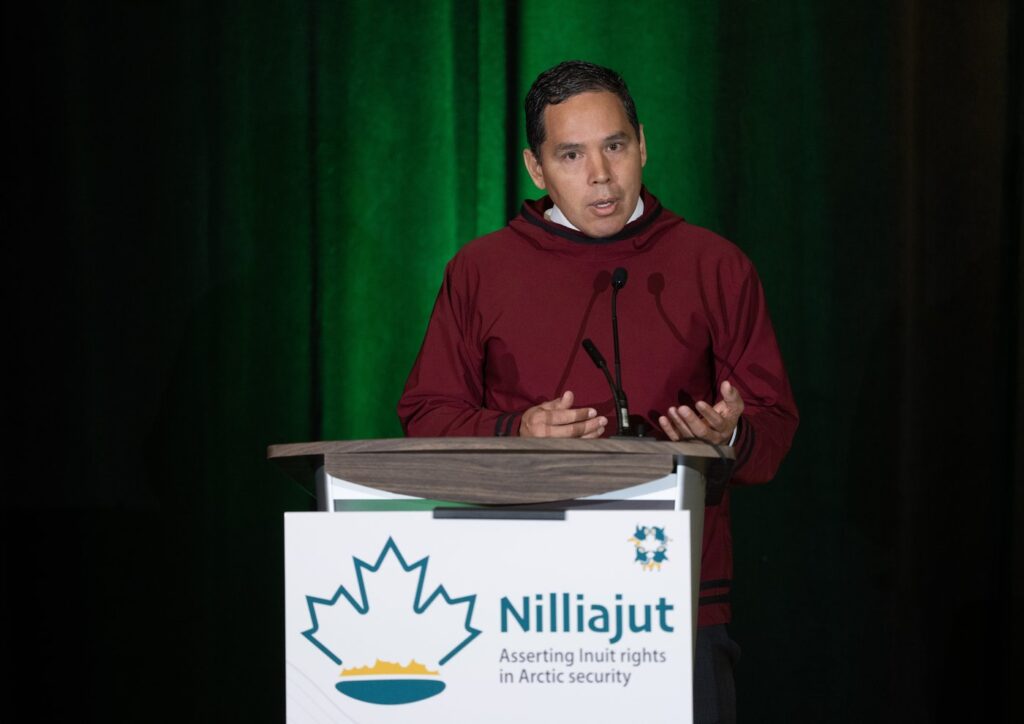
During the summit, ITK president Natan Obed highlighted that if the partnership between Inuit and Ottawa is deemed unfeasible, Inuit communities may start seeking alternative partners. He characterized the current relationship with the federal government as generally positive but acknowledged a significant shift in the level of consultation involving Inuit in decisions made about their territory. For instance, Obed criticized Ottawa for not engaging in “deep consultation” with Inuit prior to announcing defense investments and the development of the Northern Operational Support Hub network for the Canadian Armed Forces.
Obed expressed concern, stating, “We were informed and asked if we could come celebrate with the Government of Canada when they announced them. We are not an essential part of those conversations, even though they are in our homeland.” He affirmed that while Canada remains the “preferred partner” for Inuit, they would explore other avenues if necessary, stressing that pursuing alternative partnerships is a pragmatic approach, not a threat.
Obed reflected on the need for Inuit to utilize their resources and leverage opportunities in their homeland, especially given increased federal interest in Arctic resources. “If the partnership with Canada is not on the table, if we are not going to be respected partners, then should we not be looking for other partners as well to uphold our interests?” he added. He drew parallels with former Governor of the Bank of Canada Mark Carney's strategies to diversify Canada’s trade relationships, noting that Inuit leaders find themselves in a similar position.
While detailing strategic Arctic issues, Obed pointed out potential collaboration with foreign investors, including discussions regarding Chinese investment in natural resource extraction. He reiterated that any initiative would begin with talks with the federal government as they take Canadian sovereignty threats seriously, wishing to participate actively in discussions about security and sovereignty.
Obed noted that large-scale projects would help fund Inuit treaty implementation and provide social programs and employment opportunities for Inuit. He voiced concerns about recent changes in how the Canadian government interacts with Inuit rights-holding institutions, which signals a troubling shift away from rights-based funding approaches. He highlighted the significant role that these interactions play in strategic decision-making for Inuit communities.
As a specific example, Obed mentioned the proposed Inuit Nunangat University, set to open by 2030 with its main campus in Arviat, Nunavut, emphasizing the necessity for federal legislation that would enable the university to confer degrees across multiple jurisdictions. He indicated that without federal commitment, Inuit may need to explore partnerships outside of Canada to realize this educational institution. Furthermore, he criticized the government’s current housing funding model, which reverts to collaboration with territorial governments rather than Inuit organizations, complicating local decision-making. “We are also seeing the return of a territorial North, rather than an Inuit Nunangat North,” Obed remarked, underscoring the urgency for Inuit governance and autonomy in their territories.