Negotiators from the United States and Iran convened in Switzerland on Saturday to discuss enhancements to their interim agreement aimed at halting the ongoing war, following Iran's announcement of the closure of the Strait of Hormuz due to escalating Israeli attacks in Lebanon. Iranian officials warned that meaningful progress would be unlikely unless hostilities ceased. U.S. President Donald Trump retaliated with a threat to impose tolls on traffic in this crucial waterway if a final deal with Iran isn't finalized within 60 days, asserting that the fees would be "for services rendered as the Guardian Angel to the countries of the Middle East." The interim agreement facilitates toll-free passage in the strait for 60 days.
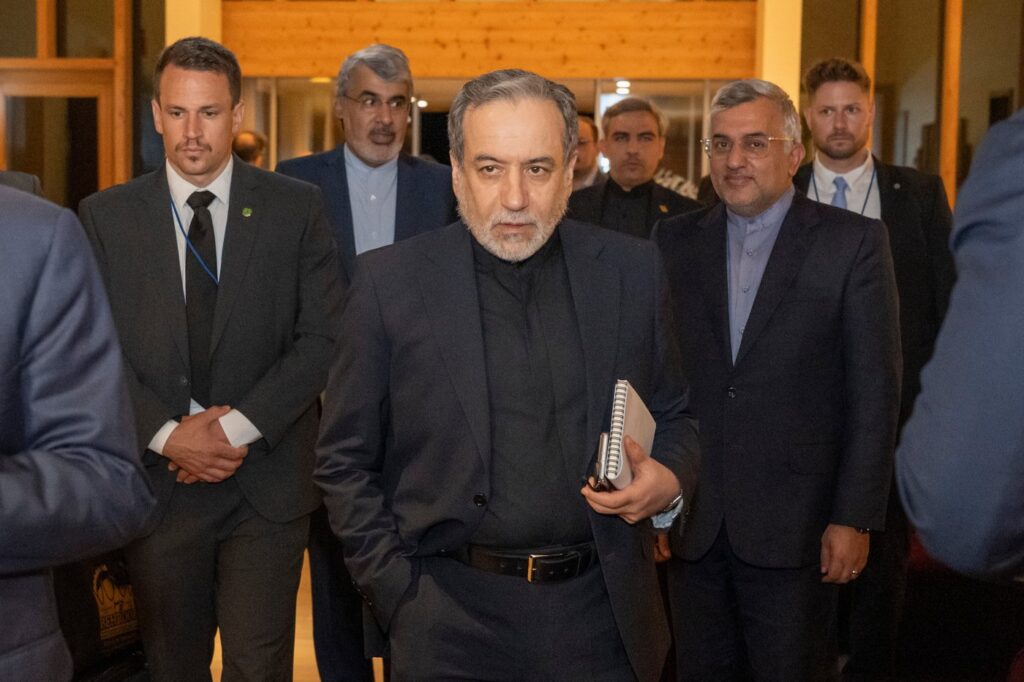
These developments marked a challenging introduction to the technical-level talks set to begin the following day, facilitated by key mediator Pakistan alongside Qatari representatives. U.S. Vice President JD Vance traveled to Switzerland shortly after Iranian state television broadcast footage of their negotiators arriving, led by parliamentary Speaker Mohammad Bagher Qalibaf, and including Foreign Minister Abbas Araghchi. The discussions aim to unfreeze billions of dollars in Iranian assets.
Originally scheduled to start on Friday, the talks were postponed by Iran amid the intensifying conflict in Lebanon. U.S. and Qatari officials managed to broker an agreement between Israel and the Iranian-backed Hezbollah to mitigate hostilities. Vance expressed cautious optimism about the prospects for progress in discussions regarding Iran's nuclear program and a ceasefire in southern Lebanon.
Iranian Foreign Ministry spokesperson Esmail Baghaei asserted that negotiations toward a final agreement would commence only once essential commitments were fulfilled. He warned that failure to do so could jeopardize the entire memorandum of understanding. Meanwhile, Iran's military command declared that the Strait of Hormuz is closed due to the U.S. failing to honor its commitments by not ending hostilities. The U.S. disputed this claim, maintaining that vessel traffic continued and that American forces were ensuring safety in the area, with over 17 million barrels of oil transiting on that day alone.
The economic landscape grew increasingly uncertain with reports indicating the lifting of the U.S. blockade on Iranian ports, allowing unrestricted oil sales by Tehran. This outcome has raised questions among some U.S. Congress members regarding the justifications for the war. The interim agreement, signed by Trump and Iranian President Masoud Pezeshkian, allows for a 60-day negotiation window to reach a nuclear agreement, although extensions may be possible due to the complexity of the issue.
The backdrop of these talks was the ongoing conflict in Lebanon, where Israeli military actions resulted in the death of at least 16 individuals, including children. An Israeli military official stated that Hezbollah had launched over 50 projectiles at Israeli forces. In retaliation, Israel targeted multiple Hezbollah positions, with significant casualties reported on both sides, raising the death toll of the latest Israel-Hezbollah conflict to over 4,000, according to Lebanon’s health ministry.
Hezbollah has indicated a willingness to commit to a ceasefire should Israel agree to a comprehensive halt to hostilities in Lebanon. In response, an Israeli military official noted that their forces have received new orders from the political echelon to implement a cease-fire, while affirming their right to respond defensively if attacked. Despite this, mistrust remains prevalent among certain communities, both within Lebanon and Israel, regarding the likelihood of a lasting truce.