On Thursday, researchers initiated a pivotal study examining two potential treatments for the ongoing Ebola outbreak in eastern Congo. This development came as the World Health Organization (WHO) confirmed the enrollment of the first participant into the trial.
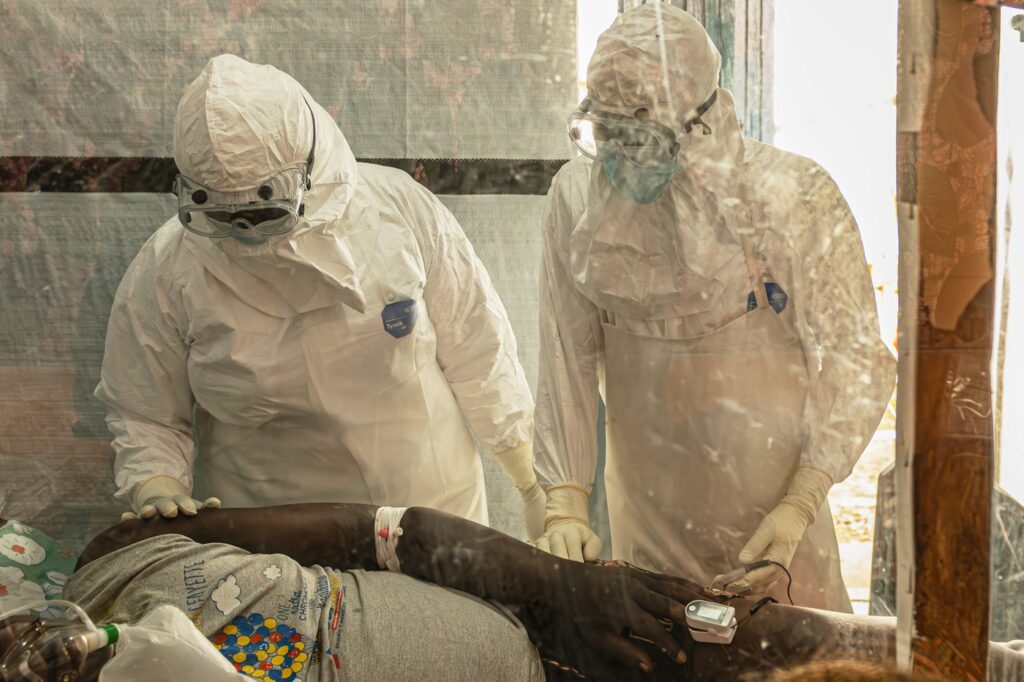
The outbreak is caused by the Bundibugyo virus, which is less prevalent than other strains of Ebola. As reported by WHO Director-General Tedros Adhanom Ghebreyesus, over 1,400 people have been diagnosed, with 438 fatalities linked to the virus. At present, there are no specific treatments or vaccines available for Bundibugyo. While standard supportive care can aid recovery—especially when administered early—the urgent need for more effective therapeutic options has become increasingly evident, as noted by Tedros.
The trial is intended to assess the efficacy of two drugs in enhancing survival rates among Ebola patients. One of the drugs under investigation is remdesivir, developed by Gilead Sciences. Although it has been approved for treating COVID-19, initial laboratory tests suggest it may also be effective against the Bundibugyo virus. The second treatment, MBP134, is an experimental drug from Mapp Biopharmaceuticals, composed of antibodies specifically engineered to target various Ebola viruses, including Bundibugyo.
Patients participating in this trial will receive the best standard care available, along with a random assignment to receive either remdesivir, MBP134, both drugs, or neither. Dr. Vasee Moorthy, a research adviser with the WHO, explained that the study will monitor patient survival over a 28-day period following the initiation of treatment. However, he cautioned that determining the effectiveness of either drug could take months, possibly requiring as many as 1,000 participants. If one of the drugs shows high efficacy, researchers may be able to reach conclusions with fewer patients and more quickly.
Currently, the trial is limited to a single Ebola treatment center located in Ituri province, a region severely impacted by violence that has hindered healthcare efforts against the virus, transmitted through contact with the bodily fluids of infected individuals. Plans are in place to expand the study to additional locations as soon as it is safe to do so.
Moorthy confirmed that sufficient quantities of both drugs have been donated, with Gilead providing remdesivir and the U.S. government supplying doses of MBP134, which it has funded. Should either treatment prove effective, subsequent efforts will focus on ensuring ongoing access for patients beyond the trial.
This WHO-supported trial represents a collaborative effort among Congo's national biomedical research institute INRB, Britain’s Oxford University, Antwerp's Institute of Tropical Medicine, and various international health organizations, united in the fight against this urgent public health crisis.
The Associated Press Health and Science Department, supported by the Howard Hughes Medical Institute's Department of Science Education and the Robert Wood Johnson Foundation, maintains editorial responsibility for the information presented.