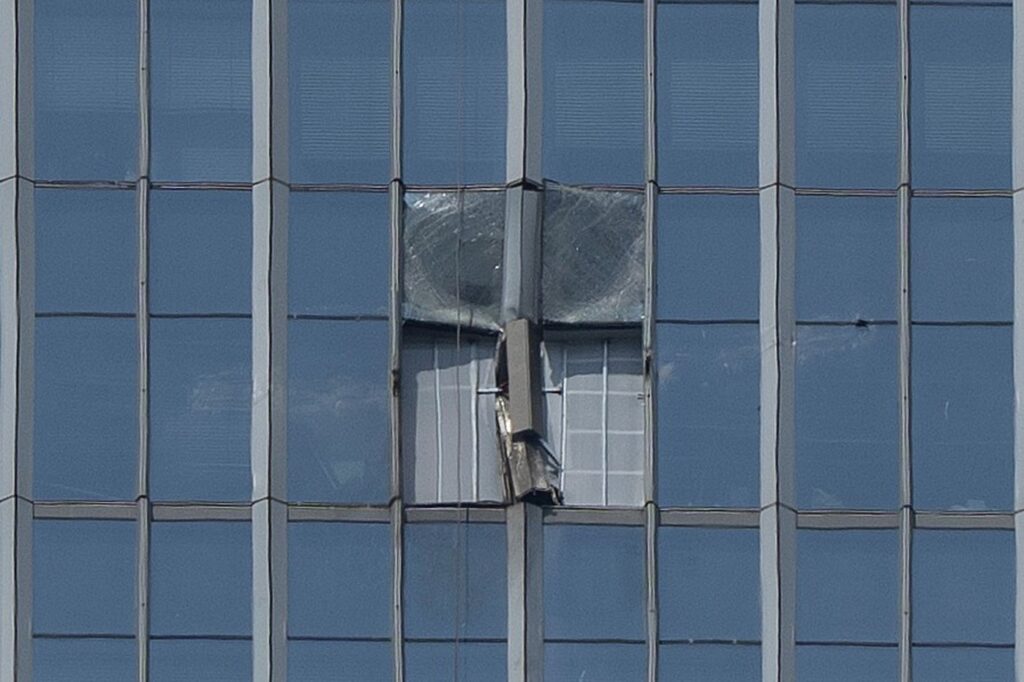
BEIJING (AP) – A tragic incident occurred on June 26 when a small plane crashed into the CITIC Tower, the tallest building in Beijing. The pilot, a 66-year-old man identified only by the surname Liu, reportedly expressed intentions of ending his life in his diary, according to a statement from the Chinese authorities released on Thursday.
The investigation conducted by Beijing's Chaoyang district government concluded that the crash was attributable to “personal reasons.” Liu died in the crash, and 13 other individuals sustained injuries, all of which were reported as non-life-threatening; one of the injured has already been discharged from the hospital.
The crash unfolded around 6 p.m. in a bustling downtown district, coinciding with the time when people were leaving work. The impact left a noticeable hole in the glass facade of the CITIC tower, which is also known as the “Zun” building, a structure designed to resemble the shape of an ancient wine vessel.
According to the Chaoyang district's statement, Liu had taken off on a solo flight from a general aviation airport located on the outskirts of Beijing in a two-seat training plane. He deviated from the designated flying area, leading to the loss of contact with air traffic control.
Liu's background reveals a troubling personal life; he was reported to have no fixed employment, was divorced, and lived alone. Furthermore, he suffered from insomnia and anxiety, which were chronicled in his diary that contained multiple references to thoughts of ending his life.
The incident has raised substantial concerns regarding security in central Beijing, where strict airspace regulations are enforced, including a ban on the operation of drones. This area is of particular significance as it houses the residences and working spaces of China’s leaders.