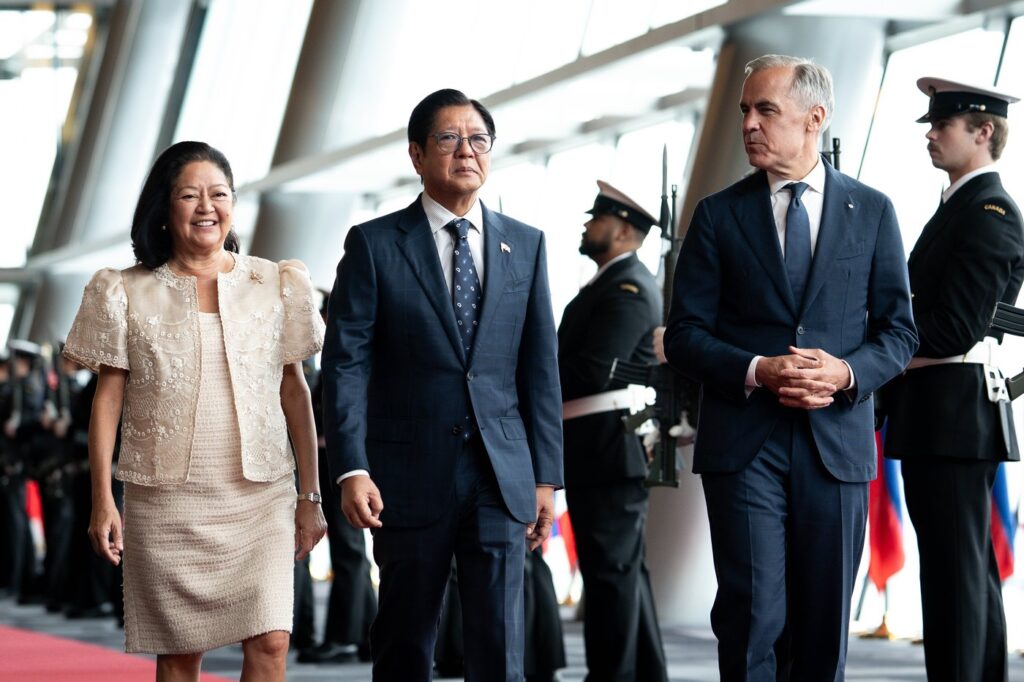
VANCOUVER – Canadian Prime Minister Mark Carney and Philippine President Ferdinand Marcos Jr. signed multiple agreements on July 2, 2026, focusing on energy, natural resources, labour, and tourism. This marks the first visit to Canada by a Philippine head of state in over a decade, underscoring the shared aspirations of both nations aimed at strengthening their bilateral ties.
President Marcos expressed optimism about the ongoing collaboration, stating, “We share the same aspirations, in terms of what we would want to achieve in the world.” The importance of this visit was highlighted by Carney, who had invited Marcos to Canada in an effort to finalize a bilateral trade agreement by the time he travels to Manila for a summit in November.
During the visit, Carney and Marcos oversaw the signing of a memorandum aimed at enhancing protections for Filipino workers in Canada and increasing labour mobility between the two countries. Carney acknowledged the indispensable contributions of Filipino workers, particularly in fields like healthcare, and emphasized the government’s commitment to ensuring their fair treatment and rights.
Marcos pointed out the robust people-to-people connections between Canada and the Philippines and emphasized the potential of creating “a mutually beneficial talent pipeline” that could encompass various sectors of the economy. He also expressed hope that Canadian federal and provincial governments would collaborate to allow Filipino professionals to practice their trades in Canada.
Carney highlighted the significance of Filipino-Canadians in the fabric of Canadian society, stating they are “at the very heart of Canada.” He described the potential mutual benefits that can arise from a strategic partnership in energy security and critical minerals between the two nations. According to the 2021 census, nearly one million people in Canada identified as Filipino, emphasizing the substantial community’s influence.
The strong ties between Canada and the Philippines are already underpinned by previous defense-related agreements. Vina Nadjibulla, vice-president of the Asia Pacific Foundation, observed that Marcos’s visit is a testament to the advancements made since Canada’s Indo-Pacific strategy was launched in 2022. Once centered on people-to-people connections, the relationship has evolved into a partnership that encompasses trade, investment, energy, maritime security, cybersecurity, and defense.
Nadjibulla pointed out that Canada’s efforts in detecting illegal fishing activities are aiding the Philippines and mentioned the Philippines' appreciation for Canada’s support of a UN tribunal's ruling that opposed Beijing's territorial claims in areas considered under Philippine jurisdiction. As the geopolitical landscape shifts due to conflicts such as the ongoing war in Iran, the Philippines is increasingly looking to Canada for support in areas like oil, gas, and nuclear technology.
Moreover, Nadjibulla observed that the reception of Asian leaders, including leaders from Japan and India, is indicative of a renewed interest in Canada’s global partnerships. The significance of establishing strategic relationships through direct visits by leaders cannot be overstated, as Canada aims to solidify its position on the international stage.
The interactions between Carney and Marcos illustrate a forward-looking approach that seeks to enhance both nations' economic prospects and strengthen their collaborative efforts in addressing global challenges.