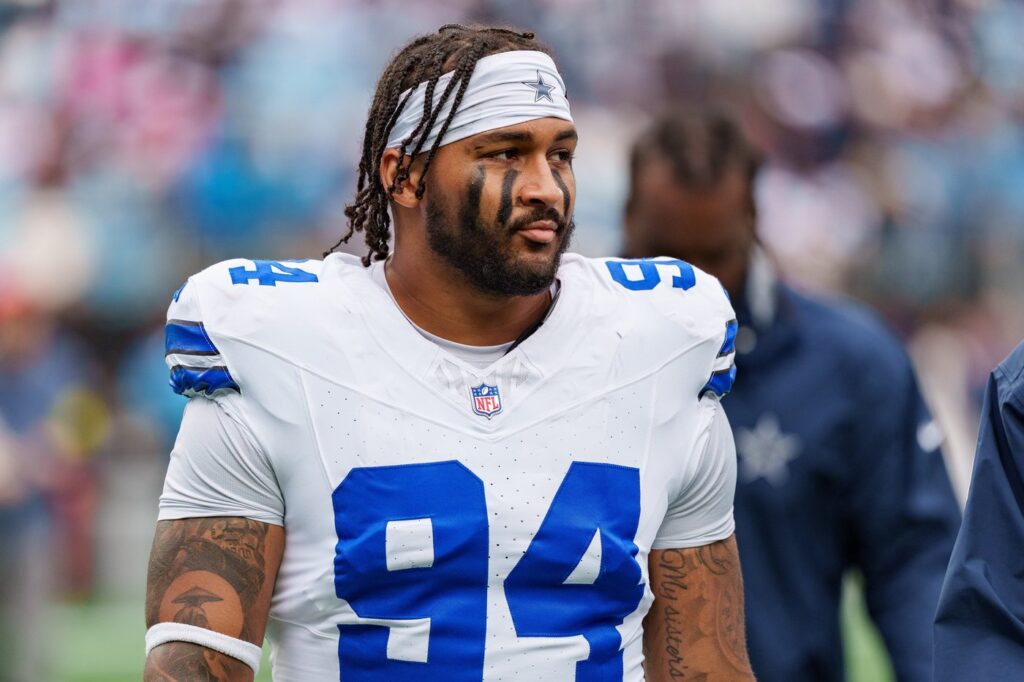
AUSTIN, Texas (AP) Former Dallas Cowboys defensive end Marshawn Kneeland tragically died by suicide in November 2025 following a harrowing high-speed chase with police. His family revealed on Tuesday that he suffered from early-stage chronic traumatic encephalopathy (CTE), a brain condition associated with repeated head trauma.
The Boston University CTE Center conducted an analysis of Kneeland's brain tissue postmortem and confirmed that he was in stage one of four stages of CTE at the time of his death. At just 24 years old, Kneeland's diagnosis underscores the grave risks associated with repeated head injuries, particularly in contact sports like football.
EDITOR'S NOTE This report includes discussions about suicide. If you or someone you know is in distress, the National Suicide and Crisis Lifeline in the U.S. can be reached by calling or texting 988. An online chat is also available at 988lifeline.org.
Chronic traumatic encephalopathy is a degenerative brain disease identified in athletes from various contact sports, military veterans, and others who experience consistent blows to the head. It has been linked to various symptoms such as mood swings, impulsive behavior, and depression, and can only be diagnosed after death.
Kneeland’s family, along with his girlfriend, Catalina Mancera, expressed their desire to raise awareness about CTE in their statement released via the Concussion and CTE Foundation. They emphasized that while his diagnosis does not change the tragedy of his death, it provides critical context regarding the struggles he faced throughout his life. “Raising awareness is important to us. We continue to remember Marshawn with compassion for the person he was, rather than defining him by the final moments of his life. One Love,” they stated.
CTE-related issues have been documented across various sports, including football, hockey, and soccer. Kneeland's devastating decision to end his life occurred after he engaged in a high-speed chase, following his failure to stop for the Texas Department of Public Safety troopers due to a traffic violation. After the vehicle crash, which occurred shortly after losing police pursuit, Kneeland fled on foot.
Authorities later reported that during the search for Kneeland, dispatchers received information indicating that he had sent a group text message to acquaintances saying goodbye, raising concerns about his suicidal tendencies.
Dr. Chris Nowinski, the CEO of the Concussion & CTE Foundation, highlighted that Kneeland's diagnosis is a concern, even in the current age where concussion protocols and improved safety equipment are in place. He stated that the risk of developing CTE remains high and emphasized that concussion protocols alone do not mitigate the risk, given that CTE stems from repeated head impacts rather than concussions alone. “If we want to reduce CTE risk, we must implement CTE prevention protocols and aggressively reduce the number and strength of head impacts at every level of the game,” Nowinski asserted.
Kneeland's journey in football began at the young age of 7. He later played at Western Michigan University before being drafted by the Dallas Cowboys in the second round of the 2024 NFL Draft. This tragic incident has reignited conversations about the long-term consequences of head impacts in contact sports and the urgent need for better protections for athletes at all levels.
AP NFL: https://apnews.com/hub/nfl
Jim Vertuno, The Associated Press