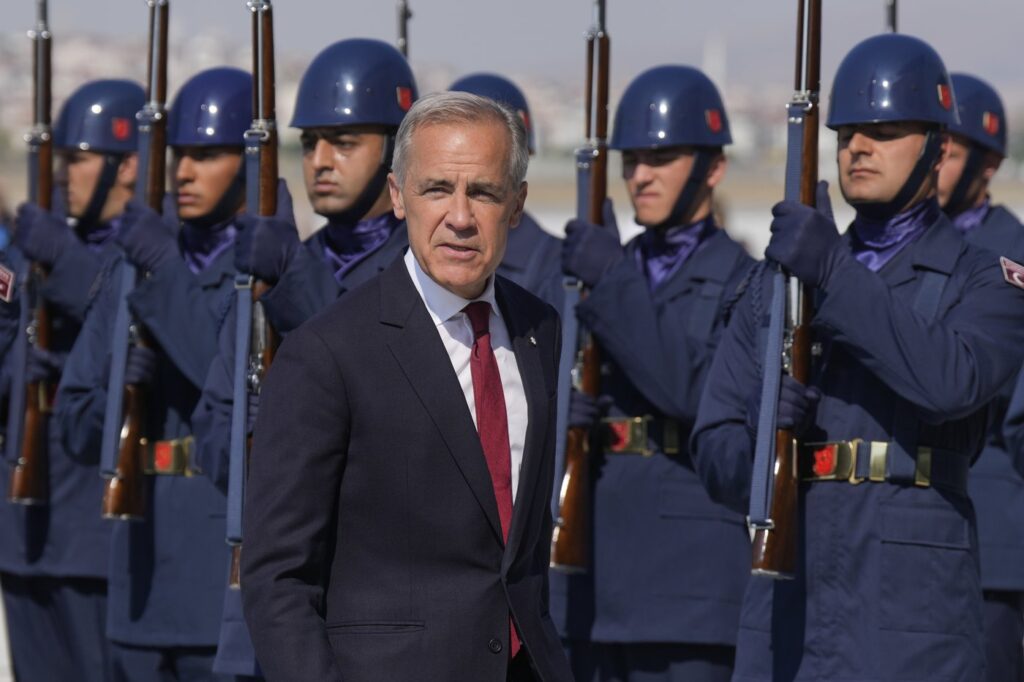
OTTAWA – Prime Minister Mark Carney has embarked on a significant visit to Saudi Arabia, aiming to forge economic partnerships with a country that plays a crucial strategic role, despite its increasingly concerning human rights record. Carney is currently in Jeddah, having been invited by Crown Prince Mohammed bin Salman. This marks the first visit by a sitting Canadian prime minister to the kingdom in 26 years.
According to Thomas Juneau, a professor from the University of Ottawa who specializes in Middle Eastern affairs, "It’s very significant." He notes that while there is a willingness from Saudi Arabia to deepen relations with Canada, the nation does not rank high on their priority list. Carney’s visit comes on the heels of a gradual improvement in bilateral relations following a major diplomatic rift in 2018, when the Trudeau government criticized Saudi Arabia for its justice system and treatment of women, demanding the release of human rights activists. This led to Saudi Arabia withdrawing its ambassador from Canada and expelling Canada’s envoy.
In the aftermath of that dispute, which also saw Saudi Arabia halt trade talks with Canada, diplomatic ties were restored in 2023. Juneau emphasizes that Carney's current visit could pave the way for investment opportunities along with collaborations in security, defense, green energy projects, and various diplomatic initiatives. He pointed out that Saudi Arabia is keenly interested in Canada’s secure food supply chains, given the region's limited agricultural production.
Furthermore, Juneau is keenly observing if the Israeli-Palestinian conflict will be on the agenda, as both nations share a similar stance advocating for peace alongside a sovereign Palestinian state. The development of Canada potentially providing security for shipping in the Strait of Hormuz is another crucial point, especially following a recent ceasefire's collapse when Iran attacked commercial vessels, prompting a U.S. response.
Overall, Juneau finds it challenging to gauge the precise objectives of Carney's visit. Carney's office has outlined multiple "priority sectors," including mining, artificial intelligence, cleantech, agriculture, tourism, infrastructure, and life sciences. Juneau stresses the need for the government to be more transparent about its goals, especially given the turbulent history of Canada-Saudi relations.
Carney has actively sought outreach to Gulf states over the past year, having visited both the United Arab Emirates and Qatar. Nonetheless, Canada appears to be lagging behind other nations in pursuing investment from affluent oil states and enhancing cooperation in diplomacy, security, and artificial intelligence. This gap has widened as Canada’s allies have offered more military and intelligence resources amid ongoing conflicts, particularly concerning Iran.
Saudi Arabia has currently shifted its focus towards forging relationships with countries like South Korea for defense manufacturing, Ukraine for drone technology, and various Western European nations for nuclear and agricultural projects. Juneau notes that while Canada continues to prioritize its relations with the U.S., Saudi Arabia seeks to explore additional partnerships beyond Washington while still relying on American security guarantees.
The kingdom is undergoing significant transitions, aiming to diversify its economy beyond oil. Although there have been social reforms, such as allowing women to drive since 2018, these changes are tightly controlled and come with ongoing systemic restrictions, including male guardianship rules. Juneau observes that while economic transformations are evident, there remains a lack of political reform and an alarming trend in worsening human rights conditions.
Human Rights Watch has consistently criticized Saudi Arabia for its dismal human rights record, which has deteriorated further with a rise in executions. Reports indicate that the Saudi authorities suppress dissent severely, imposing long sentences or the death penalty in cases related to peaceful expression. The Raoul Wallenberg Centre for Human Rights has urged the Canadian government to pressure Saudi Arabia to lift a travel ban on Raif Badawi, a blogger punished for his writings, who served time and remains barred from leaving the country despite his family's residence in Quebec.