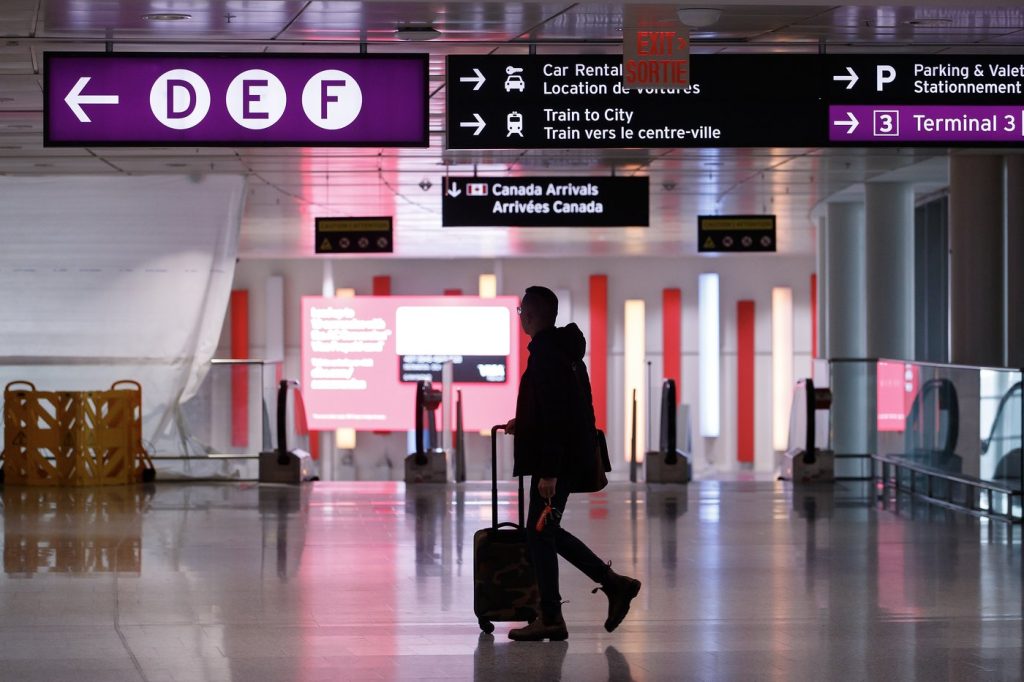
Toronto Pearson Airport, Canada’s largest airport, is issuing a cautionary message to passengers regarding the proliferation of misleading information generated by artificial intelligence (A.I.). Airport officials are alarmed by the rise in A.I.-produced articles that contain inaccurate details about flight operations, which could mislead travelers.
Sean Davidson, a spokesperson for Pearson Airport, noted, “In the last few months, we’ve seen this really ramp up.” Upon initial inspection, headlines from various travel-related websites may appear credible. However, a closer examination reveals alarming headlines, such as one that appeared last week: “I.T. Outage Triggers Major Flight Chaos Across Canada.” This trend is becoming a significant concern for the airport.
Davidson elaborated, stating, “Some ‘authors’ on these websites are writing up to 100 articles a day, so it’s clearly done by A.I.” The airport is distressed by the potential consequences for passengers who might show up unnecessarily or decide to cancel or rebook flights due to this misleading information. Efforts to contact the websites responsible for this content in order to have the false articles removed have so far proven unsuccessful.
The issue extends beyond Pearson Airport, impacting airports across North America. Ritesh Kotak, a cybersecurity expert, emphasized that the deceptive content generated by these websites can lead to real financial gains for the entities behind them. He explained, “The way these websites make money is if they’re able to generate traffic; if they’re able to get people to click on things, then guess what? They can sell advertising space on it.” The more clicks an article receives, the higher the revenue generated, creating an incentive for the dissemination of misinformation.
Another cybersecurity expert, Carmi Levy, highlighted additional risks associated with these websites. He warned, “These sites collect information from us, and that information can be used in all sorts of ways against us as well.” Furthermore, these platforms have been linked to more severe issues like ransomware and malware attacks, posing significant security threats to online users.
Given the current landscape, experts are advising online users to exercise greater caution in the age of A.I. It’s vital for individuals to verify the legitimacy of the information they encounter online. In this case, it is recommended to refer directly to official sources, including the airline’s official website or social media channels, or the official website of Pearson Airport.
Toronto Pearson Airport has identified several websites that are producing this misleading A.I.-generated content. The list includes:
- TheTraveler.org
- Toronto Digest
- Travel and Tour World
- NomadLawyer
- Travel Tourister
As A.I. technology continues to evolve, the importance of verifying information from credible sources becomes increasingly critical, particularly in sectors like aviation where accurate communication is essential for passenger safety and operational integrity.