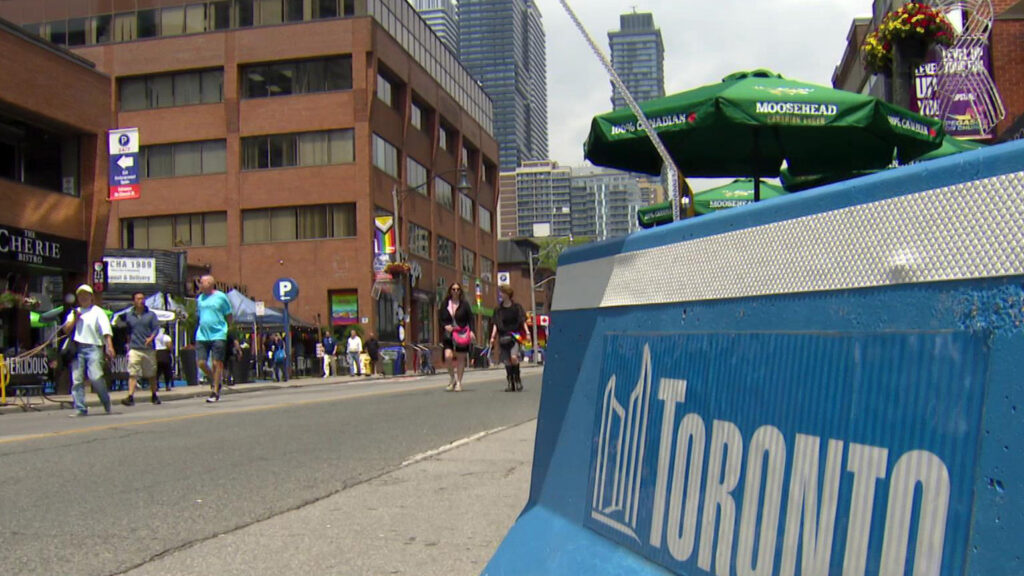
It's been three weeks since a section of Toronto's Church-Wellesley Village has been closed to vehicle traffic, and both residents and business owners are expressing a positive response to the changes in the atmosphere. The two-block stretch of Church Street, between Wellesley and Alexander Streets, has been designated as pedestrian-only since June 19 as part of a pilot project. The initiative aims to create more space for pedestrians and stimulate local businesses at the same time.
CityNews interviewed various residents and business owners to assess the progress of the pilot project. One long-time resident expressed their enjoyment of the newfound walking space, stating, “I’ve lived here for 30 years, and you see a difference in the atmosphere.” This sentiment was echoed by others who have long wished for a similar pedestrian experience to those found in European cities or Montreal.
As the pedestrian-only access garnered attention, the City officially celebrated the project with a ribbon-cutting ceremony on a recent Friday. The concept of dedicated pedestrian streets is becoming increasingly popular not only in Europe but also in major cities across Canada. Many in the Church-Wellesley Village community hope that this change will not be temporary and that the streets will remain pedestrian-friendly for years to come.
While some business owners reported that they have not seen a significant uptick in daytime customers, many others acknowledged that the pilot has contributed to a more inviting environment which, in turn, has attracted more foot traffic. George Pratt, owner of Flash nightclub and chair of the Church-Wellesley Business Improvement Association, remarked, “I would like to see it come back again next year and maybe for a longer period of time,” suggesting an extended timeframe from May to September.
The pilot project is currently projected to cost approximately $500,000, escalating from an initial budget of around $150,000. Councillor Chris Moise noted that about $300,000 of the funding relates to policing and private security. He mentioned that these costs would need to be reduced if Toronto aims to expand its pedestrian-only initiatives elsewhere in the city. Moise also addressed community feedback about the security presence, stating, “One of the complaints we’ve received is that there is too much security. It’s a bit of an overkill.” He expressed hope that over time, security measures could be scaled back.
The Toronto Police reported that they spent about $25,000 on paid-duty officers during the pilot program's opening weekend, with the majority of the police presence coming from officers on regular duty. Moving forward, police officials have indicated that any future pedestrianization projects will need careful planning to maintain public safety and ensure emergency access.
Mayor Olivia Chow has shown openness to the idea of more pedestrian streets in Toronto, stating, “If the businesses and the residents, if they think that it’s something that they want to do, absolutely the City of Toronto will consider it.” The Church Street pedestrianization pilot is currently set to run until August 21, after which the city will evaluate the outcomes and determine the next steps.