According to a recent poll by the Pew Research Center, global perceptions of the United States and China have undergone a significant shift, with many people now viewing China more favorably than the U.S. This change is particularly striking, as the U.S. has historically been viewed more positively, but this year marks the first time in nearly two decades that China has surpassed the U.S. in favorability among many nations.
The survey, which was conducted from February to May, shows that in 25 out of 36 surveyed countries and territories, respondents express more favorable views toward China than the U.S. Notably, this includes responses from Canada and Mexico. The shift in opinion correlates with rising tensions between the Trump administration and U.S. allies, as well as the ongoing military conflict involving the U.S. and Israel in the Middle East.
Only six countries continue to hold more positive views of the U.S. compared to China. These countries include Israel, Japan, India, South Korea, the Philippines, and Poland. However, even in these nations, the favorability of the U.S. has decreased in recent years.
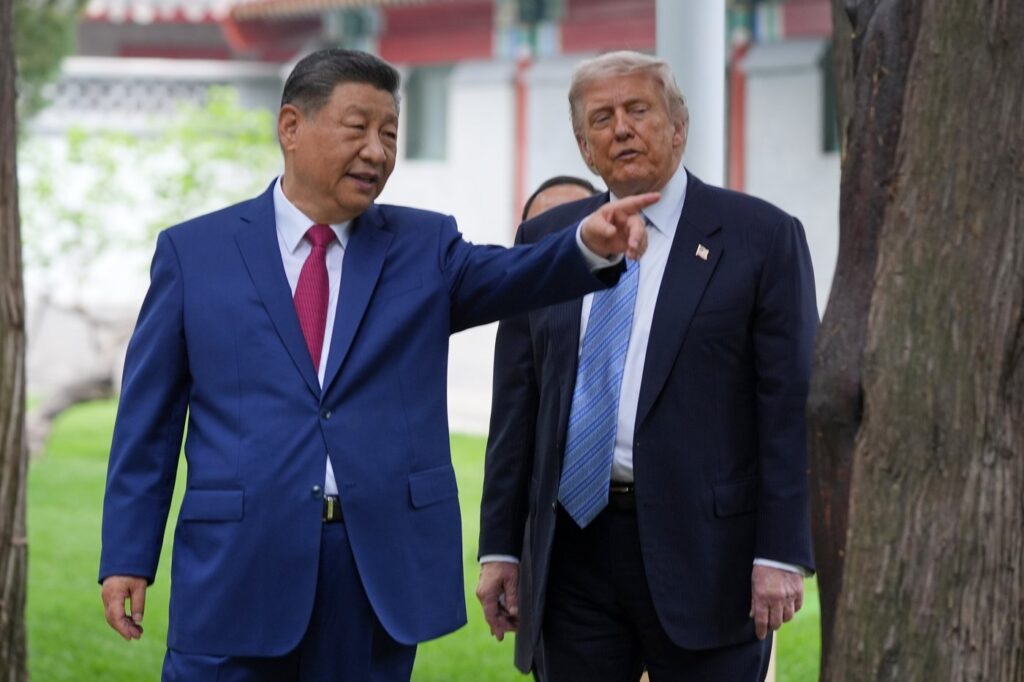
In contrast, the survey revealed that in 22 out of the 36 countries, Chinese leader Xi Jinping enjoys more favorable opinions than U.S. President Donald Trump. This sentiment is particularly pronounced in Canada, Mexico, and major European powers such as France, Germany, and the United Kingdom. Despite this, many respondents also reported low confidence in both leaders, indicating a general discontent with their leadership styles.
Laura Silver, associate director of Pew’s Global Attitudes Research, pointed out that the declining perception of the U.S. has been accelerated by the aftermath of the COVID-19 pandemic and global unrest related to U.S. foreign policies, including military actions abroad. Silver stated, “There was just an actual relationship between the outbreak of the war and the sense that the U.S. is just not contributing to peace and stability and that people have less confidence in Donald Trump.”
Trump’s controversial policies, such as demanding control of Greenland, a military operation in Venezuela to capture its then-leader Nicolás Maduro, and the U.S. approach to the recent Israeli-Hamas conflict, have all negatively impacted America's global standing. Silver indicated that while the pandemic fades from collective memory, many see China as a more stable and reliable partner compared to the U.S.
In response to the survey, White House spokesperson Olivia Wales claimed that President Trump had contributed significantly to global stability and highlighted achievements including the alleged destruction of Iran’s nuclear facilities and the defeat of narcoterrorists, asserting that Trump has made the U.S. stronger than ever. Meanwhile, the Chinese Embassy in Washington asserted that the poll results reflect recognition of China's governance and developmental progress.
The survey also highlighted significant changes in perspectives within U.S. allied countries. For instance, favorable views of the U.S. among Canadians dropped from 57% to just 33% over recent years, while positive perceptions of China surged from 14% to 44%. This decline in Canadian opinion can be attributed, in part, to tariffs imposed by Trump and controversial statements regarding Canada’s status in relation to the U.S.
Additionally, major European countries, including France, Germany, Spain, Italy, Sweden, and the Netherlands, have also reported shifts in favor of China over the U.S. The U.K. is notable, too, where public opinion has equalized, with about six in ten Brits previously expressing positive views of the U.S. three years ago, but that advantage has now vanished.
While the U.S. still retains an edge over China concerning respect for personal freedoms, the gap is narrowing. The Pew report indicates that respondents in nearly all surveyed nations have become less likely to believe the U.S. government respects personal freedoms since the last survey in 2021.
In total, the Pew survey gathered responses from over 42,000 individuals across 35 countries, plus the West Bank and East Jerusalem, providing a broad view of global sentiment. The margins of error for individual countries ranged from 2.3 to 5.5 percentage points, indicating a robust dataset for analysis of these shifting perceptions.
```