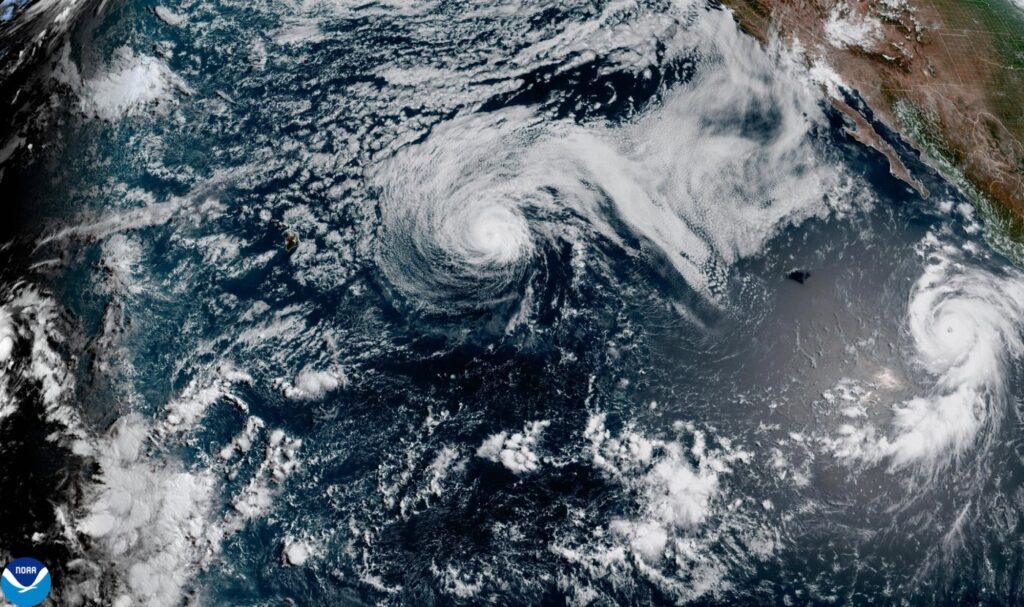
MIAMI (AP) - Hurricane Genevieve has rapidly intensified into a major hurricane as of Sunday, boasting maximum sustained winds of 140 mph (220 kph), classifying it as a Category 4 hurricane. According to the National Hurricane Center based in Miami, a hurricane is categorized as major when it reaches Category 3 status, defined by sustained winds of 111 mph (179 kph) or more. Currently, Genevieve is positioned approximately 530 miles (855 kilometers) southwest of the coastal city of Manzanillo, Mexico. The storm is moving west-northwest at a speed of 14 mph (22 kph).
While no coastal watches or warnings are currently in effect, the hurricane center has alerted that significant swells generated by Genevieve are likely to contribute to “life-threatening surf and rip current conditions.” These hazardous conditions are already impacting certain areas along Mexico's southwestern coast and are expected to reach the southern parts of the Baja California Peninsula on Sunday night or the following Monday.
Forecasters predict that Genevieve may continue to strengthen in the coming days before it begins to weaken by midweek. The storm's current trajectory indicates that it will remain far from land, primarily impacting ocean swells rather than coastal regions directly.
In a related development, further northwest in the Pacific Ocean, Hurricane Fausto has been downgraded to a Category 1 storm. The storm is continuing its path toward the Hawaiian Islands with maximum sustained winds recorded at 85 mph (140 kph). Fausto is located about 825 miles (1,330 kilometers) east of the city of Hilo, Hawaii, and is also moving west at a velocity of 14 mph (22 kph).
Forecasters anticipate that Fausto will soon lose intensity and be downgraded to a tropical storm in the days ahead. Despite the expected weakening, it is important to note that Fausto could still produce significant surf conditions impacting parts of Hawaii.
Both storms underscore the dynamic nature of tropical weather in the Pacific Ocean, emphasizing the need for vigilance and preparedness on the affected coasts as conditions can change rapidly.