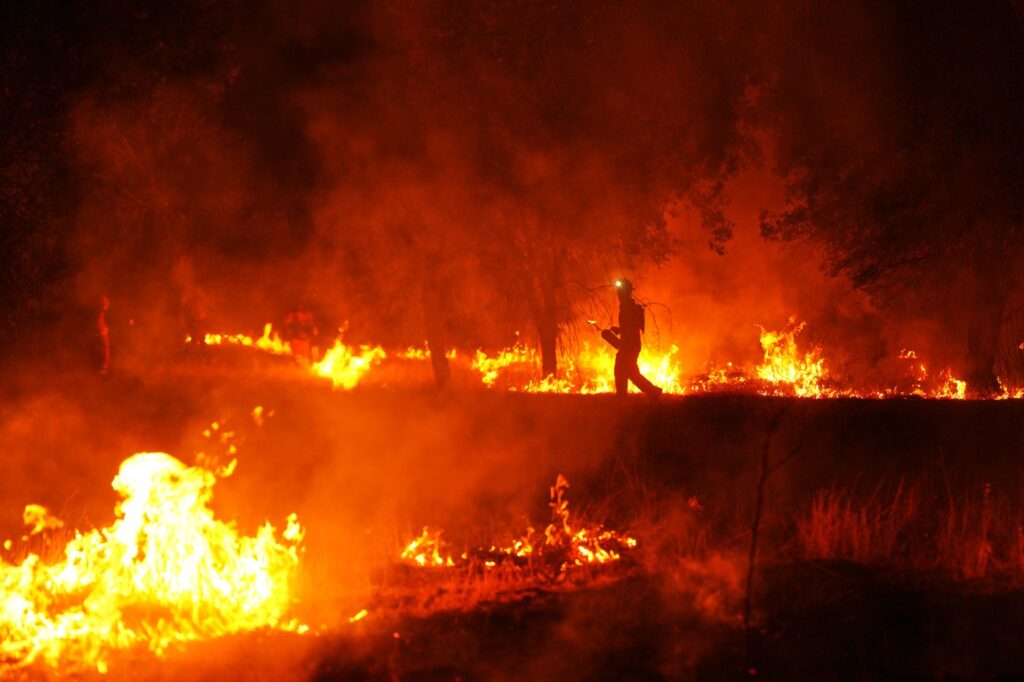
BARCELONA, Spain (AP) — Javier García, a Spanish firefighter, has encountered unprecedented challenges in his two decades of protecting woodlands and rural communities. The ongoing wildfire raging near Madrid, described as Spain’s largest recorded blaze, has consumed an astonishing 500 square kilometers (193 square miles), an area five times the size of Barcelona.
This ferocious blaze has forced approximately 25,000 people to evacuate from villages in the smoldering hills of Ávila, located to the west of Madrid, the capital. García, speaking by phone, remarked, “This doesn’t have a precedent.” The intensity of the fire has prompted a dramatic shift in firefighting tactics; first responders now focus primarily on evacuations and safeguarding property, rather than direct attacks on the flames themselves.
García's brigade has transitioned into a vital last line of defense, emphasizing the preservation of life above all else—prioritizing saving lives, then homes, and lastly, the surrounding forest. Fortunately, there have been no reported fatalities from these fires, although about 79,000 individuals have been forced to leave their homes due to the wildfire in Ávila, alongside other fires in the Madrid region and eastern Castellón.
Climate change is cited as a significant factor exacerbating these wildfires. García and his crew collaborate with emergency wildfire brigades, which assist regional firefighters during crises. Their shifts last around 12 hours, during which they work tirelessly to cool down burning trees and clear underbrush that could act as fuel for the flames. Over the past few weeks, García's 40-man unit has been engaged in battling the Ávila fire, following recent efforts in Guadalajara and near Zaragoza.
Last year marked a turning point for García, as he had never experienced battling one major fire after another. Traditionally, Spain's climate, characterized by hot summers and relatively dry conditions, rendered it vulnerable to wildfires. However, experts and government officials have noted that climate change has amplified the frequency and intensity of heat waves and droughts, leading to prolonged periods of high wildfire risks. According to García, extreme fire risk days have nearly doubled, from an average of around 15 to now between 30 to 40 days each year.
In total, wildfires have burned approximately 1,530 square kilometers (590 square miles) across Spain this year, significantly higher than the area affected in the first half of 2022. In neighboring France, a massive wildfire has further intensified the crisis, displacing over 200,000 residents. Firefighter Raúl Guerrero, who has served in the region of Castilla y León for the past decade, expressed the sheer power of the Ávila fire, emphasizing its intensity as “beyond the capacity of extinction.” This means that under certain conditions, the fire’s power and virulence become insurmountable for firefighting efforts.
Guerrero highlighted the emotional toll this situation takes on firefighters, sharing feelings of impotence when faced with such formidable blazes. Additionally, he noted that the increasing difficulty in combating wildfires relates to the loss of traditional farms and local forestry industries, which used to establish buffer zones around communities. Nowadays, unkempt vegetation grows dangerously close to homes, creating a scenario where this biomass acts as “pure gunpowder” for potential future fires. Guerrero urged property owners and local authorities to maintain vigilance by consistently clearing brush and managing forests year-round to help mitigate the risk of devastating wildfires.