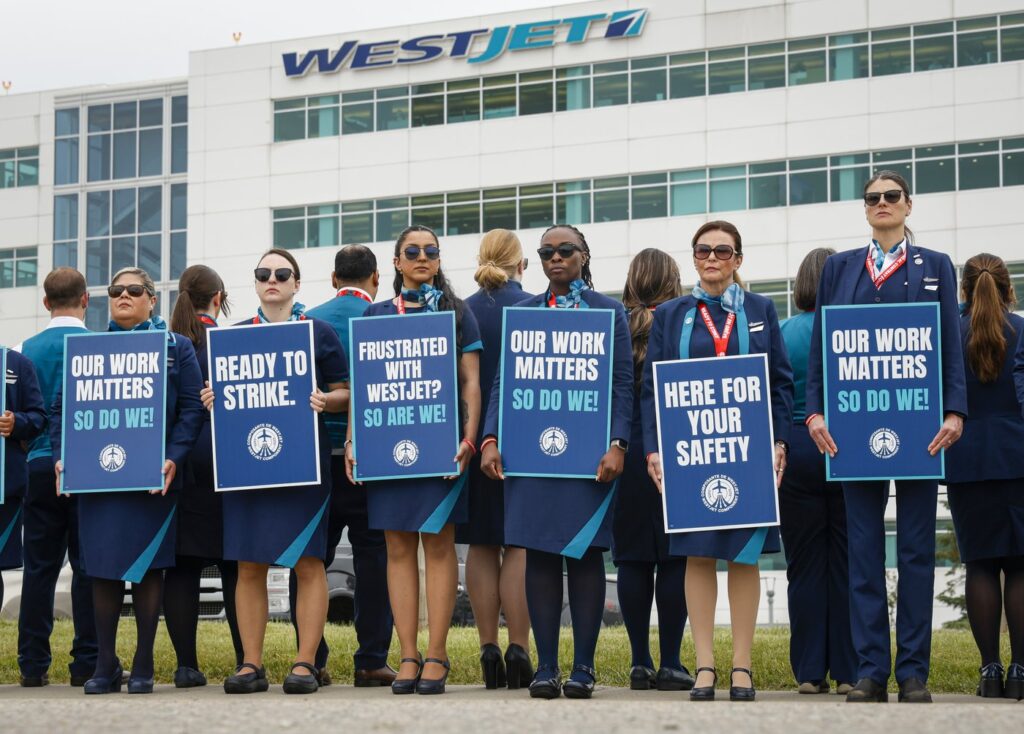
WestJet's 4,400 flight attendants initiated a strike early Sunday morning, halting airline operations during a busy summer travel weekend due to unsuccessful contract negotiations between the carrier and the union. This strike marks another significant development in labor disputes affecting Canada's largest airlines, following previous brush-ups that notably disrupted operations at both WestJet and Air Canada.
Over the last three years, the Canadian aviation sector has seen a series of strikes resulting from unsuccessful negotiations, particularly involving WestJet mechanics and Air Canada flight attendants. Tensions also escalated between pilots at both WestJet and Air Transat, with a looming threat of job action during their contract discussions.
May 2023: WestJet Pilots
In May 2023, negotiations between WestJet and the union representing its 1,800 pilots reached a critical point, leading the airline to preemptively cancel over 230 flights in anticipation of a potential strike. However, a deal was successfully negotiated just hours before the strike deadline on May 19. The pilots achieved a 24% wage increase over four years, a significant win in historical terms. This agreement set a high bar for labor gains within the Canadian aviation sector, especially after Delta Air Lines pilots secured a remarkable 34% pay hike over a similar period.
June 2024: WestJet Plane Mechanics
The situation escalated further in June 2024 when WestJet plane mechanics went on strike just one day after the federal labor minister proposed binding arbitration. The surprise strike ended only when the union accepted a tentative agreement that included wage increases of over 26% across five years, ratified by members weeks later. This three-day strike raised concerns regarding consumer responses to airline strikes and highlighted a dispute resolution process that nearly pushed tensions over the edge. The labor board's decision to allow the strike resulted in WestJet canceling more than 1,100 flights, impacting approximately 150,000 travelers, many of whom received less than 24 hours' notice of their disrupted travel plans.
August 2025: Air Canada Flight Attendants
The ongoing labor disputes extended to Air Canada in August 2025 when 10,000 flight attendants commenced a strike on August 16, following ten years without a new contract. They had been seeking significant gains in wages and boarding pay, but negotiations faltered. Less than 12 hours into the strike, Ottawa intervened as Jobs Minister Patty Hajdu invoked Section 107 of the Canada Labour Code, directing the Canada Industrial Relations Board to mandate binding arbitration and order employees back to work. In an unprecedented move, the union defied the order, leading the labor board to declare the strike unlawful. Despite this, the situation pressured Air Canada's management, resulting in a tentative agreement between the then-CEO Michael Rousseau and the union, which managed to end the strike just four days after it commenced.
In September 2025, Air Canada flight attendants rejected the wage proposal, resulting in the dispute transitioning to arbitration. The arbitration decision in February 2026 ultimately boosted flight attendants' wages by 12% for junior mainline cabin crew in the first year, with subsequent increases of 2.5% to 3% for the following three years. Air Canada estimated that the strike had cost them $430 million in lost revenue.
December 2025: Transat Pilots
By December 2025, Air Transat was involved in contract negotiations with the union representing its 750 pilots, which culminated in an agreement being reached just hours before a December 10 strike deadline. This deal, ratified in January 2026, was negotiated by the Air Line Pilots Association and offered pilots substantial gains, including over 50% raises across the five-year contract. Remarkably, the airline managed to limit flight cancellations to just 18 as they prepared for a potential work stoppage.
The ongoing labor disputes within Canadian aviation illustrate workers' efforts to secure contracts that reflect the significant gains made in other regions of North America, particularly in response to the rising cost of living. The current situation at WestJet and the historical context of labor actions in the Canadian airline industry underscore the increasingly contentious dynamics between labor forces and airline management amid an evolving economic landscape.