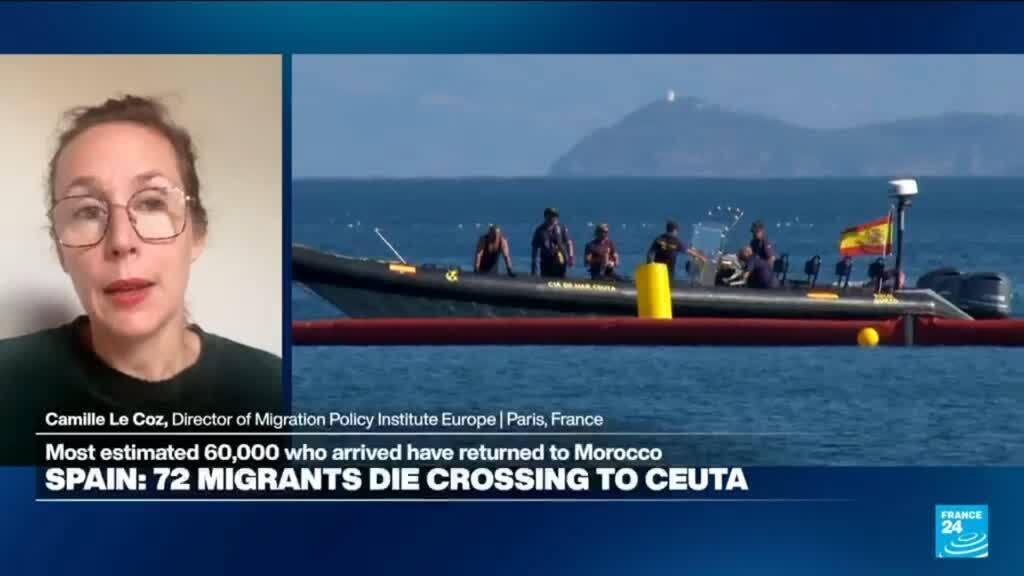
Stuart Norval recently welcomed Camille Le Coz, the Director at Migration Policy Institute Europe, for a discussion that delves into the complex dynamics of migration, particularly in light of recent events in Ceuta. Le Coz provides a fresh perspective that challenges the prevailing political narratives dominating European discourse surrounding migration. Instead of focusing solely on the emotionally charged imagery that often accompanies migration crises, she emphasizes the underlying structural forces that significantly influence migratory patterns.
One of the key points Le Coz makes is the demographic pressures in North Africa. The region is experiencing significant population growth, coupled with limited economic opportunities. This demographic trend inevitably propels individuals to seek better prospects abroad, often leading them to Europe. Le Coz highlights that these demographic factors are essential to understanding why migration continues to be a pressing issue for European countries.
In addition to demographic pressures, Le Coz discusses the persistent labour shortages across Europe as a factor that inadvertently encourages immigration. Many European nations face declining birth rates and an aging population, resulting in a workforce that struggles to meet the demands of various industries. Consequently, there is a growing demand for migrant workers who can fill these gaps, making the migration debate not only a question of humanitarian concerns but also one of economic necessity.
Another crucial element Le Coz addresses is the role of smuggling networks, which have been amplified by social media platforms. These networks have evolved, making it easier for individuals to find routes and access information about migration. The digital age has transformed the way people navigate their migration journeys, often leading to dangerous situations but also providing opportunities for movement that did not previously exist. In this context, the migration issue becomes not solely about those arriving at European shores but also about the broader systems that facilitate or complicate their journeys.
Le Coz also points out the political dimensions associated with migration crises. She observes that these situations often become tools for domestic political competition, with various parties and stakeholders exploiting the circumstances to advance their agendas. The political manipulation of migration narratives tends to overshadow the realities of human movement, leading to polarized discussions that can simplify complex issues into binary arguments of ‘us versus them.’ This trend underscores the observation that Europe’s migration debate is frequently less about the actual movement of people and more about the narratives that emerge around it.
Through her nuanced interpretation of the situation in Ceuta, Le Coz reminds the audience that understanding migration requires looking beyond the surface-level events. By examining the interconnected elements of demographic shifts, economic demands, technological changes, and political maneuvering, she calls for a more holistic approach to the migration discourse in Europe. This perspective encourages an understanding of migrants not merely as figures in political narratives but as individuals shaped by a multitude of factors that drive their decisions to migrate.
In conclusion, Camille Le Coz's insights contribute to a richer understanding of the complexities of migration in Europe. By shifting the focus away from sensationalist portrayals and towards the structural determinants of migration, she advocates for a more informed and comprehensive dialogue that acknowledges the intricate realities behind the movements of people across borders. Such a dialogue is crucial for developing effective policies that address the root causes of migration while respecting the humanity of those involved.