OTTAWA – Prime Minister Mark Carney stated that Canada's approach towards the United States is currently "quite firm," and he emphasized that trade negotiations with Washington are still "constructive" as the August 19 deadline for new U.S. tariffs approaches. This announcement comes in light of U.S. President Donald Trump's threats to impose 50 percent tariffs on a wide array of Canadian imports starting on August 19.
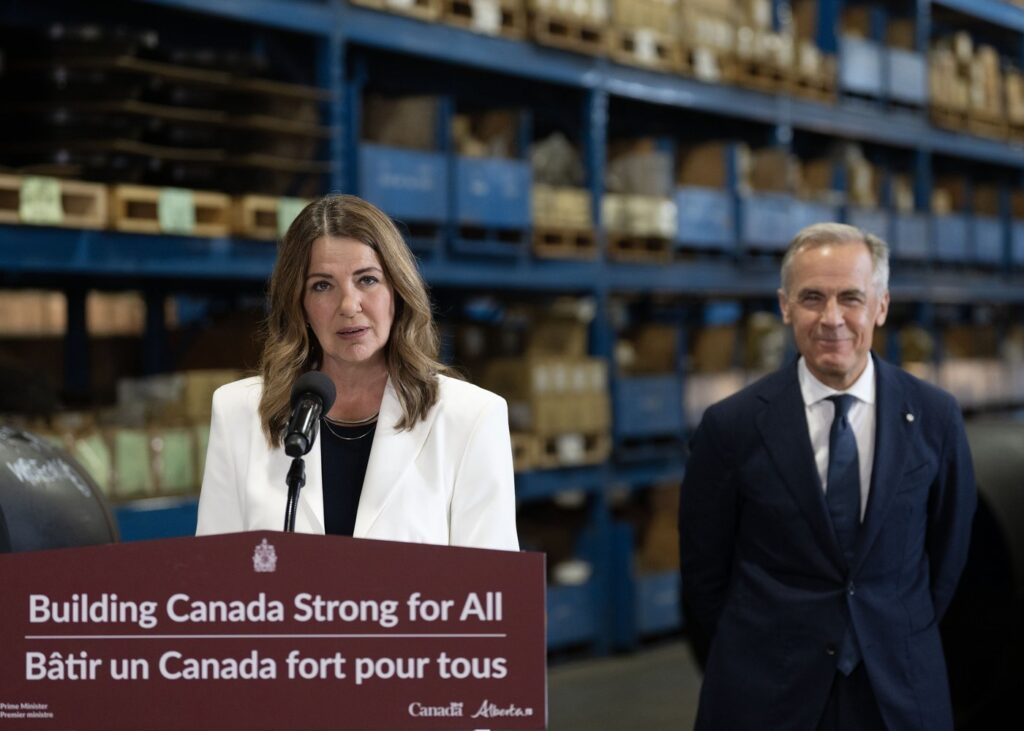
During a news conference in Toronto, Carney affirmed the importance of continued dialogue. "We have time. We have real negotiations, constructive negotiations on several issues," he said in response to questions about whether Canada should adjust its strategy or adopt a tougher stance toward the Trump administration.
Carney pointed out that Canada’s Minister responsible for Canada-U.S. trade, Dominic LeBlanc, is currently in Washington, joined by Canada’s chief trade negotiator Janice Charette, for a series of meetings intended to advance the negotiations. The pair had also traveled to Washington the previous week, meeting with U.S. Trade Representative Jamieson Greer.
The potential new tariffs are particularly significant, as they would be imposed at a higher rate than previous measures and would affect a broad spectrum of Canadian goods. Unlike earlier tariffs, these measures would not include exemptions for products that comply with the Canada-United States-Mexico Agreement (CUSMA).
The White House indicated that the latest tariffs are a reaction to provincial restrictions on alcohol, Canada’s supply management system for dairy products, and specific automotive quotas. In retaliation, Carney previously mentioned that trade negotiations with the United States would intensify in their efforts to counteract these tariffs.
The ongoing tariff dispute initiated by President Trump has now persisted for over a year. In early July, the United States declared it would not renew CUSMA in its existing shape as Canada and Mexico had anticipated. Instead, the U.S. activated an unprecedented annual review process.
Last month, Minister LeBlanc expressed concerns about the uncertainties that surround the review process initiated by the Americans. "We have suggested bringing structure and rigour to the review process the Americans have initiated," LeBlanc stated, noting that the annual review could be renewed each year for a maximum of ten years. Without a mutual agreement among the three countries, CUSMA could expire after its current term concludes in 2036.
Canada is hopeful that bilateral negotiations with the United States may eventually lead to a reduction in sector-specific tariffs, particularly those on steel and aluminum. The Globe and Mail recently reported that one potential strategy under consideration involves Canada implementing export quotas on steel and aluminum to mitigate U.S. tariffs in those sectors. However, this report was based on anonymous sources and could not be independently verified by The Canadian Press.
When questioned about the possibility of establishing export quotas, Carney refrained from making a commentary on the matter, stating, "This is not the time to trigger the options, but we have options." Meanwhile, LeBlanc's office informed that the minister had also met with Jay Timmons, the president and CEO of the National Association of Manufacturers, prior to a meeting with Republican senators Kevin Cramer of North Dakota and Bill Hagerty of Tennessee.