HALIFAX – On Wednesday, Nova Scotia's Court of Appeal delivered a landmark ruling, stating that the province cannot deny enhanced income support to unhoused individuals living in tents. This decision overturns a previous ruling by the Nova Scotia Supreme Court, which had found that Bradley Lowe did not qualify for enhanced income assistance due to his living situation.
The unanimous decision, made by a panel of three judges, highlighted that the province's income assistance regulations rely on the term "accommodations." The judges explicitly disagreed with the province’s assertion that a tent does not qualify as an accommodation, indicating there were no legal grounds to exclude Lowe’s tent from consideration. “Enhanced rate should be available to persons living in circumstances like Mr. Lowe,” the judges wrote in their ruling, which was signed by Justice Michael Wood alongside Justices Cindy Bourgeois and Elizabeth Van den Eynden.
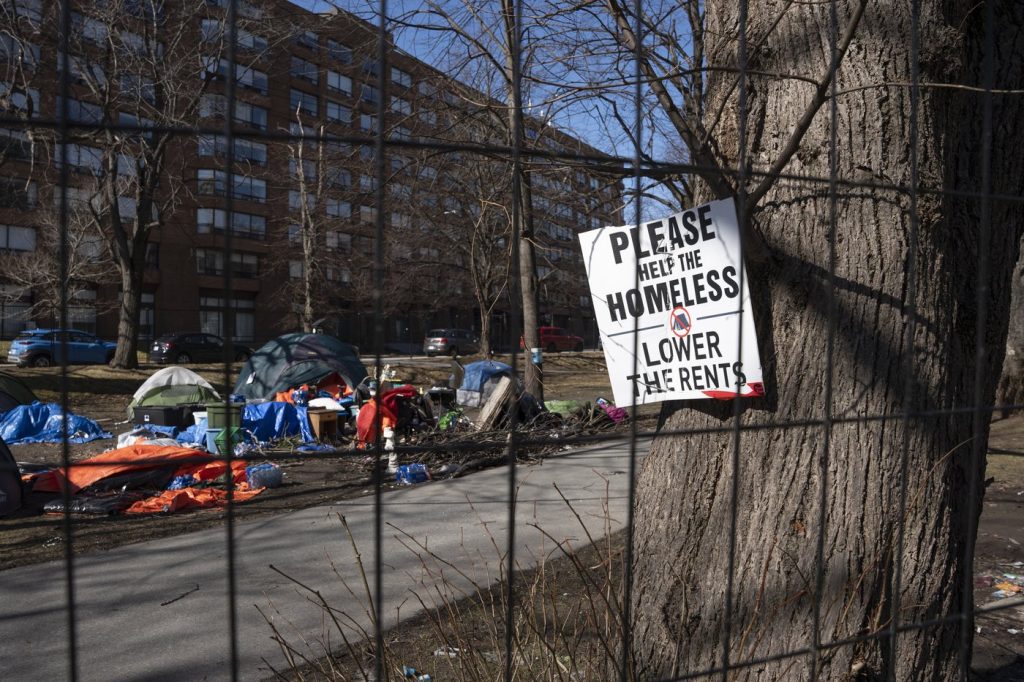
Bradley Lowe had been living in an ice-fishing tent located in Victoria Park, a central green space in downtown Halifax, when he applied for income assistance in 2023. Initially, he was approved for the essential rate of $380 per month. However, with legal assistance, he sought the enhanced rate of $974 per month, supported by medical documentation of his disability and the fact that he owned his accommodation – his tent. Despite meeting these criteria, the province’s Department of Community Services denied his request based on his unhoused status, which ultimately led to a protracted legal battle.
Lowe passed away in late 2023, but his family urged his lawyer, veteran human rights lawyer Vince Calderhead, to continue the legal fight on his behalf. The case progressed through the assistance appeal board and reached the Nova Scotia Supreme Court, where a judge maintained that Lowe's tent disqualified him from the enhanced assistance rate. However, the Court of Appeal found this reasoning to be erroneous, commanding the province and the assistance appeal board to compensate Lowe’s estate $3,000.
Justice Wood stated in the ruling, "I am satisfied that the tent owned by Mr. Lowe, and in which he resided, was his accommodation within the meaning of the regulations. He was, therefore, entitled to receive enhanced rate assistance at the time of his application in October 2023."
Emma Halpern, the executive director of the Elizabeth Fry Society of Mainland Nova Scotia, expressed her elation over the ruling, considering it a victory for recognizing the dignity of the most vulnerable members of society. "I feel like this is a win for all Canadians in that I really, deeply believe that we are only as healthy as our most vulnerable people," Halpern mentioned in an interview. She also underscored the hope that this decision might influence similar policies in other provinces.
The Elizabeth Fry Society participated as an intervener in the case, advocating for the specific challenges women face when living in tents, which include heightened vulnerability to physical and sexual violence without secure shelter. The society noted that women, often tasked as caregivers or in roles necessitating a certain physical appearance, face unique obstacles that may be alleviated by qualifying for higher assistance rates.
Halpern pointed out that losing funding and housing simultaneously can create significant barriers for individuals trying to regain stability. She expressed satisfaction with the court's rejection of the province's argument that providing additional support to women at risk of violence might encourage them to remain in tents rather than seek shelter. "I’ve never heard of anyone deciding they want to live permanently in a tent so they can get an extra couple hundred bucks a month," Halpern asserted. "The reason women are ending up in tents is because there are no beds in transition houses or women’s shelters."
This groundbreaking ruling sets a significant precedent in addressing housing insecurity and the related support systems for individuals living in vulnerable conditions within the province of Nova Scotia.