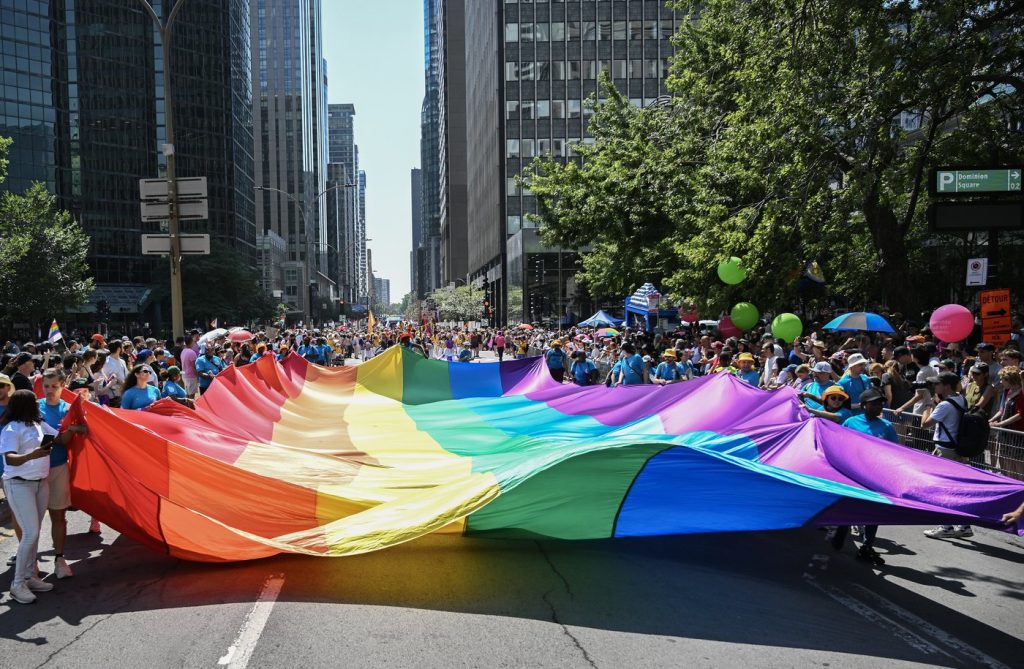
In Montréal, as pride month celebrations unfold throughout Quebec, political candidates from sexual and gender-diverse backgrounds are raising alarms about a surge of hateful messages targeting them in the lead-up to the provincial election this fall. The party Québec solidaire highlights a distressing wave of online hate directed towards its LGBTQ+ candidates, with party president Roxane Milot describing the situation as “exceptional” and “alarming.” Milot, who identifies as bisexual and is running in a Montreal riding, expressed concerns that this online violence discourages individuals from diverse backgrounds from pursuing political careers.
Milot stated, “There’s a direct link. We’ve seen that for many people from diverse backgrounds—whether they’re queer, women, or racialized—it’s been harder to convince them to run.” She noted that LGBTQ+ organizations have reported that the climate of hate is worsening daily in Quebec, making it increasingly alarming. Recently, Milot herself faced hateful messages and trolling on social media.
In a notable incident, Québec solidaire made headlines when one of its candidates, Vanessa Durand, withdrew from the race after posting hateful remarks targeting Parti Québécois supporters within LGBTQ+ communities. The offensive post was deleted, and Durand subsequently apologized for her comments and retracted her candidacy.
Philippe Schnobb, a new Parti Québécois candidate who identifies as part of the sexual and gender-diverse community, also reported regularly receiving homophobic messages, some evolving into threats. Since entering politics in January, Schnobb has noticed a marked increase in such negativity compared to his previous role as president of Montreal’s public transit agency. “It’s not pleasant, especially when it turns into threats,” he remarked. One troubling comment on his social media post contained homophobic slurs and an explicit threat: “a 2x4 is waiting for you.” Although he mentioned receiving “intolerable remarks,” Schnobb does not plan to take legal action at this moment and urged for a reduction in hostility as the election date approaches.
Liberal Leader Charles Milliard, who is openly gay, was asked earlier in February if Quebecers were ready to elect a gay premier, to which he responded, “we’ll see.” He emphasized the inherent rights of every Quebecer to vote and stated, “Politics is about doing public things, and I have no intention of hiding who I am from Quebecers.” In an effort to stand against the tide of hatred, Milliard denounced the homophobic remarks directed at him on International Day Against Homophobia and Transphobia.
Philip Laflamme, a senior adviser for content and communications at the Liberal party, recognized that homophobic and transphobic remarks are pervasive issues affecting all major political parties. He noted that even candidates not directly part of the sexual and gender diversity community can face such insults, particularly due to their association with a leader who identifies as gay.
The communications director for Coalition Avenir Québec Leader Christine Fréchette stated that the party is closely monitoring candidates' social media accounts and strongly condemns such attacks. Éric Duhaime, Leader of the Quebec Conservative Party and an openly gay politician, confirmed he has received hateful comments but prefers not to give them undue attention.
In light of the rising tide of online violence against candidates, some political parties have adapted their strategies. Milot mentioned that Québec solidaire has established support groups and a remote assistance service to aid candidates who require help. Similarly, the Liberal party has developed a support structure and conducts training sessions to prepare candidates for managing violent situations.