VATICAN CITY (AP) – Pope Leo XIV returned to the Vatican on Saturday, just days after undergoing surgery for lung cancer. This significant medical event marked the first major health issue of his 17-month papacy. His surgeon, Dr. Stefano Margaritora, indicated that there are "no clinical reasons" preventing the pope from embarking on his scheduled trip to Latin America next month.
The pope, who is 71 years old, had a lower lobe of his right lung removed due to adenocarcinoma, the most common type of lung cancer. The surgery took place on Tuesday, and the recovery has been swift, resulting in his early discharge from the hospital, ahead of the week-long stay originally anticipated by the Vatican. Dr. Margaritora expressed confidence in the pope's recovery, stating that he expects Leo to be fully healed in about ten days. Despite the upcoming November 6-17 trip to Uruguay, Peru, and Argentina—which involves a dozen flights and two helicopter rides to high altitudes—Margaritora assured that there are no medical concerns regarding the travel.
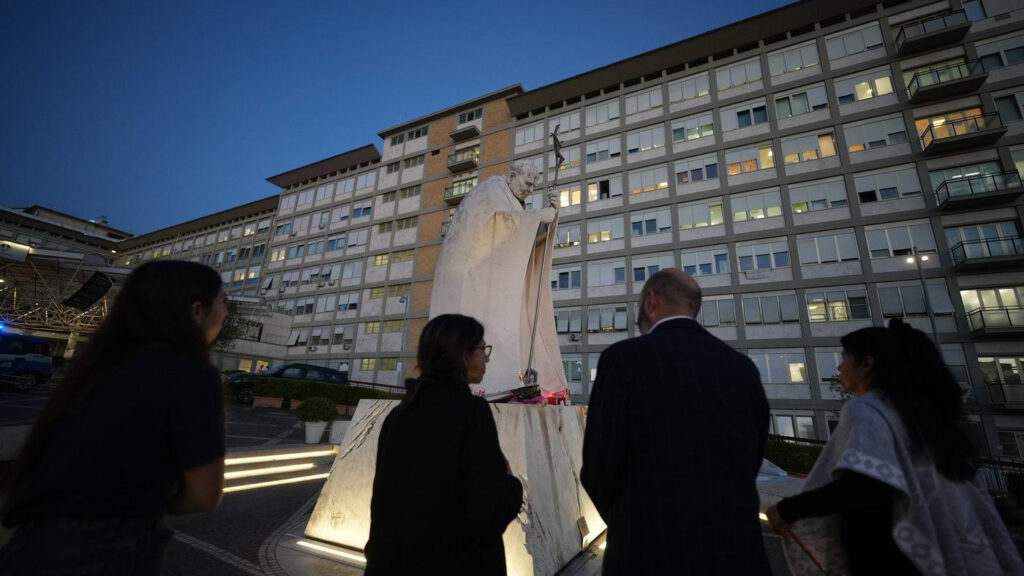
Upon leaving the hospital, Pope Leo XIV expressed his gratitude for well-wishes and reported feeling "much better." Accompanied by his surgeon, he greeted patients and waved to supporters outside, receiving heartfelt applause and shouts of "Holiness." Notably, he interacted with a 13-year-old Ukrainian girl who presented him with a homemade papal doll, which provided her comfort during her successful battle with cancer. This young girl had previously met the pope at an audience in St. Peter’s Square last December, where she felt inspired to overcome her illness.
Since the surgery, the pope has shown impressive signs of recovery. He has engaged in meaningful conversations, including a phone call with Russian President Vladimir Putin, held discussions with senior aides, and even celebrated Mass in a makeshift hospital chapel. Looking ahead, Pope Leo is set to resume his official duties on Sunday by delivering the traditional Angelus blessing to the faithful gathered in St. Peter's Square. This event comes just one week after he candidly revealed the discovery of a nodule that necessitated surgical intervention to the crowd in the square, an unusually transparent sharing by the Vatican.
Dr. Margaritora elaborated on the tumor's discovery, explaining that it was detected incidentally during routine abdominal examinations. The nodule appeared as "a small spot" located at the lung's base, close to the diaphragm. He noted that had the tumor been positioned higher, it likely would not have been identified. Thankfully, the cancer was found at an early stage, as the pope had been experiencing no respiratory symptoms and felt healthy prior to the diagnosis. Margaritora described the procedure to remove the lung lobe as "routine" and executed without complications, though he acknowledged the emotional weight of operating on a pope, especially given its historical significance in modern times.
The Vatican chose to withhold details about the tumor’s malignant nature until after the surgery was successfully completed. A prior biopsy had been conducted before Pope Leo’s admission to Gemelli Hospital, where the surgery took place. Medical experts pointed out that state-of-the-art Ion robotic bronchoscopy could have provided preliminary insights into the malignancy of the tumor and whether it had spread to the lymph nodes.
Histological testing of the tumor and the associated lymph nodes is currently in progress. The outcomes of these tests, along with information regarding the tumor's molecular and genetic profile, will guide the medical team in determining whether additional treatments are necessary. Potential treatment options could range from chemotherapy and immunotherapy to targeted oral therapy tailored to the tumor's genetic characteristics. Dr. Margaritora remarked on the pope's remarkable resilience, stating that his recovery has seemingly required "very little assistance from us," attributing much of the progress to the pontiff's commendable determination to recover quickly.