Impact of Dockworkers' Strike on Labor and Technology in Europe
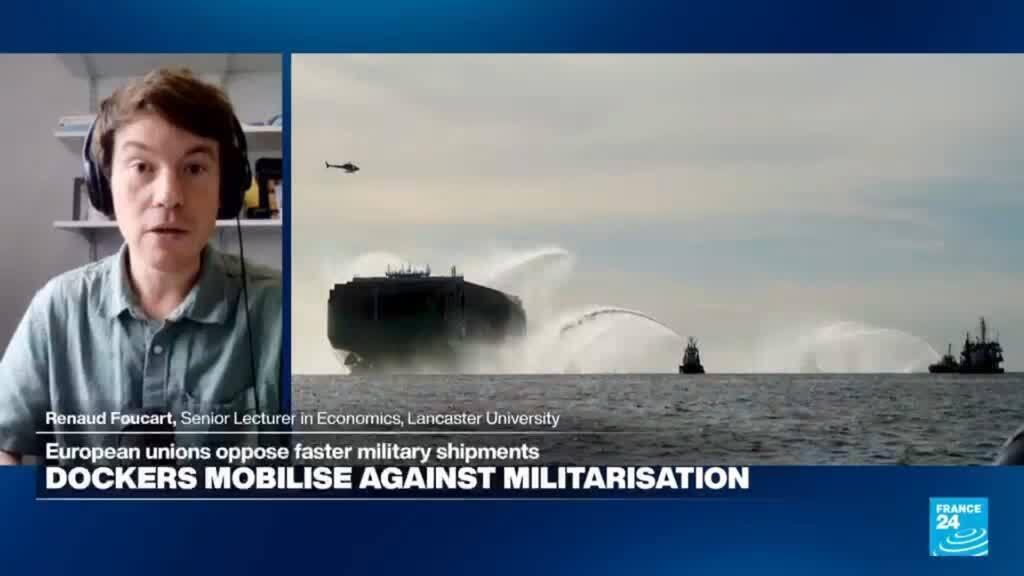
Carys Garland has introduced Renaud Foucart, a Senior Lecturer in the Department of Economics at ECARES, Lancaster University. Foucart’s insights revolve around a recent international strike by dockworkers, which highlights the intricate relationship between organized labor, technological advancements, and the ongoing military investments in Europe. His analysis provides a detailed examination of how the actions of dockworkers can influence broader economic and policy frameworks in the contemporary context.
The essence of Foucart’s argument lies in the strategic positioning of dockworkers within global supply chains. He posits that their unique role grants them significant leverage in negotiations, particularly regarding changes in labor conditions and the automation of ports. “They know how powerful they are,” he states, pointing out that the dockworkers have an acute awareness of their crucial contribution to the global economy. This confidence enables them to assert pressure on policy makers, especially in light of increasing military expenditures across Europe.
Foucart specifically addresses the emerging intersection of labor struggles and technological changes. As ports globally are adapting to advancements such as automation and artificial intelligence, dockworkers find themselves at the forefront of these transitions. Their ability to mobilize through strikes and collective bargaining creates an opportunity for them to negotiate better working conditions, even amidst the pressures of automation. “They can get those concessions. And I think they will get them,” he asserts, suggesting an optimistic outlook on the potential outcomes of their activism.
The international dockworkers' strike may serve as a catalyst for broader discussions regarding the role of labor in reshaping military policy and investment. Given that European nations are significantly ramping up their military spending, the implications of dockworker negotiations extend beyond wages and hours—they may impact the future allocation of resources within military infrastructures. Foucart emphasizes that as dockworkers secure concessions, there may be a ripple effect that influences how military capabilities are integrated with supply chain management. This dynamic brings to light the necessity for policymakers to engage with labor organizations seriously, recognizing that decisions made in response to labor demands can shape military and economic strategies fundamentally.
Throughout his argument, Foucart also raises questions about the ability of dockworkers to redirect military policy. While he acknowledges their leverage in negotiations, he remains cautious about the extent to which labor can influence military strategy directly. The conversation surrounding military investments is often complex and intertwined with national security concerns, which can complicate labor negotiations. Nonetheless, the growing awareness among workers of their influence signifies a shift in the paradigm of labor-power dynamics within Europe.
Foucart’s perspective illustrates a significant moment in the labor movement, especially concerning sectors that are increasingly affected by technological innovations and governmental priorities. As dockworkers rally for their rights, their push for better working conditions and concessions regarding automation will likely set a precedent for other sectors facing similar challenges. By fostering cooperation among labor groups and advocating for transparent dialogues with policymakers, dockworkers may pave the way for a new model of labor relations that prioritizes both worker rights and technological adaptation.
In summary, Renaud Foucart's exploration of the international dockworkers' strike underscores the shifting landscape of labor relations, particularly in the face of technological progress and military investment in Europe. This situation not only highlights the potential for labor to negotiate vital concessions but also suggests a critical intersection of economic and military policies that warrants close scrutiny from all stakeholders involved.