VANCOUVER — Zoe Grames-Webb, one of the plaintiffs in Canada's first youth-led climate trial, shared her poignant memories of waking up to a "completely grey wall of smoke" during the devastating 2017 wildfires on British Columbia's Sunshine Coast. At the time, Grames-Webb was just 11 years old, and the smoke was so thick that it obstructed her view of the islands across Howe Sound, which she had previously enjoyed.
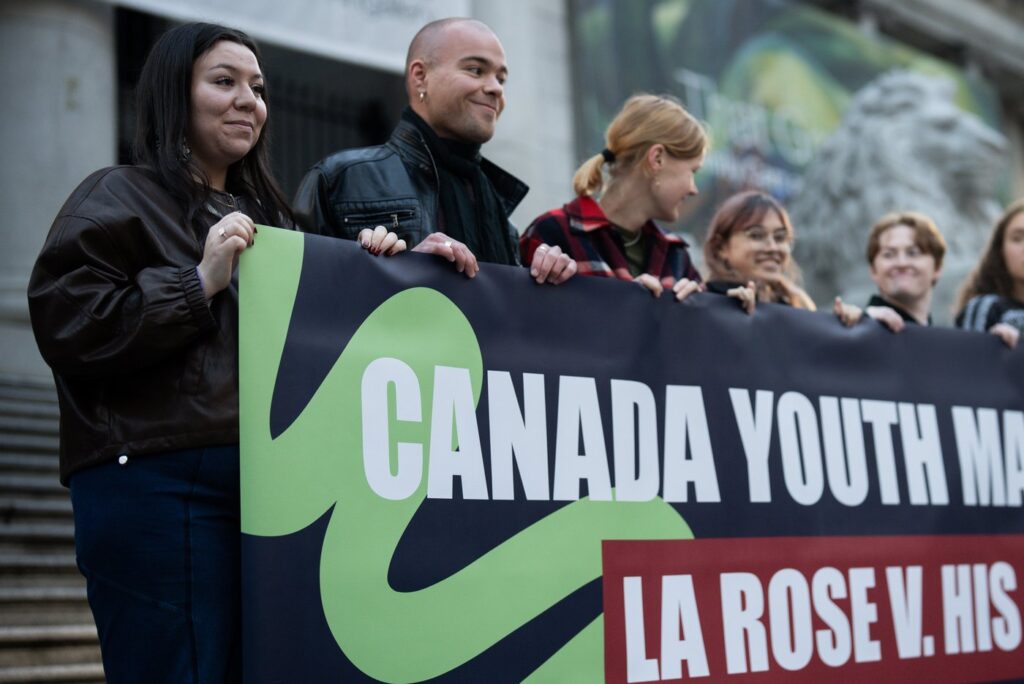
Reflecting on that moment, Grames-Webb testified, "I was extremely concerned because I was thinking about how thick the smoke would have been to just not (be) able to even see the islands across the water." This stark memory has lingered with her, marking her first significant encounter with the consequences of climate change. Now, at age 20, Grames-Webb is part of a group of over a dozen Canadian youths suing the federal government, asserting that existing federal legislation infringes upon their constitutional rights by allowing the continuation of high greenhouse gas emissions.
Grames-Webb recounted further struggles during the 2020 wildfire season, a time that also coincided with the COVID-19 pandemic. Unable to engage in outdoor activities like running and hiking, Grames-Webb experienced physical symptoms including intense headaches and respiratory discomfort from the smoke. She emphasized the importance of outdoor activities for her mental well-being, revealing how the smoke not only limited her physical activities but also exacerbated her anxiety.
The trial has thus far featured testimonies from 10 of the 15 plaintiffs along with various experts in fields such as renewable energy, emissions reduction, and health implications of climate change. Among the expert witnesses is Dr. Elizabeth Pinsky, a pediatrician and child psychiatrist, who commenced her testimony by discussing the multifaceted risks posed to children by climate change, including heightened vulnerability to extreme heat and air pollution, as well as increasing rates of anxiety and depression.
During a cross-examination on Friday, government lawyers suggested that Dr. Pinsky had integrated climate advocacy into her medical career. She countered the assertion by stating that pediatricians often view advocacy as a critical component of promoting patient health. "There are statements or positions or things that are considered advocacy that in a different political climate might just be considered good sense and caring for children," Pinsky remarked.
Notably, this testimony marked Pinsky's fourth appearance in youth-led climate litigation over the past three years, including cases against the U.S. Environmental Protection Agency. Pinsky, a founding member of Climate Code Blue, explained that the health impacts of climate change are irrefutable, citing medical literature that demonstrates worsening health outcomes as climate change accelerates. She described the burden placed on children as particularly unique, highlighting the reality that those responsible for safeguarding their future are not only failing to act but are doing so knowingly.
In her report for the court, Pinsky emphasized that even minimal exposure to wildfire smoke is harmful, asserting that "near-zero exposure" is the goal for protecting public health. When questioned about preventive measures, Pinsky argued against a logic where healthcare systems refrain from treating preventable conditions simply because they can be treated once they arise. She illustrated this by likening it to smoking and lung cancer treatment: "We do not tell our patients to go ahead and continue to smoke."
The final witness on Friday, Sarah Newton, a substitute teacher from Smithers, B.C., shared her experiences of conducting classes in stifling temperatures that soared to 30 degrees Celsius. She expressed concern over how such conditions affected her students and their learning experiences. Newton, who identifies as a social justice advocate, noted that her students often voiced worries about the environment, with comments reflecting fear for animals and concern over their own futures.
In a reflective moment, a lawyer for the federal government asked Dr. Pinsky whether engaging in a lawsuit could serve as a means of addressing climate anxiety. Pinsky's reply underscored the uncertainty inherent in legal actions, stating, "It depends on how the lawsuit turns out."