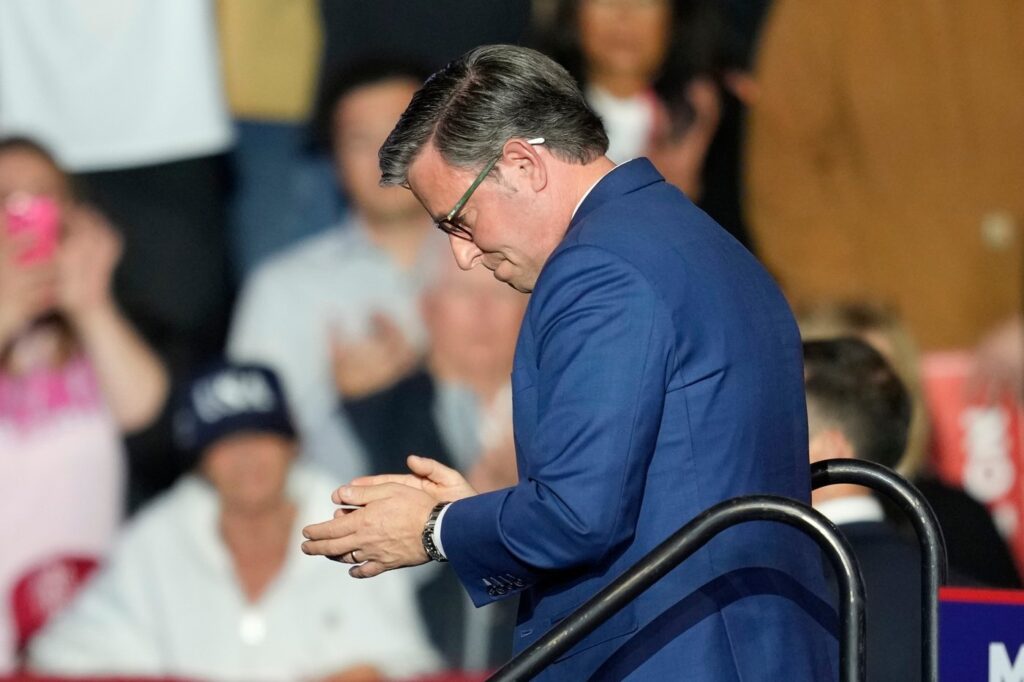
WASHINGTON (AP) — House Speaker Mike Johnson has decided to step back from Republican Party leadership following significant electoral losses for the GOP in the recent midterm elections. He will not seek support to continue as House minority leader when the new Congress convenes in January, as confirmed by two anonymous sources.
Johnson, who secured reelection for a sixth term representing his Shreveport-area district in Louisiana, is expected to remain in the House as a regular member rather than as a leader.
His rapid ascent to and subsequent departure from leadership is remarkable. Johnson was viewed as an unintentional speaker, yet he fostered a close relationship with President Donald Trump and led the House GOP during a tumultuous period characterized by one of the slimmest majorities in recent history.
This transition opens the door for an intense internal struggle within the party to identify the new GOP leader, especially after Democrats seized the House majority.
House Majority Leader Rep. Steve Scalise of Louisiana expressed his intentions to run for minority leadership in a letter to colleagues, stating that the election outcome was worse than anticipated and highlighting the critical stakes involved. Rep. Jim Jordan of Ohio also announced his bid for the position, presenting himself as “battle-tested.”
The election for the new House leader among Republicans is scheduled to take place when members-elect convene in Washington next week. The anticipated showdown is likely to see Scalise facing off against Jordan, both of whom had previously sought leadership roles, only for Johnson to emerge as the consensus choice amid their split support.
The decision by Johnson comes in the wake of a disappointing electoral performance by the GOP, which was unable to defy historical trends that typically see the party in power suffer losses during midterm elections. Despite Johnson’s optimistic assertions that Republicans would retain power, the party faced a severe defeat, diminishing his pathway to maintain leadership.
The gavel of the House Speaker is anticipated to shift to the Democrats, with them preparing to nominate House Democratic Leader Hakeem Jeffries of New York for the role. The election for speaker will take place early in the new Congress, on January 3, 2027.
Johnson initially ascended to the role of House Speaker in 2023, following the ouster of previous GOP Speaker Kevin McCarthy, marking a historic coup within the House. His rise to prominence was characterized by the inability of Republican colleagues to reach a consensus on a successor to McCarthy, paving the way for Johnson, who had previously distinguished himself by rallying support for Trump's deceptive claims concerning the 2020 election.
During his tenure, Johnson aligned himself closely with Trump, engaging in regular communication with the former president and detailing their interactions in a manner that echoed Trump’s voice. He played a pivotal role in the passage of a significant package of tax cuts and social service reductions that were signed into law by Trump and shielded the administration from difficult votes, including a recent attempt to impeach Defense Secretary Pete Hegseth.
Moving forward, the intra-party competition within the House GOP is expected to reflect the ongoing ideological divisions between the party's more traditional conservative faction and its far-right supporters. Scalise, with his strong connections in the business and energy sectors, appears favored by the conservative elements, while Jordan, known for his aggressive style and leadership of the Judiciary Committee, has garnered backing from the far-right, including members of the Freedom Caucus.
Both Scalise and Jordan previously jockeyed for the Speaker position after McCarthy’s removal but failed to secure the necessary majority support, resulting in Johnson ultimately taking the role. This upcoming leadership election is poised to reignite these intra-party tensions as the GOP navigates its future direction.