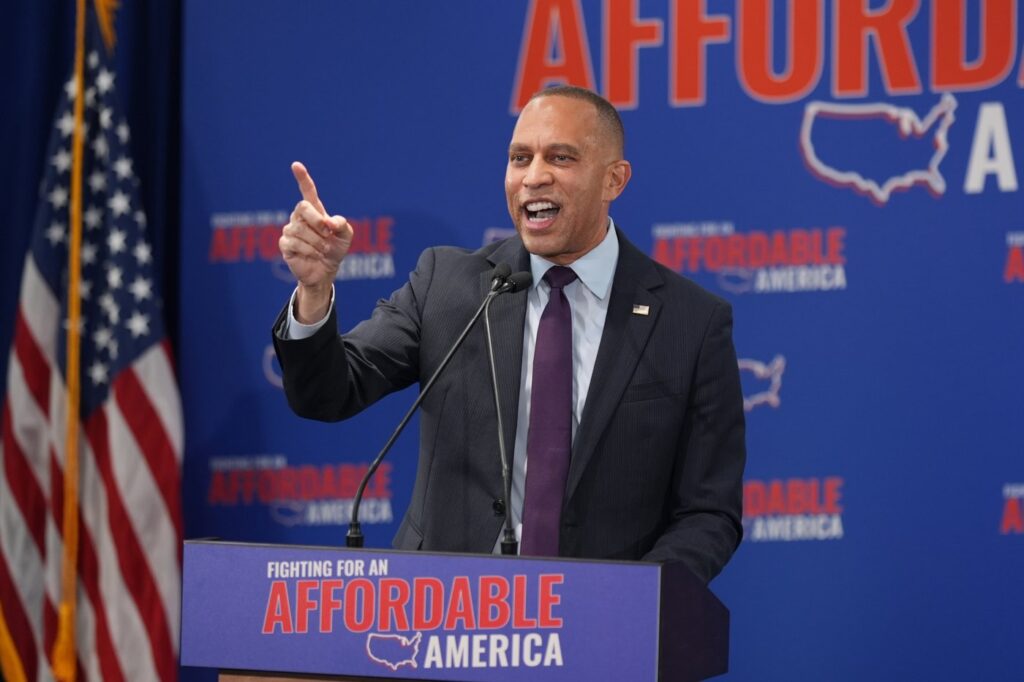
AUSTIN, Texas – In a groundbreaking election on Tuesday, Democrats in Texas achieved significant victories across the state, effectively breaking the long-standing Republican dominance that has persisted for decades. This electoral success includes the flipping of a U.S. Senate seat, regaining control of the governor's mansion, and taking over the Texas House of Representatives. The results shocked many and signified a potential political realignment in a state that had been a stronghold for the Republican Party.
The Democratic candidates' wins underscored a widespread voter dissatisfaction with current economic conditions, characterized by high prices and concerns over government corruption. Voters decisively rejected the Republican Party, historically aligned with former President Donald Trump, in a state of nearly 32 million people that ranks among the world's largest economies. This election marked a clear shift as Democrats reclaimed counties along the Mexico border, traditionally seen as Republican territory, and flipped congressional seats, defying the odds set by a gerrymandered electoral map.
James Talarico, the newly elected U.S. Senator, addressed supporters after defeating Republican Attorney General Ken Paxton, stating, "This win is for every Texan who has ever wondered if anyone is ever listening." He emphasized that the Democrats heard the people's grievances, signaling a new era for Texas politics.
Prior to this election, Texas Democrats had not triumphed in a statewide campaign since 1994. The successful candidates include James Talarico and Gina Hinojosa, who made history by becoming Texas' first Latina governor after ousting incumbent Republican Governor Greg Abbott. Additionally, Democrats won crucial positions such as lieutenant governor and attorney general, affirming the long-held belief that changing demographics in Texas could lead to political shifts.
The Republicans' loss in Texas is particularly alarming at the national level, given the party's dependence on Texas to secure pathways to the presidency. Outgoing Florida Governor Ron DeSantis expressed concern over the Democratic sweep, indicating that losing Texas represents a significant setback for the Republican Party.
Looking forward, the challenge for Democrats lies in effectively governing amidst these newly won positions. Hinojosa's approach to governance will likely initiate a remarkable shift in the political landscape of the Texas Capitol, where conservative policies on issues like abortion, immigration, and gun rights had previously dominated. The Democratic campaign focused not on reversing existing policies but rather on addressing issues of affordability and corruption, resonating with voters frustrated with the GOP's prioritization of culture war issues.
Hinojosa studied under the more progressive banner while serving as a legislator but has now adopted a broader populist approach, focusing on economic issues exacerbated by tariffs and international conflicts. She affirmed that, "The voters have delivered a mandate for change," committing to pursuing a forward-looking agenda that prioritizes progress over partisanship.
A notable shift occurred in border counties, where Democratic support surged back from Trump’s influence two years prior. An extensive voter poll revealed that Talarico secured a diverse coalition, winning the majority of young voters and Hispanic voters in Texas. Approximately three-quarters of voters under 30 and about 60% of Hispanic voters supported Talarico, signaling a stark change in the electorate's preferences compared to the previous election cycle where Trump won Texas by double digits.
As the Texas Republican Party contemplates its future, challenges loom large for the party, with Lt. Gov. Dan Patrick acknowledging the need for serious work to regain control. Voters, exemplified by residents like Karen Sites and her daughter Sofia in the suburb of Dripping Springs, expressed optimism about the new Democratic leadership, particularly regarding pressing social issues like LGBTQ+ rights and environmental concerns.
The election results represent a significant turning point for Texas politics, showcasing a shifting landscape that could have lasting implications for both state and national elections.