On the occasion of his 50th birthday, Dale Flood had planned a special trip to New York City with his family to watch the Buffalo Bills play. However, their Saturday morning flight was canceled due to a four-hour freeze on U.S. air traffic. Flood, a resident of Vancouver, worked tirelessly to find alternate flights for himself, his wife, and their 11-year-old son but to no avail. As a result, the family will now arrive in New York on Sunday, too late to attend the highly anticipated NFL game, leaving them feeling disappointed.
“It’s sad,” Flood expressed in a phone interview. “It’s hard to watch an 11-year-old cry. It’s hard to go through all of October and November really looking forward to this, to that time in New York.”
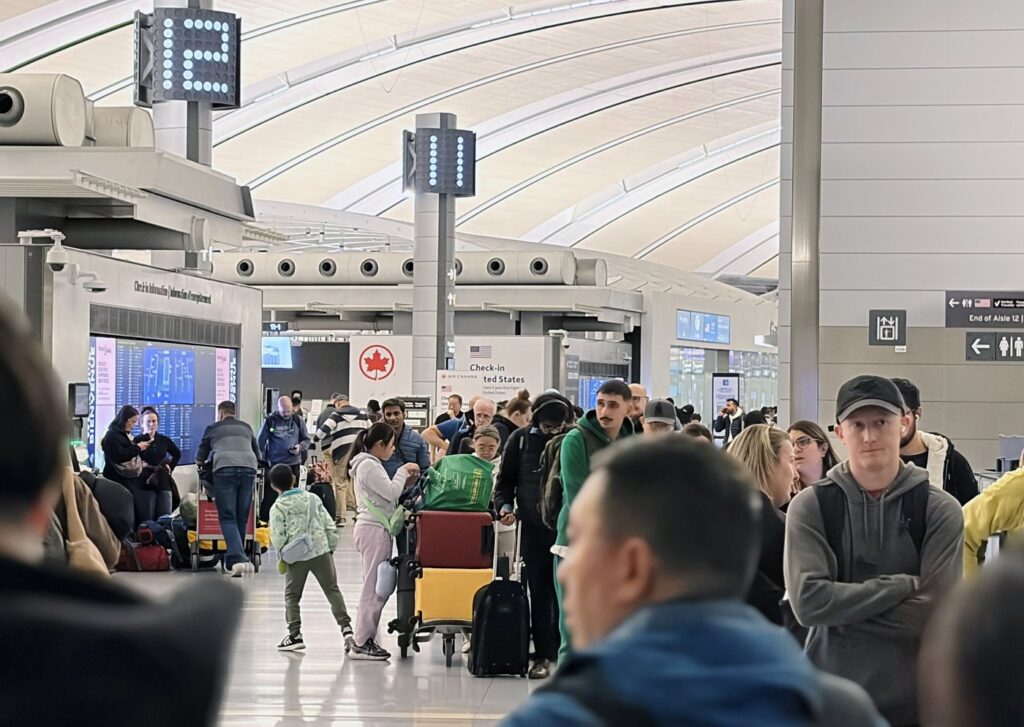
The air traffic freeze caused significant disruptions across Canadian airports on Saturday as airlines scrambled to inform passengers about delays, and many travelers found themselves on hold for hours trying to obtain updates. Canadian airports from Vancouver to Halifax reported delays, and Toronto Pearson International Airport even had to call in additional staff to manage the busy travel day.
Flood recognized that the disruption was unexpected and felt that there was little he could have done to reach New York on time. He expressed frustration over not being able to connect with a customer service agent at Air Canada, wishing he could talk to someone directly.
Edward Langer, who traveled to New York with his 15-year-old daughter, also experienced complications due to the air traffic freeze. His Saturday flight back to Edmonton was pushed back by about four days, resulting in several missed days of school and work, along with thousands of dollars in extra hotel costs. Like Flood, Langer was unable to reach his airline, Porter Airlines, despite spending hours on hold.
“When you go on some of the travel sites to book hotels, (the price) is just doubling and tripling,” he noted, emphasizing the frustration travelers faced.
The chaos in air travel stemmed from a ground stop order issued by the U.S. Federal Aviation Administration (FAA) on Friday, which halted air traffic in the U.S. for more than four hours. The grounding was attributed to new technology being added to the air traffic control system, which overloaded outdated equipment, leading to intermittent communication and radar issues. Investigation into the malfunction is ongoing.
Air Canada reported canceling approximately 250 flights due to the FAA order, affecting around 27,000 passengers. Yasmine Mehdi, an Air Canada spokesperson, acknowledged the significant disruption and noted that it would take some time to return to normal operations with continued cancellations as aircraft and crews remained out of position across the airline's network.
Both Porter Airlines and WestJet indicated that it would likely take until the end of the weekend for flights to return to regular schedules. Porter Airlines announced they would provide refunds to customers unable to accommodate rescheduled flights, while WestJet activated its policy allowing for flexible rescheduling due to the chaos.
Isabelle Rochefort shared her experience at Montreal’s Trudeau International Airport, where she was lining up to board an Air Canada flight to Cancun, Mexico, when her flight was canceled. The confusion was heightened because her flight did not involve any travel to the U.S., leaving her uncertain about her next steps. Eventually, she managed to retrieve her bag and arrange for a ride home to Sorel-Tracy, over an hour away. Rochefort has since been rebooked on a new flight for Sunday, although she would need to pay for another expensive trip to the airport.
Despite her frustrations, Rochefort expressed some understanding of the situation, stating that both the airport and airline seemed to manage as best as they could under the circumstances. She raised the pertinent question of whether passengers would receive compensation for the disruption, noting, “That remains to be seen.”