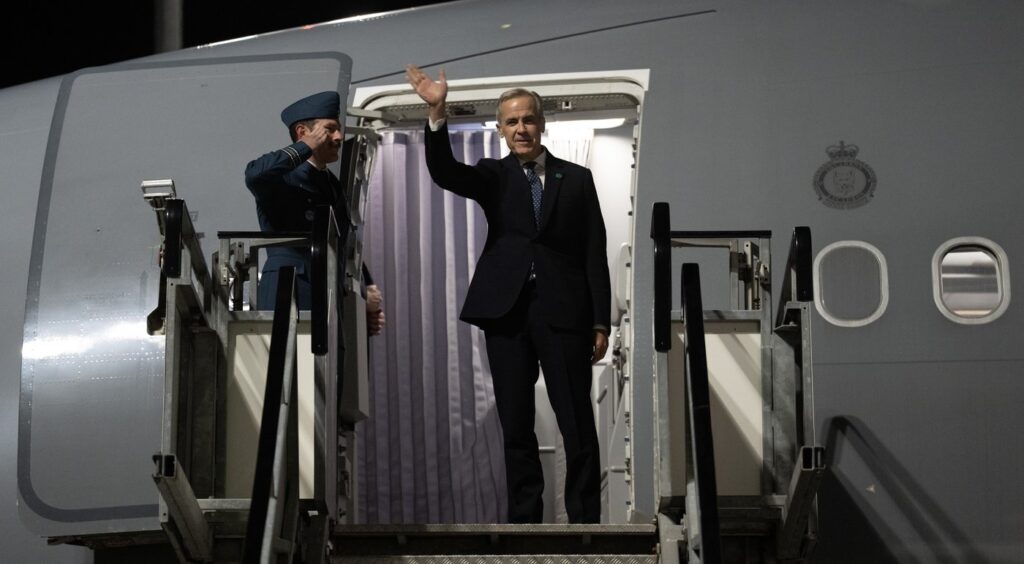
MANILA — Prime Minister Mark Carney has concluded a brief visit to the Philippines and is now headed to Cambodia as part of an initiative by the Canadian government to enhance trade access in the region.
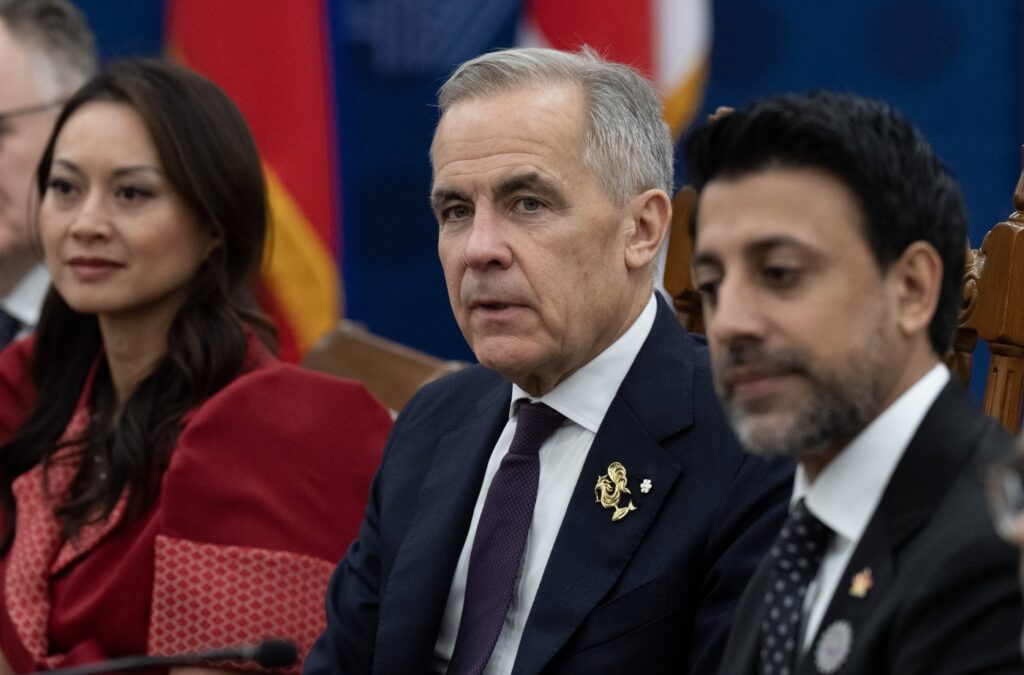
During his one-night stay in Manila, Carney participated in a summit organized by the Association of Southeast Asian Nations (ASEAN). Notably, he announced the successful conclusion of free-trade negotiations with the Philippines and introduced funding aimed at the protection of tropical rainforests.
Trade Minister Maninder Sidhu provided statements to reporters regarding the significance of Canada’s role in the global economy. “What Canada presents is certainty to the world,” he asserted on Sunday, which was late Saturday in Canada.
Carney was invited to the summit alongside other foreign leaders, including U.S. President Donald Trump, by the Philippine chair, which is currently holding the rotating presidency of ASEAN, a bloc comprising 11 countries. Ottawa is also engaged in ongoing discussions for a broader trade deal with ASEAN, which would provide Canada with access to smaller member nations while reinforcing its existing agreements with larger countries like Indonesia and the Philippines.
Sidhu emphasized the strategic advantages of bilateral agreements, mentioning, “You can get more into the weeds. You can upgrade later on when you’re dealing with (one deal that is) bilateral, as opposed to an agreement with 11 partners.” He noted the economic significance of the region, describing it as “the fastest growing region in the world, 700 million consumers, an economy valued at $6 trillion.”
The minister expressed optimism regarding Canadian pork producers, especially as the Philippines moves toward imposing restrictions on pork imports from various countries, including Canada. He stated, “They’ve got a global safeguards investigation … for 60 days. Canada is not the culprit, and you’ll find out once the investigation is done.”
In addition to his discussions in Manila, Carney met with Brazilian President Luiz Inacio Lula da Silva on the sidelines of the summit. During this meeting, he announced a commitment of $540 million for an initiative aimed at rainforest protection, as part of a larger project co-led by Brazil and Norway. This funding is part of a broader $6 billion pledge made by Ottawa earlier this spring to support international climate finance targeting biodiversity preservation and support for communities reliant on these ecosystems.
Lula, through an interpreter, framed the financial support as investments expected to generate profits rather than simply donations. Carney indicated further discussions with Brazil might be on the horizon, noting that Brazil is a member of the Mercosur trade bloc, with which Canada is in negotiation for a trade deal. He stated, “By May, we will also have an opportunity to discuss our economic cooperation, our largest trading partner in Latin America by far, (with) $15 billion dollars in trade.”
Currently, Carney is on his way to Cambodia for a summit of the Francophonie, which will feature a side event focused on technology trade in Phnom Penh. While in Cambodia, Carney is set to meet with Quebec Premier Paul St-Pierre Plamondon, who is advocating for increased autonomy in Quebec’s international dealings. Sidhu noted Ottawa’s collaborative approach with the province, mentioning that Quebec has many trade officers stationed in Canadian embassies worldwide and recently achieved significant sales in Asia’s aerospace sector.
Later this week, Carney will attend the Asia-Pacific Economic Cooperation summit in China, following an agreement made earlier this year with Chinese President Xi Jinping regarding the limited sale of Chinese electric vehicles in Canada. Additionally, Trade Minister Sidhu indicated that the Chinese automaker Chery is seeking Transport Canada certification to introduce lower-cost vehicles in Canada, with expectations that several Chinese manufacturers may achieve this certification by year-end.
Sidhu expressed hope that Chinese automotive manufacturers could create jobs in Canada, stating, “There is an interest from Chinese manufacturers to utilize our workforce in Canada, but before you invest billions of dollars, you need to understand the market.” He underscored the importance of reviewing successful European models and assessing their applicability within Canadian supply chains and labor force.
Despite recent advancements, Canada continues to navigate trade complications with China. Sidhu noted ongoing negotiations regarding various products, including pork, pet food, and others. Furthermore, he revealed that Canada is working alongside Beijing to create more opportunities for Canadian small and medium enterprises to sell consumer goods on Chinese online platforms like Alibaba.