Israeli forces have confirmed the killing of a senior Hamas commander, Samir Mahmoud Hassan Abu Younis, during an airstrike in southern Gaza that occurred just after midnight on Sunday. The Israeli military stated that Abu Younis was responsible for directing plans aimed at executing terrorist attacks. A statement from Hamas corroborated the commander’s death and mentioned that his funeral would take place later that day. This strike follows a previous Israeli attack in which Abu Younis' predecessor was killed two months prior. The military indicated that other Hamas militants were targeted during the operation but did not provide further specifics.
In Jordan, the State Security Court sentenced three men to death for their role in a deadly shooting at a Greek Orthodox Church that took place on October 23. The attack is noted as one of the most lethal incidents against Jordan's Christian community in decades, claiming nine lives and injuring many others during a funeral at St. George’s Church in the village of Hamoud, located south of Amman. The convicted individuals, identified as two brothers and their brother-in-law, were arrested three days post-attack following a shootout with security forces. Jordanian authorities characterized them as followers of extremist beliefs but clarified that they were not part of any specific organized group.
In Yemen, the Iran-backed Houthi group announced the release of approximately 600 detainees amid escalating hostilities. This represents the largest single release of prisoners during the ongoing 12-year civil war. A Houthi official responsible for prisoner affairs, Abdul-Qader al-Murtaza, confirmed the release. Concurrently, a coalition allied with Yemen's internationally recognized government reported a withdrawal from positions along the Bab el-Mandeb Strait, facing relentless Houthi offensives. The Southern Armed Forces stated their intent to secure the southern city of Aden, while also attempting to breach the Houthi siege around the strategic city of Taiz. Reports from Aden mention explosions, indicating that Houthis targeted the Buraiqeh district with ballistic missiles.
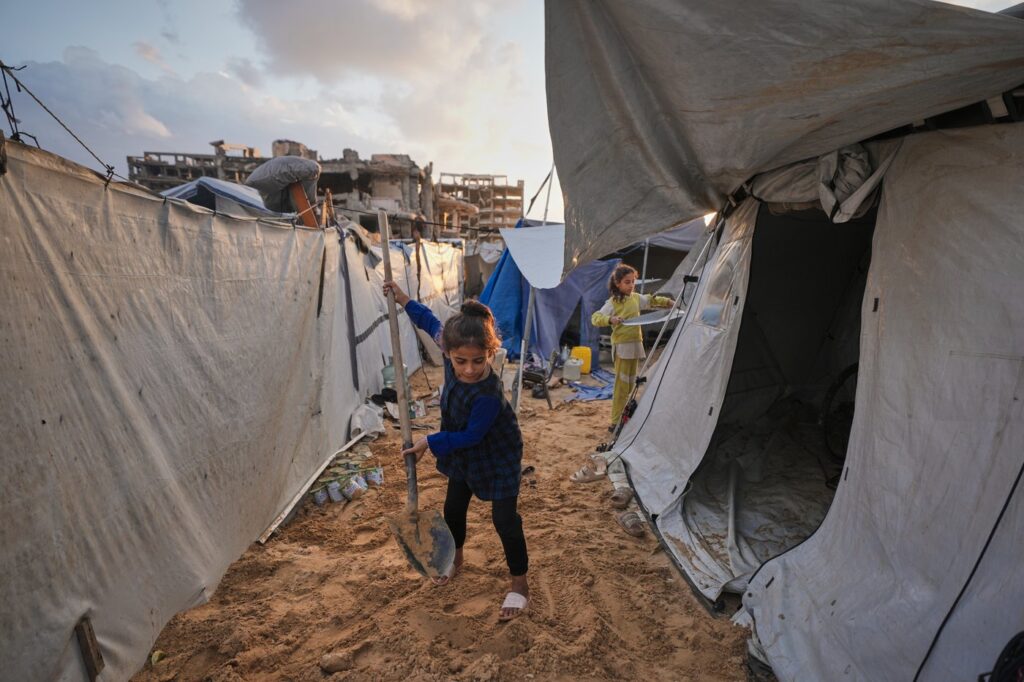
Hostilities continue to hinder humanitarian efforts in Yemen, particularly for the U.N. refugee agency, which has expressed concerns about the safety and assistance to around 9,600 African refugees. The situation remains dire in the southwestern province of Lahj, where clashes between Houthi and government forces are obstructing aid efforts.
On a different front, Iran's paramilitary Revolutionary Guard engaged in clashes with members of the Kurdish Iranian dissident group, the Kurdistan Free Life Party (PJAK), close to its border with Iraq. The IRGC reported that it "destroyed" a group of PJAK fighters intending to infiltrate Iranian territory. They allegedly confiscated a variety of weaponry and equipment during the confrontation. While the IRGC did not specify the timing of these events, PJAK claimed that an ambush by IRGC forces had resulted in the death of one of its members earlier in the week.
In Israel, the military apprehended freelance journalist Mohammad Ateeq, who works for Agence France-Presse, on suspicions of terrorism connections. Israeli forces reportedly blindfolded him and took him from his home near Jenin. The AFP has called for evidence regarding his detention, as this incident raises concerns about press freedom in the region.
Additionally, Iran’s Revolutionary Guard claimed responsibility for striking a radar system at a U.S. military base in Bahrain, according to the state-run IRNA news agency. The U.S. Central Command did not immediately respond to these claims, although it had earlier reported intercepting two Iranian drones directed toward Bahrain. Bahrain’s military confirmed that its air defense systems successfully intercepted several Iranian projectiles.
As tensions continue to escalate across the Middle East, these incidents highlight the ongoing conflict and humanitarian crises affecting the region, reflecting complex political dynamics and the fragile security landscape.