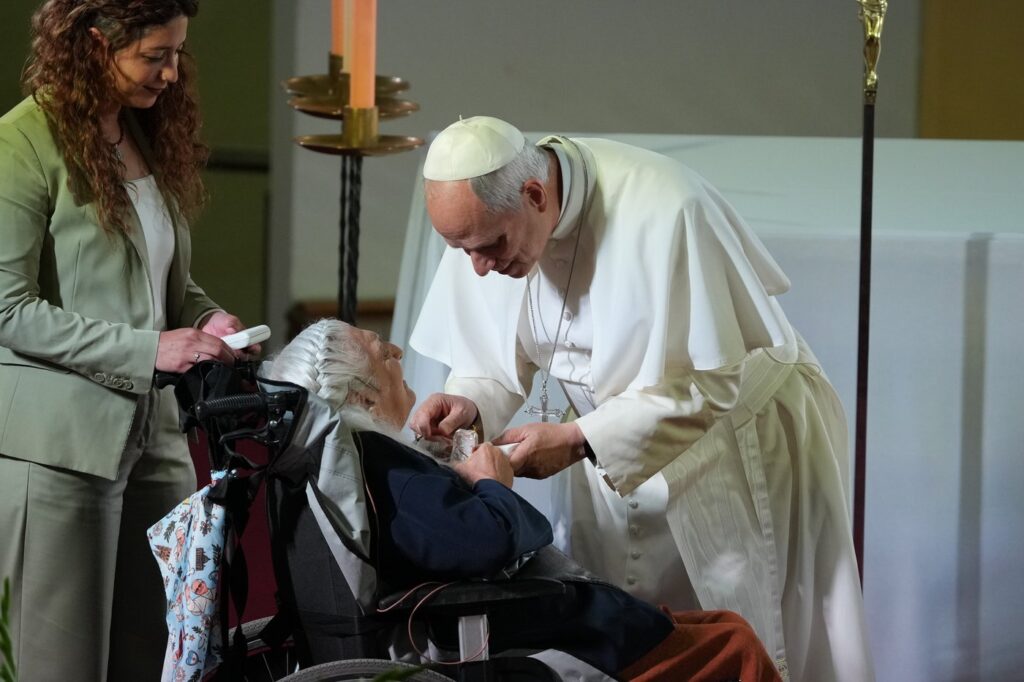
BUENOS AIRES, Argentina (AP) — A remarkable turnout of young Argentines filled the parks of Buenos Aires to hear Pope Leo XIV, who excitedly pledged a church that embraces "todos, todos, todos" — everyone, everyone, everyone. The enthusiasm mirrored a concert atmosphere, reflecting the hopes of Catholic authorities who worried that younger generations were drifting away from the faith.
Many of Leo's resonant applause lines during his visit echoed those of his Argentine predecessor, Pope Francis, signifying the unity and adoration surrounding both figures. Francis, recognized for his strong advocacy for the marginalized, became an internationally respected moral authority, yet his critiques of local politics in Argentina led to a fraught relationship with his homeland. Over a year since his death, Leo’s visit carried on Francis's legacy, helping the populace reframe their perception of Francis from a divisive figure to a beloved national icon.
Pablo Forni, a sociologist at Argentina's national research council, stated, “It’s as though it has finally become clear that Francis left a very important legacy, not just for Argentina but for the universal church. Leo is reaping what Francis sowed.” The ambiance during Leo's visit was filled with reminders of Francis, as billboards featured his image, and pilgrims were seen waving placards proclaiming “Francisco y León, un solo corazón”—Francis and Leo, one heart. Even President Javier Milei, who previously criticized Francis harshly, acknowledged him as “the most important Argentine in history” during Leo’s official welcome ceremony.
Pope Francis, known as Jorge Mario Bergoglio during his time as Buenos Aires archbishop, took significant actions during Argentina's economic crisis in 2001, mobilizing the church to provide crucial support to impoverished communities. However, his critical stance against the Peronist political movement, which emphasized social justice, created tensions. Once Francis took on the papacy, he found some support among Peronists who aligned with his critiques of capitalism. Despite this connection, conservatives were angered, believing that Peronism was responsible for Argentina's economic struggles and corruption. His gestures were often interpreted politically, further complicating his relationship with the nation.
Francis never returned to Argentina, despite invitations from multiple presidents, largely due to the political minefield he would navigate. The Rev. Lorenzo de Vedia remarked, “At first many people were thrilled to see an Argentine elected pope. But once they heard his criticism, they stopped loving him quite so much.” His outspokenness and candid nature resulted in a divided Catholic base globally, leading to clashes with Vatican officials and American conservatives.
In contrast to Francis's assertive style, Leo XIV, a Chicago-born missionary in Peru appointed by Francis, is perceived to have inherited the same causes but conveys them in a gentler manner. According to Cardinal Pedro Barreto, a close ally of Francis, “Leo XIV is clearing the path Francis laid out so that it can be traveled by every baptized member of the church.” Leo contemporaneously honored Francis throughout his visit, praying in places significant to Francis and echoing his messages. His encouragement to Argentines to “keep making a mess” reflected Francis’s advocacy for youthful engagement.
Leo's address to political leaders tackled pressing societal issues. He advocated for a human-centric economy and a careful choice of words, contrasting sharply with the drastic policies of President Milei, described as an "anarcho-capitalist." Political figures rushed to align with Leo's messages, demonstrating the broader impact of his diplomacy. Axel Kicillof, the Peronist governor of Buenos Aires province, emphasized the importance of Leo's visit in fostering dialogue amid challenging times.
Observers noted that Leo's message of unity and compassion for the marginalized resonated with all sides, an attribute that made his appearance politically strategic. Gustavo Morello, an Argentine sociologist of religion, reflected, “Had Bergoglio said the same things and visited the same places, it would have been seen as far more political.” With Leo's visit, a bridge was formed between different factions, allowing the church's humanitarian messages to transcend political divisions.