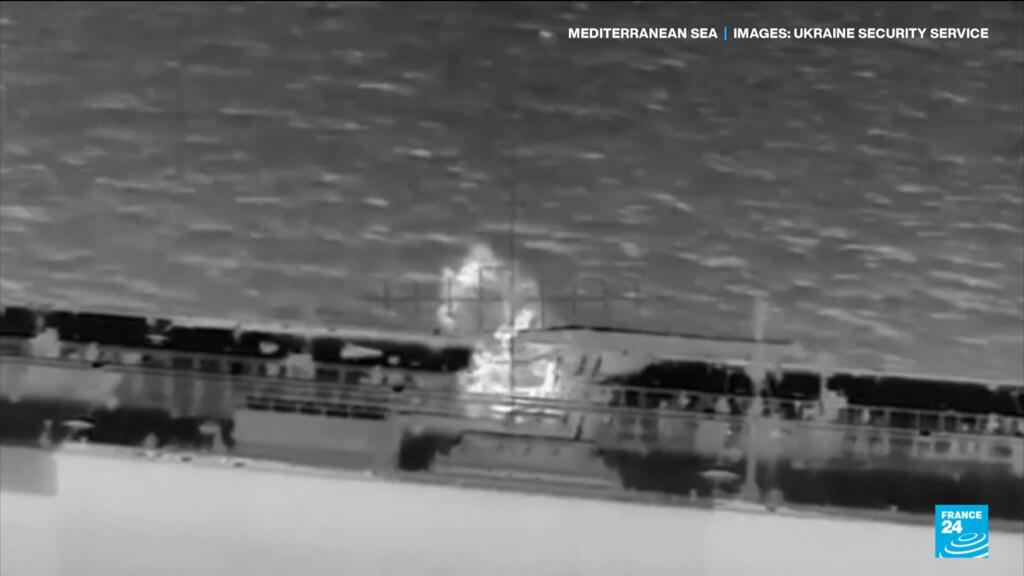
On Friday, Ukraine announced that it had successfully targeted a vessel belonging to Russia's "shadow fleet" in the neutral waters of the Mediterranean Sea. This event marks a significant development in the ongoing conflict between Ukraine and Russia, particularly as it pertains to maritime operations. The attack represents the first instance of Ukrainian drones striking a Russian vessel operating in these neutral waters, highlighting the growing tension and strategic confrontations between the two nations.
The term "shadow fleet" refers to vessels that are used to transport oil from Russia, particularly under conditions of international sanctions. These ships often employ tactics such as frequently changing flags and disguising their ownership to evade detection and restrictions imposed by Western nations. By employing this strategy, Russia has managed to continue exporting oil, despite substantial sanctions aimed at crippling its energy revenue streams.
This recent drone strike by Ukraine underscores its commitment to targeting the logistics networks that support Russia's economy amid the ongoing conflict. The Mediterranean Sea, being a critical route for maritime trade, plays a pivotal role in the navigation and transport of goods, making it an important theater for both countries' strategic operations.
Ukraine's military strategy has increasingly incorporated advanced drone technology, allowing for precise strikes against key targets. This capability not only enhances Ukraine's offensive options but also sends a message of resilience and adaptability in the face of ongoing military challenges. The successful operation indicates that Ukraine is willing and able to extend its reach beyond its immediate borders to disrupt Russian supply chains.
The implications of this drone strike may resonate beyond the immediate military context. By targeting the shadow fleet in neutral waters, Ukraine may be sending a signal to international allies about the importance of addressing maritime security and the ongoing threats posed by Russia's circumvention of sanctions. Such actions could bolster support for further sanctions or military aid as Western nations observe the unfolding developments.
This attack comes at a time when the geopolitical landscape surrounding the conflict is complex and changing. With Russia having already faced significant economic challenges due to sanctions, the continued ability to transport oil is crucial for financing its military operations. Strikes like this not only aim to diminish operational capacity but also have the potential to destabilize Russian economic resilience.
In conclusion, the successful strike against Russia's shadow fleet vessel in the Mediterranean Sea represents a notable advancement in Ukraine's military capabilities and strategic objectives. It demonstrates the increasing relevance of unmanned aerial systems in modern warfare and the importance of maritime routes in the broader context of the conflict. As the situation continues to evolve, the international community will be watching closely to see how both Ukraine and Russia respond to the heightened tensions and operational challenges that arise from such confrontations.