
In 2025, climate change exacerbated by human actions rendered the year one of the three hottest on record, as reported by scientists. This year marked a significant milestone, as the three-year temperature average exceeded the limit articulated in the 2015 Paris Agreement, which sought to cap global warming to no more than 1.5 degrees Celsius (2.7 degrees Fahrenheit) above preindustrial levels. Experts warn that surpassing this threshold could lead to severe consequences, including loss of life and catastrophic environmental degradation worldwide.
The findings from the World Weather Attribution researchers, released recently in Europe, followed a year plagued with extreme weather events. These disturbances highlighted the increasing dangers posed by a warming planet, impacting countless communities globally.
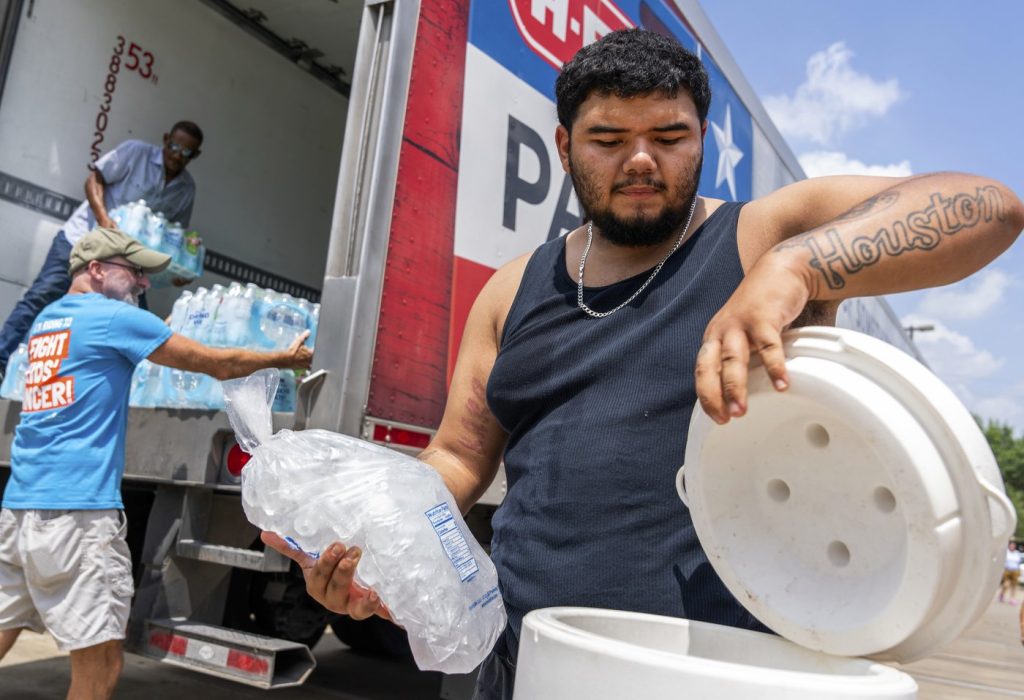
Despite the occurrence of a La Niña phenomenon, a natural cooling of Pacific Ocean waters that typically influences global weather patterns, temperatures remained elevated. Researchers emphasized that the ongoing combustion of fossil fuels—namely oil, gas, and coal—continues to release greenhouse gases into the atmosphere, perpetuating global warming.
Friederike Otto, co-founder of World Weather Attribution and a climate scientist from Imperial College London, expressed urgency, stating, “If we don’t stop burning fossil fuels very, very quickly, very soon, it will be very hard to keep that goal” of limiting warming. The scientific consensus on climate change is becoming increasingly evident, according to Otto.
Extreme Weather Events in 2025
Extreme weather events are claimed to kill thousands and inflict billions of dollars worth of damage annually. The WWA scientists identified 157 extreme weather incidents as the most severe in 2025, meeting specific criteria, including causing over 100 deaths or affecting more than half of a region's population. Researchers closely analyzed 22 of these incidents.
The report highlighted hazardous heat waves as the deadliest extreme weather events of 2025. Some heat waves observed were deemed ten times more likely than they would have been a decade ago due to climate change. Otto remarked, “The heat waves we have observed this year are quite common events in our climate today, but they would have been almost impossible to occur without human-induced climate change. It makes a huge difference.”

Prolonged drought in various regions led to devastating wildfires across Greece and Turkey. In Mexico, torrential rains and flooding resulted in multiple fatalities and missing persons. Additionally, Super Typhoon Fung-wong hit the Philippines, displacing over a million individuals, while severe monsoon rains caused flooding and landslides in India.
The WWA's findings indicate that these increasingly frequent and severe weather extremes threaten millions' capabilities worldwide to adapt to and recover from such incidents, an issue referred to as “limits of adaptation.” For instance, Hurricane Melissa intensified rapidly, complicating forecasting and planning efforts while severely impacting Jamaica, Cuba, and Haiti, leaving these nations struggling with significant losses and damage.
Global Climate Negotiations Stall
The United Nations climate negotiations held in Brazil in November concluded without a definitive strategy for transitioning away from fossil fuels. While additional financial commitments were made to assist countries in adapting to climate change, such initiatives are expected to require substantial time for implementation.
Various stakeholders, including officials, scientists, and analysts, have acknowledged that global warming will likely exceed 1.5 degrees Celsius, although some contend that reversing this trajectory remains attainable.
Progress, however, is uneven among different nations. China is rapidly advancing its renewable energy initiatives, deploying solar and wind power, while simultaneously continuing to invest in coal. In Europe, extreme weather events have galvanized calls for climate action; however, some countries claim that environmental measures place constraints on economic growth. In the United States, policy shifts under previous administrations have moved away from clean energy initiatives in favor of supporting fossil fuels.
Otto encapsulated the situation by saying, “The geopolitical weather is very cloudy this year,” pointing to policymakers prioritizing fossil fuel interests over the well-being of their populations. With the ever-evolving nature of extreme weather events, Andrew Kruczkiewicz, a senior researcher at the Columbia University Climate School, emphasized the need for adaptive strategies, timely responses, and enhanced recovery methods to mitigate the growing complexities of climate disasters.
“On a global scale, progress is being made, but we must do more,” Kruczkiewicz added, emphasizing the urgency of collective action against climate change.