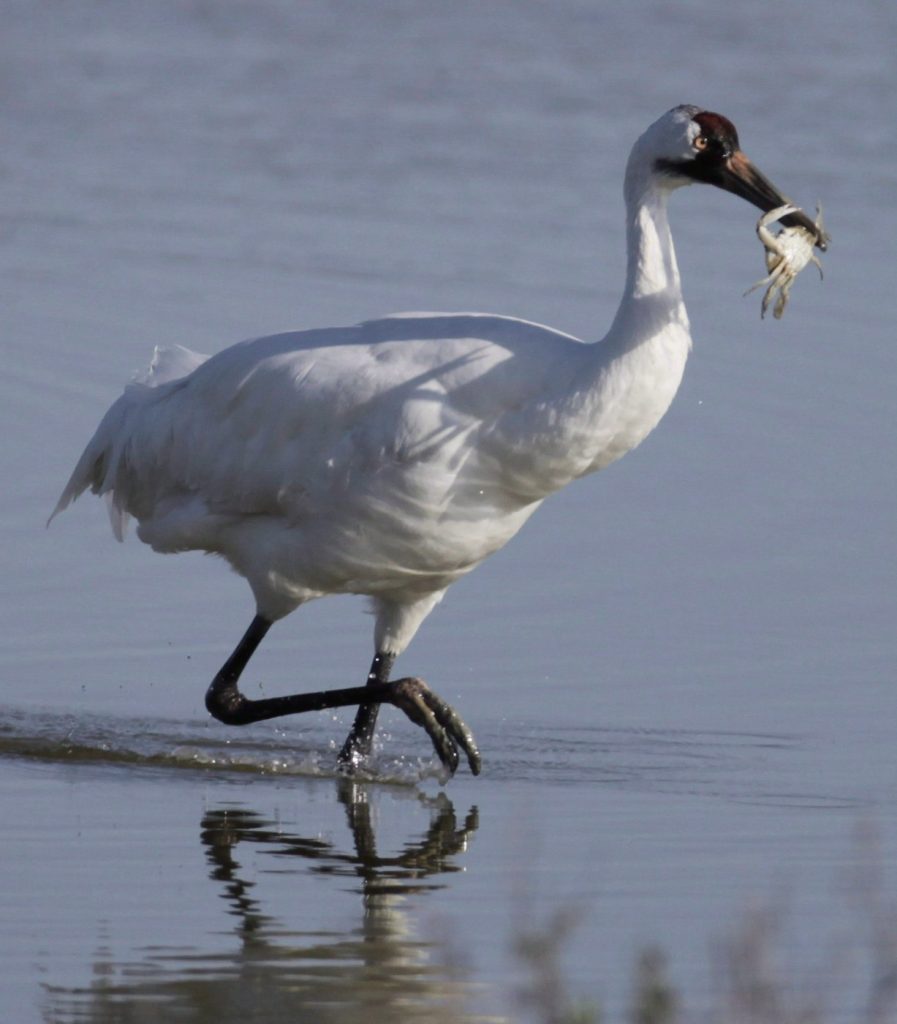
SASKATOON – A wildlife biologist has expressed deep concern regarding the recent discovery of two dead members of the critically endangered whooping crane population in Saskatchewan that tested positive for avian flu. Mark Bidwell with the Canadian Wildlife Service confirmed that this marks the first detection of the highly pathogenic H5N1 virus in the wild population of whooping cranes, which are recognized as Canada's tallest bird.
According to Bidwell, the total population of wild whooping cranes is approximately 550, making each individual crucial for the species' survival. "Losing even one of them hits pretty hard because every single individual is vital to the survival of this species," Bidwell stated. He emphasized the significance of this population as the only wild and self-sustaining flock of whooping cranes in the world, highlighting Canada's fortunate position to still have them.
The first dead whooping crane was found in Meacham, a community located east of Saskatoon. Bidwell's team identified the bird after noticing that a satellite tracker attached to one of about 50 whooping cranes had not moved for several days. On October 9, he tracked down a two-year-old female crane that had been marked right after hatching in the Wood Buffalo National Park, a region straddling the border between Alberta and the Northwest Territories.
A second carcass was located approximately 100 kilometers away in Leask, northwest of Saskatoon, nearly two weeks later, discovered by an avid birder. Both cranes tested positive for the highly pathogenic H5N1 avian influenza on November 4. Bidwell noted that while low pathogenic strains of H5 avian flu are common among wild birds and typically do not cause significant health effects, the confirmation of the highly pathogenic strain is alarming.
Bidwell stated, "These mortalities highlight that wildlife health is not isolated, and when we see avian flu affecting a species as rare as the whooping crane, it underscores the reach of the virus." He referenced that similar crane species infected with this strain in Europe and the Middle East have faced large-scale mortality events, raising concern for the health of the whooping crane population.
Researchers are actively investigating whether the virus has spread to other whooping cranes in the region. Bidwell mentioned that counterparts in Texas, where the birds migrate for the winter, reported no signs of the virus spreading as of Wednesday, and all wildlife service trackers continued to show movement. These majestic swan-white birds, characterized by their red-crested heads, can grow up to five feet tall and travel up to 4,000 kilometers every year, migrating from the Northwest Territories through the Prairie provinces to their wintering grounds in Texas.
Whooping cranes can live for up to 30 years. They breed exclusively in Canada during the summer months and are well-known for their elaborate dances that are used to attract mates. During the summer, they spend up to six weeks around Saskatoon on the Canadian Prairies, feeding, rearing their chicks, and preparing for the long flight to Texas.
Before European colonization, the whooping crane population was estimated to be around 10,000. Unfortunately, this number dwindled to just 14 individuals by the 1940s due to factors such as hunting and habitat loss. However, in the 1950s, both Canada and the United States implemented protective legislation for migratory birds and their habitats, aiding in the recovery of the species.