CAIRO (AP) - An invisible line has become a harrowing boundary for Palestinians in Gaza, where the conflict has turned the area into a zone fraught with danger. The "yellow line," marking the boundary where the Israeli military withdrew during the October ceasefire, has witnessed near-daily fire directed at those who cross or linger near it. According to the Gaza Health Ministry, of the 447 Palestinians reported killed since the ceasefire took effect, at least 77 were shot near this line, including children and teenagers.
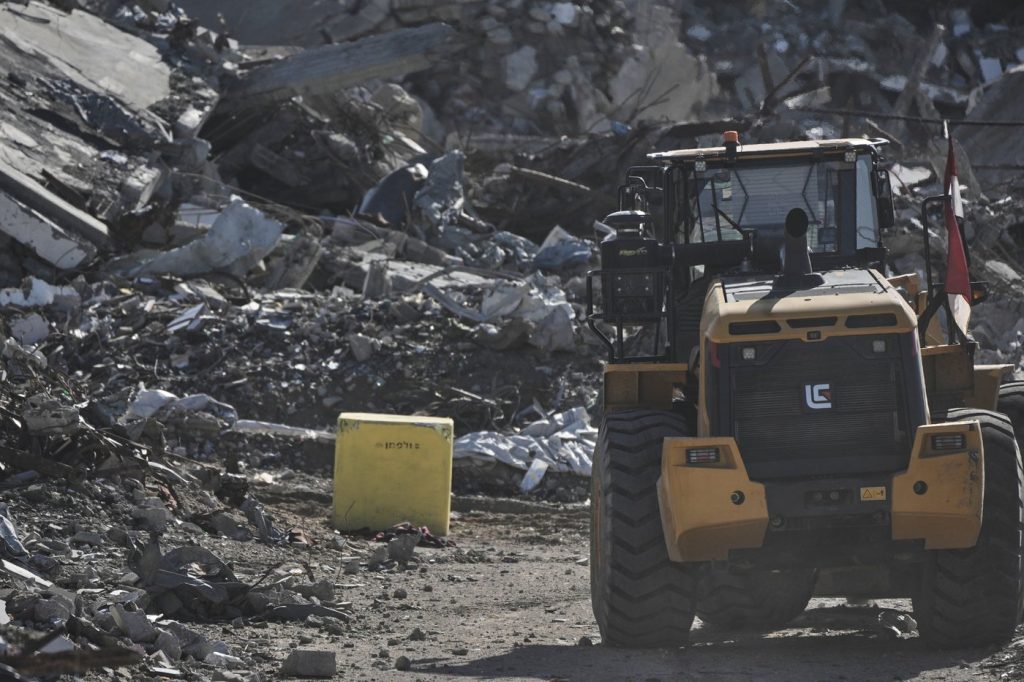
The Israeli military has attempted to define this boundary by placing yellow barrels and concrete barriers; however, inconsistencies in marking the line have led to confusion. In certain areas, the line is not clearly marked, while in others, it has been found to extend nearly half a kilometer deeper into Gaza than what was agreed upon in the ceasefire deal. This expansion effectively enlarges the territory controlled by Israel and keeps over 2 million Palestinians confined to a narrow coastal strip.
Ahmed Abu Jahal, a resident of Gaza City, noted the ongoing fear among those living near the markers, stating, “We stay away from the barrels. No one dares to get close.” With military indications suggesting the marked line is about 500 meters away, Abu Jahal reveals that residents have found it to be much closer than expected, making them fear for their lives.
Since the cessation of fighting, hospitals in Gaza have reported an influx of patients suffering from bullet wounds as locals inadvertently stray near the line. Fadel Naeem, the director of Al-Ahli hospital in Gaza City, emphasized the difficulty in clearly identifying the line due to widespread destruction, which continuously alters the landscape. A recent visit revealed that even professionals like Naeem could inadvertently cross the line without recognizing it until alerted by locals.
Reports indicate that the Israeli military acknowledges killing 57 individuals close to the yellow line, emphasizing that many of these victims were perceived as threats. Military officials claim they issue warnings and fire warning shots when individuals approach the line. However, this does not guarantee safety, as numerous civilians have been killed despite retreating when warned.
The tragic accounts of Zaher Shamia, a 17-year-old boy killed while playing near the line, highlight the grim reality faced by those residing in Gaza. Eyewitnesses state that he was shot and later crushed by an Israeli bulldozer. Similarly, three-year-old Ahed al-Bayouk lost her life when a projectile struck her while she played outside her family's tent. These poignant stories raise serious questions about the notion of a ceasefire amidst such violence.
The ambiguity surrounding the yellow line's precise location adds to the peril, with discrepancies between the maps issued by the Israeli military and those referenced by external entities. Geolocation specialists have noted significant differences, with some areas marked deeper into Gaza than official maps suggest. This disparity means that every few meters lost in the urban landscape can result in further loss of homes, contributing to the ongoing humanitarian crisis.
As the ceasefire continues without definitive timelines for troop withdrawal, many Palestinians voice concerns over what they perceive as a permanent land takeover. Israel's defense minister has referred to the yellow line as a new border, further solidifying suspicions about intentions in the region. The Israeli military's actions, including demolishing buildings within the Israeli-controlled zone, signify an ongoing strategy of territorial expansion.
Residents like Abu Jahal have witnessed the constant presence of yellow barrels and the military's increasing encroachment into neighborhoods. As the situation develops, there are growing fears among locals that they will soon be forced to evacuate their homes as the military's presence inches closer. The uncertainty faced by families compounded by violence and loss serves as a heartbreaking reminder of the dangers that lurk near this ambiguous line.