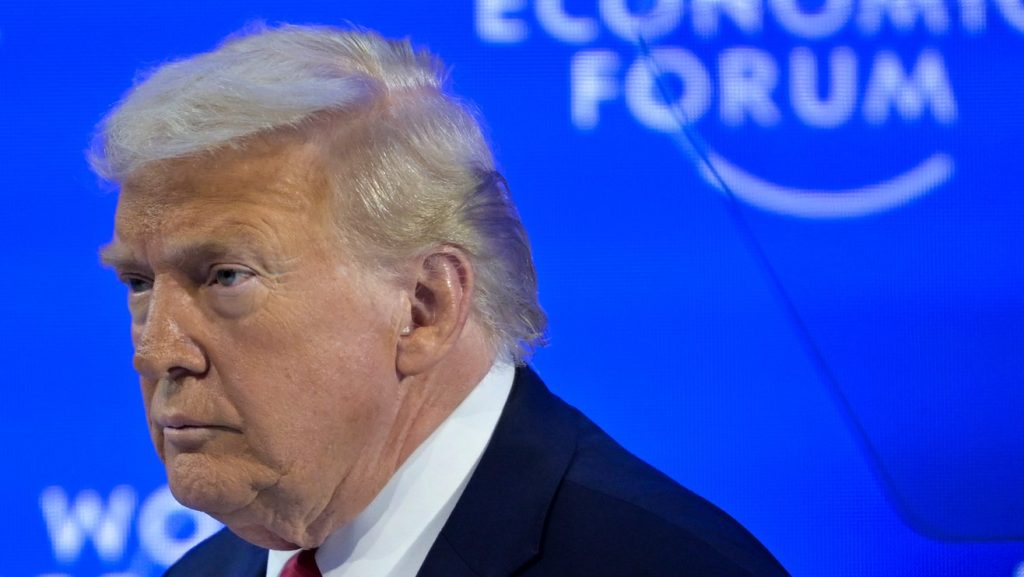
U.S. President Donald Trump announced on Wednesday that he is rescinding his threat to impose tariffs on several European nations, attributing this decision to a new cooperation framework with NATO concerning Arctic security. This sudden shift follows his remarks at the World Economic Forum in Davos, where he stated that the U.S. would not resort to military action to assert control over Greenland.
In his previous address, Trump reaffirmed his intentions to obtain "right, title, and ownership" of Greenland and cautioned NATO allies against opposing his ambitions, suggesting there could be repercussions for the alliance if they did not comply.
European Commission President Ursula von der Leyen criticized Trump's proposed tariffs on eight EU nations regarding Greenland, labeling it a "mistake" and questioning his reliability. French President Emmanuel Macron indicated that the EU might respond with significant economic measures, often referred to as a trade "bazooka."
This is not the first time Trump has threatened tariffs and subsequently backed down. In April, after expressing intentions to impose extensive tariffs globally—which resulted in a sharp market decline—he moderated his stance and characterized it as a negotiation tactic.
During his speech at the World Economic Forum, Trump also downplayed previously aggressive rhetoric concerning Greenland, explicitly stating he would not resort to force. Following this declaration, the U.S. stock market stabilized, displaying a recovery from prior turmoil.
Trump shared on his Truth Social platform that he and NATO Secretary General Mark Rutte had reached an agreement on a framework for future discussions concerning Greenland and the Arctic region, effectively withdrawing his earlier tariff threats. He expressed that further conversations would delve deeper into Greenland's status and U.S. plans for a "Golden Dome" designed to enhance national and international security against long-range missile threats.
While meeting NATO Secretary General Rutte, Trump was asked about a potential purchase price for Greenland, but he declined to specify, suggesting instead that the value lies in safety and security rather than just monetary considerations. He responded ambiguously to inquiries about his earlier comments implying potential consequences for Denmark if it chose not to sell Greenland.
Furthermore, Rutte indicated that he reminds NATO members of Trump's recurring frustration concerning the disparity in defense spending between the U.S. and its European allies. He affirmed that allies would support the U.S. in times of crisis, referencing NATO’s historical commitment following the 9/11 attacks.
Public reactions to Trump's strategy have varied. Republican House Speaker Mike Johnson supported Trump's tariff strategies as effective, while Democrat Rep. Ted Lieu criticized the approach, arguing it imposes additional costs on American households. Meanwhile, Republican Senator Lindsey Graham expressed newfound support for the idea of legally purchasing Greenland, acknowledging that military force should not be considered.
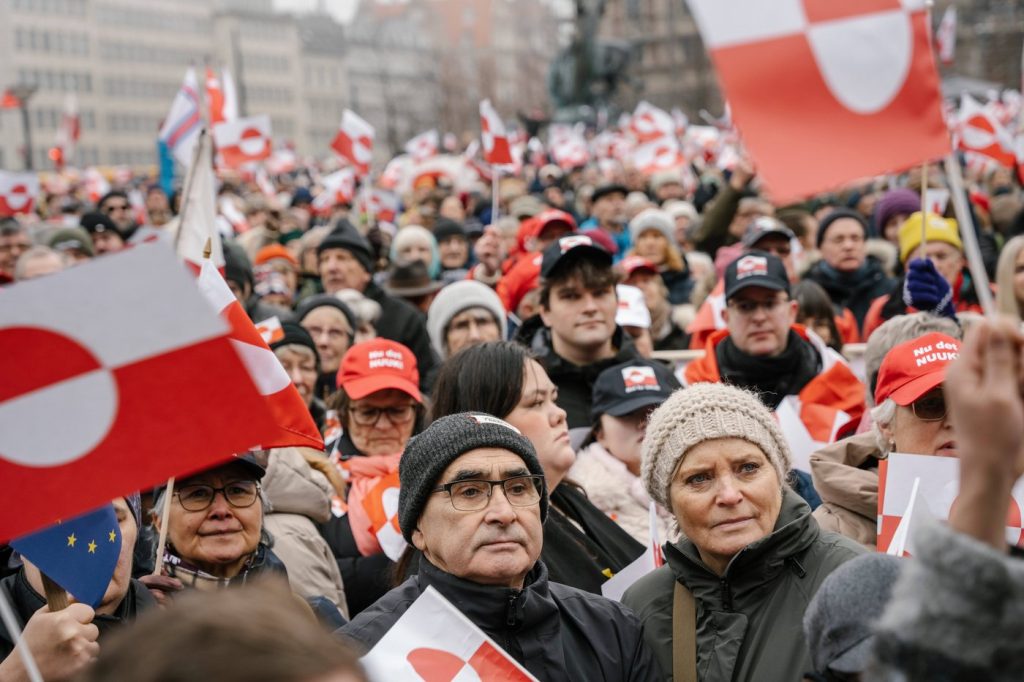
The Danish government is open to further discussion regarding U.S. security concerns in the Arctic, yet maintains that Denmark's sovereignty must be respected, reinforcing its unwillingness to cede territory. In light of Trump's assurances against military action, there seems to be a cautious optimism about future negotiations.
During his remarks, Trump claimed that business leaders have prospered significantly under his administration, remarking on the wealth generated during his first year back in office. However, Swedish Deputy Prime Minister Ebba Busch called for Europe to "toughen up" against perceived bullying from Trump, indicating a mixed European stance toward the current U.S. administration's policies.
As the discussions in Davos progressed, Trump addressed multiple economic concerns, including higher housing prices and credit card interest rates, suggesting he would ask Congress to cap rates at 10% for a year. He reiterated beliefs that economic growth would resolve U.S. debt issues, despite criticisms regarding the national debt rising under his administration.
Trump characterized the relationship between the U.S. and Europe as rooted in a shared culture, urging its protection and reinforcement. He controversially commented on issues related to immigrants from Somalia, drawing backlash for derogatory implications about their intelligence and past contributions.
In summary, Trump's recent statements indicate a potential pivot in U.S. foreign policy regarding Greenland as he seeks to balance domestic concerns with international negotiations. With varying reactions from political leaders and allies alike, the ongoing discussions about Arctic security and Greenland's status continue to capture global attention.