On Monday, Iran's Ambassador to the International Atomic Energy Agency (IAEA), Reza Najafi, alleged that recent airstrikes by the United States and Israel targeted Iran's Natanz enrichment facility. This claim stands in stark contrast to an assessment by IAEA Director General Rafael Grossi, who stated that the agency has had "no indication" that any nuclear facilities in Iran have been struck to date.
Najafi addressed the media at the IAEA headquarters in Vienna during a special session of the Board of Governors called at the request of Russia. He vehemently condemned the attacks, asserting, "Again they attacked Iran's peaceful safeguarded nuclear facilities yesterday. Their justification that Iran wants to develop nuclear weapons is simply a big lie." When pressed for details regarding which facility was attacked, Najafi confirmed that he was referring to the Natanz site.
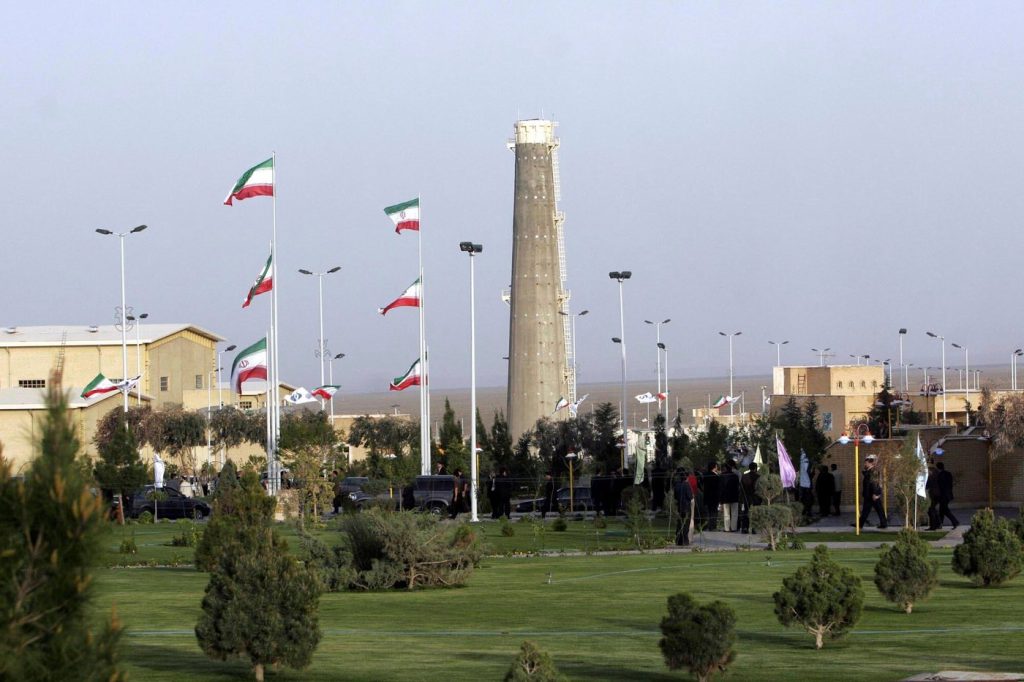
The Natanz site is located approximately 220 kilometers (135 miles) south of Tehran and features a combination of above-ground and underground labs where much of Iran's uranium enrichment has occurred. Before the onset of military actions, the IAEA reported that Iran was utilizing advanced centrifuges at Natanz to enrich uranium to levels as high as 60%, a mere technical step away from weapons-grade enrichment of 90%. Some of this enriched material was believed to be present at the complex during significant attacks that took place in June.
On June 13, Israel carried out airstrikes on the primary above-ground enrichment building at Natanz, known as the Pilot Fuel Enrichment Plant, resulting in what was described as "functionally destroyed" and causing severe damage to underground facilities containing cascades of centrifuges. Subsequently, a U.S. aerial attack on June 22 targeted Natanz's underground facilities with bunker-buster bombs, likely significantly compromising any remaining operations.
During the special session, Rafael Grossi reiterated that the IAEA has found "up to now" no evidence of damage to any nuclear installations in Iran, including the Bushehr Nuclear Power Plant and the Tehran Research Reactor. He highlighted ongoing challenges in effectively communicating with Iranian nuclear regulatory authorities due to the ongoing conflict, describing the IAEA's attempts to contact them through its Incident and Emergency Center as having received no responses. Grossi urged for military restraint, emphasizing that many countries in the region possess operational nuclear facilities, which heightens the risk to nuclear safety.
Furthermore, he noted that there have been no detected increases in radiation levels beyond the usual background levels in countries bordering Iran, suggesting that, thus far, the attacks may not have led to immediate nuclear safety concerns.
Najafi also took the opportunity to criticize former U.S. President Donald Trump, accusing the U.S. of employing deceit and disinformation as a pretext for military actions in foreign countries. He labeled the military strikes on Iran as "unlawful, criminal, and brutal," and urged the 35-member IAEA Board of Governors to "categorically condemn" such attacks, emphasizing the need for accountability and protection of nuclear facilities.