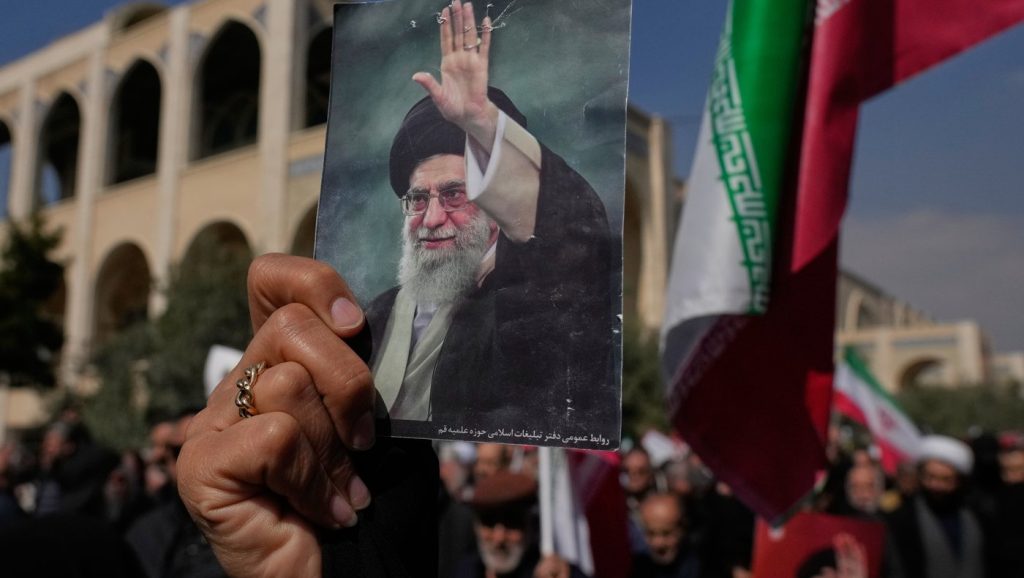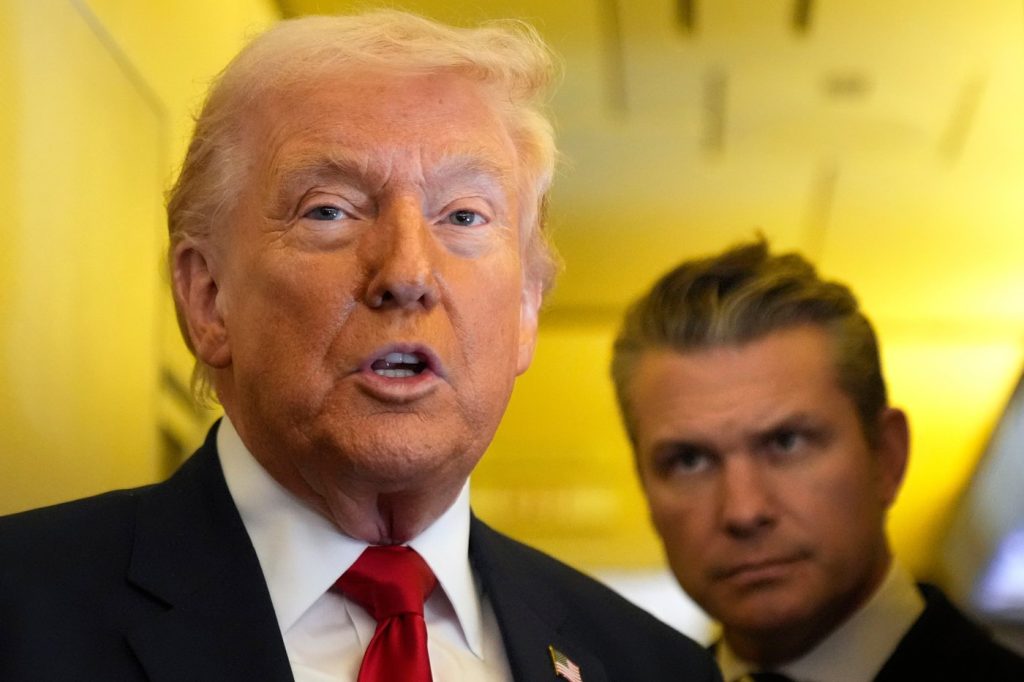
NEW YORK (AP) – Oil prices have surged significantly in the week following the escalation of conflict between the U.S., Israel, and Iran. President Donald Trump, while traveling aboard Air Force One, minimized the urgency of using America’s Strategic Petroleum Reserve to relieve the pressure on energy prices.
Trump was queried by reporters about the possibility of tapping into the reserve as tensions escalate in the Middle East, particularly in regions crucial for oil and gas production and transportation. This ongoing conflict has resulted in increased strain on the global energy sector, with U.S. consumers already experiencing higher gasoline prices, which significantly affect the cost of living.
“We’ve got a lot of oil. Our country has a tremendous amount,” Trump stated, emphasizing that the situation would stabilize quickly. This stance comes as congressional midterm elections in November put his Republican Party under pressure regarding issues of affordability. Utilizing the reserve is one of the few unilateral actions a president can take to potentially influence oil prices.
The Strategic Petroleum Reserve, consisting of underground salt caverns located in Texas and Louisiana, has the capacity to hold over 700 million barrels of oil. As of the end of last month, it contained more than 415 million barrels, an increase from approximately 395 million barrels back in 2025, according to the U.S. Energy Department.
Established post-1970s Arab oil embargo, the reserve provides the United States with an emergency oil supply. Historical data reveals that the reserve peaked at over 726.6 million barrels more than a decade ago. Although the U.S. currently exports more petroleum than it imports, the reserve occasionally sees withdrawals for various emergencies, including natural disasters and geopolitical conflicts. For instance, President Joe Biden significantly withdrew oil from the reserve in 2022 following the invasion of Ukraine, leaving the stockpile at its lowest level since the 1980s.
Recent escalations in the conflict with Iran have driven oil prices to their highest levels since early 2023. By Friday, the price of Brent crude, an international benchmark, had risen 8.5% to $92.69 per barrel from nearly $70 just days earlier. Additionally, benchmark U.S. crude increased by 12.2%, reaching $90.90 per barrel.
In response to rising prices, the Trump administration permitted India to import crude oil and petroleum products from Russia until April 4 in a move viewed as a temporary solution to alleviate market pressures. Despite this measure, when questioned about tapping the SPR, Trump downplayed its necessity, focusing instead on critiquing Biden for previous withdrawals from the reserve. He suggested he would consider refilling the strategic reserve at an “appropriate time,” guided by instinct.
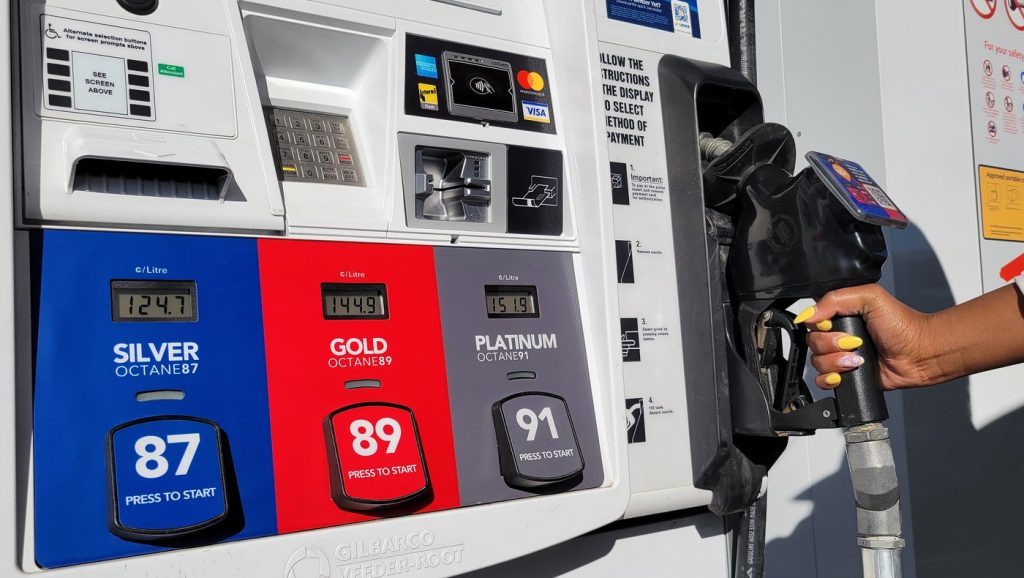
Many elements influence gasoline prices at the pump. The average price of gasoline in the U.S. has recently climbed to approximately $3.41 per gallon, an increase of 43 cents from the previous week, according to AAA. However, due to forward purchasing by refineries, the impact of any additional releases from the SPR may not immediately reflect at the consumer level, especially if the conflict continues. Variations in gas prices also exist between states, with California averaging nearly $5.08 per gallon compared to Kansas at about $2.90 per gallon.
Gasoline price increases disproportionately affect lower-income individuals, who spend a larger percentage of their income on fuel. This causes greater financial strain on these consumers as they navigate rising costs.
To extract oil from the Strategic Petroleum Reserve, water is pumped into the salt caverns, allowing the crude oil to float to the surface for collection and transportation to refineries via pipelines.