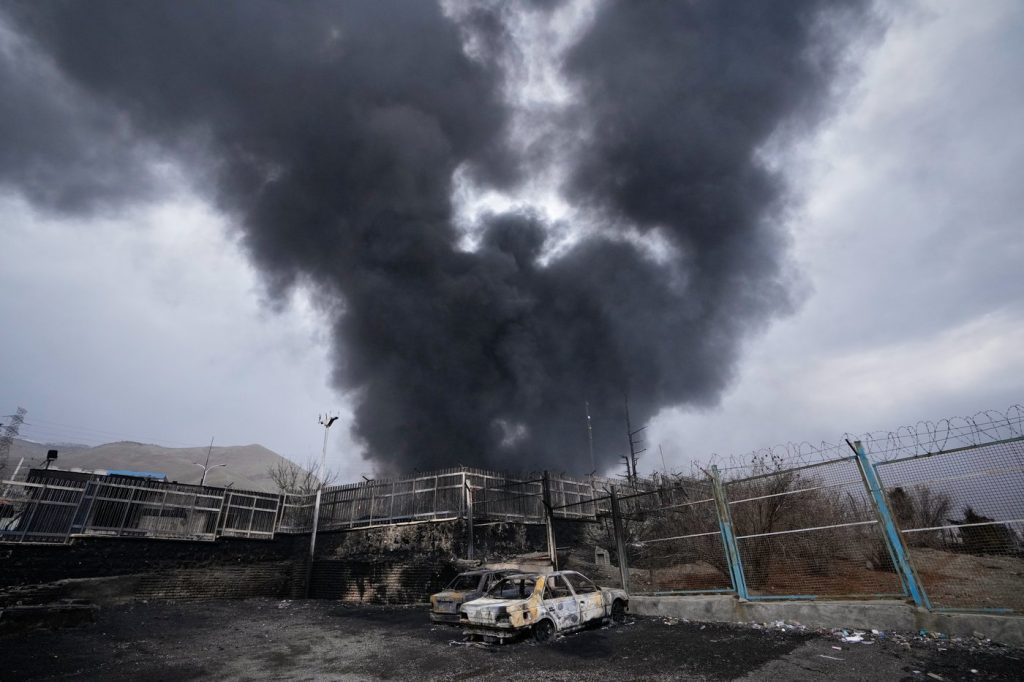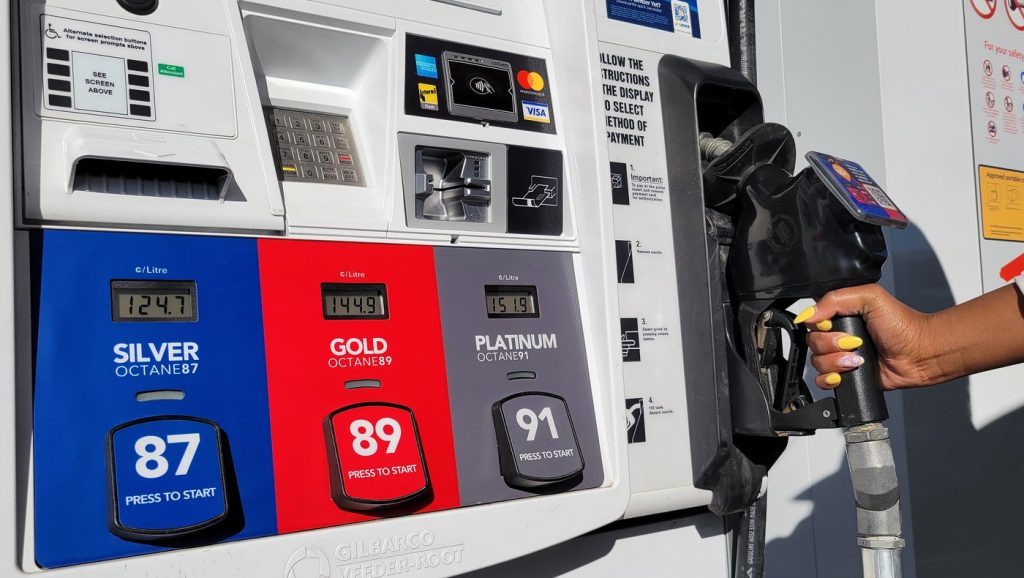
VANCOUVER — Ride-share drivers across Canada are voicing their frustrations over surging gas prices, which they attribute to escalating conflicts in the Middle East. With the war in Iran, which involves the U.S. and Israel, reaching its second week, many drivers are struggling to cope with rising fuel costs that have jumped to approximately $1.70 per litre in British Columbia, compared to $1.10 per litre six years ago.
Kuljeet Singh, a driver from Surrey, B.C., expressed concern about the financial strain placed on gig economy workers like himself, who must now work more hours to maintain their livelihoods. Singh shared that he often works over 70 hours a week, stating, "My father is old. I have to take him to appointments. That’s why I chose the flexible job. But now it’s getting harder and harder."
The GasBuddy website reports that the average gas price in B.C. hovers around $1.72 per litre, while Ontario's average is just under $1.50 per litre. Singh noted that the high prices are exacerbating the challenges posed by ride-share platform commissions, vehicle maintenance, and insurance costs, leaving him financially stretched and anxious about the future.
Truck drivers are also feeling the impact of rising fuel costs, particularly with diesel prices surging this week. Ali Yemai, a truck driver from Richmond, B.C., revealed that diesel has increased to $2.26 per litre, raising fears of inflation and its potential repercussions on low-income families. According to Yemai, "The rising fuel cost could lead to inflation and affect low-income families."
Viet Vu, a manager of economic research at the Dais think tank at Toronto Metropolitan University, explained that energy prices are influenced by a single global market for crude oil. “It’s not the fact that there is a separate market with separate prices in the Middle East compared to North America,” Vu remarked. He added that disruptions in global markets can have swift and dramatic effects on prices.
The current Middle Eastern conflict has left ships transporting approximately 20 million barrels of oil per day stranded in the Persian Gulf, unable to navigate the Strait of Hormuz due to safety concerns. Vu pointed out that Iran has set at least one ship ablaze and is threatening to target any ship attempting to cross the strait. In response to the conflict, Kuwait, OPEC's fifth-largest oil producer, announced a precautionary reduction in oil production, which may further unsettle global markets.
Vu characterized the recent gas price hikes as "quite modest," noting steady daily increases in regions like Toronto, where prices are currently at about $1.52 per litre. He observed that while fuel prices are historically high compared to last week, they remain lower than the $1.80 per litre seen by drivers in Toronto two years ago. Vu explained that a significant shift in prices due to geopolitical tension was previously witnessed after Russia's invasion of Ukraine in 2022.
As the conflict in Iran continues, concerns linger regarding how long it will persist. Vu indicated that if tensions escalate, regions with oil production capabilities, such as Alberta, may respond by increasing production in an attempt to stabilize prices.