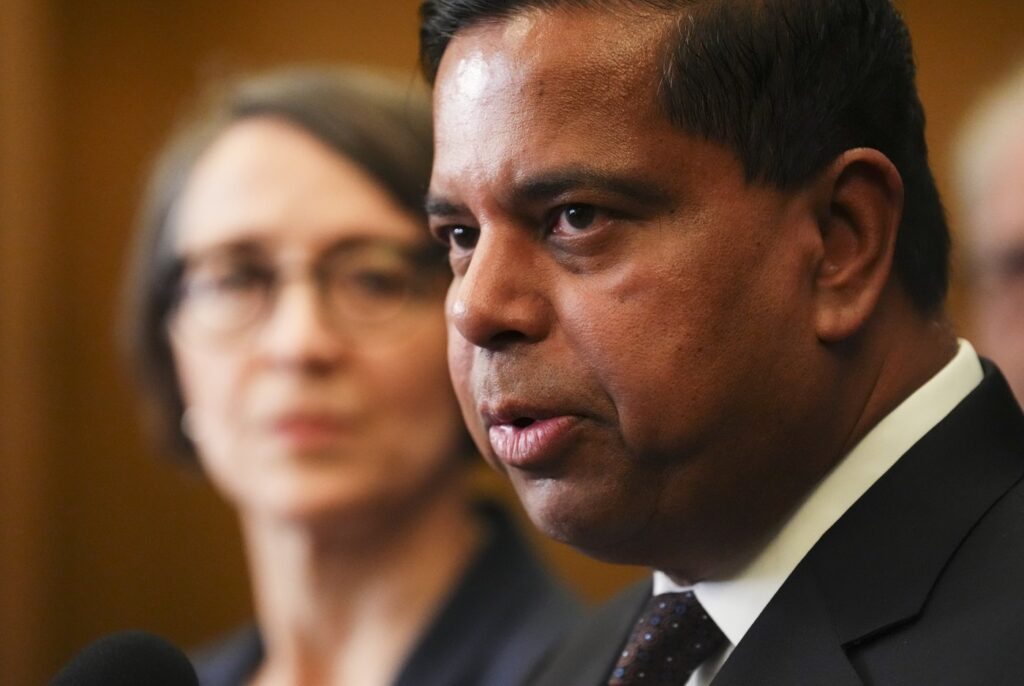
OTTAWA – Gun owners across Canada have reported more than 51,000 firearms to the federal government amid a buyback program aimed at compensating for banned guns, according to Public Safety Minister Gary Anandasangaree. With only one week remaining until the program's deadline on March 31, 2026, the current figures are significantly below the government's estimate of 136,000 firearms eligible for compensation, which was set when the program opened in January.
Anandasangaree expressed a sense of cautious optimism regarding the participation rates as the amnesty period approaches its conclusion. The buyback program allows owners the choice to receive compensation for either surrendering or permanently deactivating their firearms. This measure follows Ottawa's ban of approximately 2,500 types of firearms, including well-known models like the AR-15 and the Ruger Mini-14, which the government contends are designed for military use.
Gun owners are required to dispose of or deactivate their prohibited firearms and devices before the amnesty period ends on October 30, 2026. The firearm ban and the corresponding federal compensation initiative have been praised by advocates of gun control. Conversely, members of the Conservative Party and some firearm owners argue that the buyback program unfairly targets lawful citizens and is ultimately a waste of government resources.
The Canadian Coalition for Firearm Rights disputes the federal government's estimate of the number of guns eligible for compensation, claiming that the actual figure is considerably higher. In his statements earlier this year, Anandasangaree maintained a firm stance on the government's count of 136,000 firearms, attributing varying claims from the gun lobby to a "range of misinformation."
Accompanying Anandasangaree at a press conference on March 23, 2026, was shooting survivor and federal Secretary of State for Nature, Nathalie Provost. She sought to clarify misconceptions surrounding the ban, emphasizing that the government's focus is on restricting assault-style weapons rather than commonly used hunting rifles. “We are fighting against assault-style weapons, and it’s important that the real message is heard,” Provost stated.
In a recent legal development, a Federal Court judge dismissed a challenge to the firearm ban that argued it was unlawful and exceeded the delegated powers of the federal cabinet. The motion had been brought forth by a not-for-profit advocacy organization along with firearm owners, businesses, and recreational shooters who opposed the ban. When the Federal Court of Appeal rejected their appeal in April 2025, it cited the original court's reasoning as "thorough and persuasive."
The Supreme Court of Canada has agreed to hear an appeal of the latest ruling, a process expected to take over a year to resolve. Anandasangaree expressed confidence in the government's legal position, stating, “We’re very confident that we’ll be able to defend our position at the highest court.”
This ongoing situation has sparked considerable debate across Canada regarding gun ownership rights, public safety, and government policy on firearms, revealing deep divisions among various stakeholders.