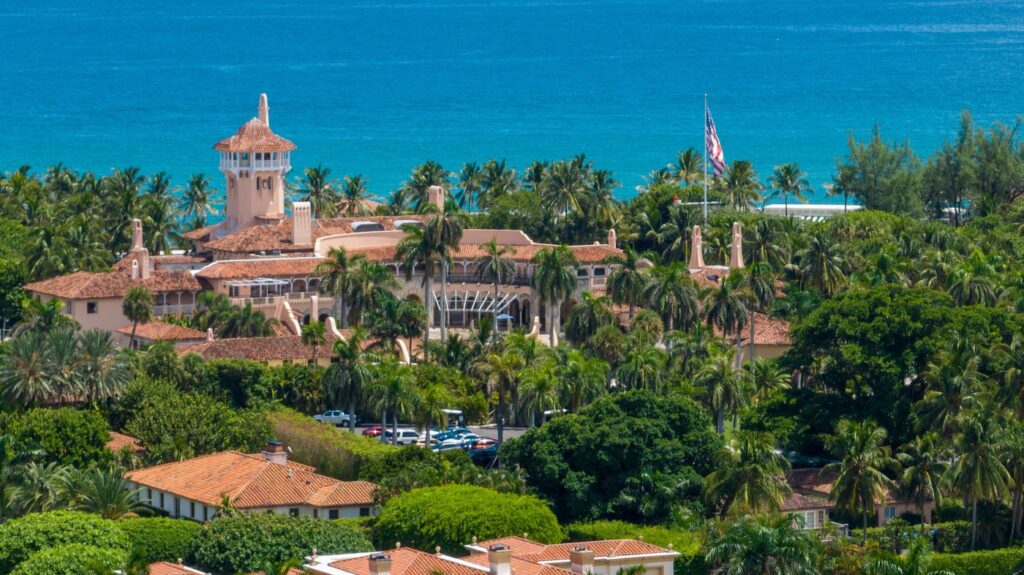
Democrat Emily Gregory achieved a significant victory in a Florida special election held on Tuesday, successfully flipping a state legislative district that includes Mar-a-Lago, the Palm Beach estate associated with former President Donald Trump. This election marked another critical moment for Democrats, signaling a potential shift in voter sentiment against Trump and Republicans as the midterm elections approach in November.
Former President Trump had endorsed Gregory's opponent, Jon Maples, actively campaigning for him ahead of the election. In a social media post made on Monday, Trump urged voters to support Maples, highlighting his connections within Palm Beach County. Despite the backing of the former president, Maples could not secure a win in a district that had been reliably Republican until now.
The legislative district was previously represented by Republican Mike Caruso, who resigned from his post to assume the role of Palm Beach County's clerk. Caruso had won the seat by an impressive 19 percentage points in the 2024 elections. Gregory's victory, with a margin of 2.4 percentage points, translating to a difference of 797 votes, is seen as a clear demonstration of the changing political landscape in the area.
Heather Williams, president of the Democratic Legislative Campaign Committee, remarked on the implications of the victory, stating, "If Mar-a-Lago is vulnerable, imagine what’s possible this November." This win marks the 29th seat that Democrats have flipped from Republican control since Trump took office, pointing to a growing trend that Democrats hope will be reflected in upcoming elections.
In her victory speech, Gregory expressed her surprise and excitement, describing the experience as "pretty shocked" and "having a fairly out-of-body experience." She grew up in Stuart, north of Palm Beach, and owns a fitness company that helps pregnant and postpartum women. This election marked her first venture into the world of electoral politics.
Apart from Gregory's win, Democrats have celebrated other notable achievements in traditionally Republican strongholds in Florida. For instance, in December, Eileen Higgins won the race for Miami mayor, marking the first time in nearly three decades that a Democrat held the position. Higgins's campaign effectively criticized Trump's immigration policies, which resonated with Miami's significant Hispanic population.
Similarly, in Texas, Democrat Taylor Rehmet flipped a historically Republican state Senate district in a special election earlier this year, energizing Democrats who were seeking signs of momentum following a period of political isolation. In light of Gregory's victory in Florida—a state that is often seen as Trump's base—Democrats are particularly enthused by the results, indicating a shift in voter sentiments against the former president.
In response to the electoral setback, Trump swiftly distanced himself from the outcome, despite his prior endorsement of Maples. He commented, "I’m not involved in that," highlighting his efforts to move past the loss. The Texas race had already stirred optimism among Democrats who had felt sidelined in Washington politics.
Democratic National Committee Chair Ken Martin remarked, "Donald Trump’s own neighbors just sent a crystal clear message: They are furious and ready for change," emphasizing the significance of the victory in a district closely associated with the former president.
Notably, Trump participated in the election by voting by mail, despite publicly criticizing this voting method as a source of fraud and advocating for Congress to limit its use. After shifting his residency and voter registration to Florida during his presidency, Mar-a-Lago has become a central hub for Trump's allies, friends, and various business figures.