TEL AVIV, Israel (AP) — On Palm Sunday, Israeli police barred Catholic leaders from entering the Church of the Holy Sepulchre for a private Mass, sparking criticism from the United States and other nations. This marked the first time in centuries that such a celebration was not allowed at the holy site, where Christians believe Jesus was crucified. The Church of the Holy Sepulchre, among other major holy sites in Jerusalem, has been closed due to ongoing conflict, specifically the Iran war, which has brought frequent missile attacks on the city.
In response to rising tensions, Israeli police stated they had approved a "limited prayer framework" for the church's activities following consultations with the Latin Patriarchate of Jerusalem. However, the Patriarchate condemned the police's decision on Palm Sunday as "manifestly unreasonable and grossly disproportionate," which prevented two of the church's top religious leaders, including Cardinal Pierbattista Pizzaballa, from performing the Mass.
Palm Sunday commemorates Jesus' triumphant entry into Jerusalem, initiating the Holy Week leading up to Easter for Christians. Israeli police informed church authorities on Saturday that no Mass could occur due to safety concerns related to narrow Old City alleys and the lack of access for emergency vehicles, which were crucial given prior incidents of Iranian missile shrapnel falling near the church.
Despite the tension and restrictions, the Latin Patriarchate emphasized that private Masses had been permissible since the Iran war began on February 28, raising questions about the specific prohibition on this occasion. Farid Jubran, a spokesperson for the Patriarchate, called the action an impediment to freedom of worship and a violation of the established status quo in Jerusalem.
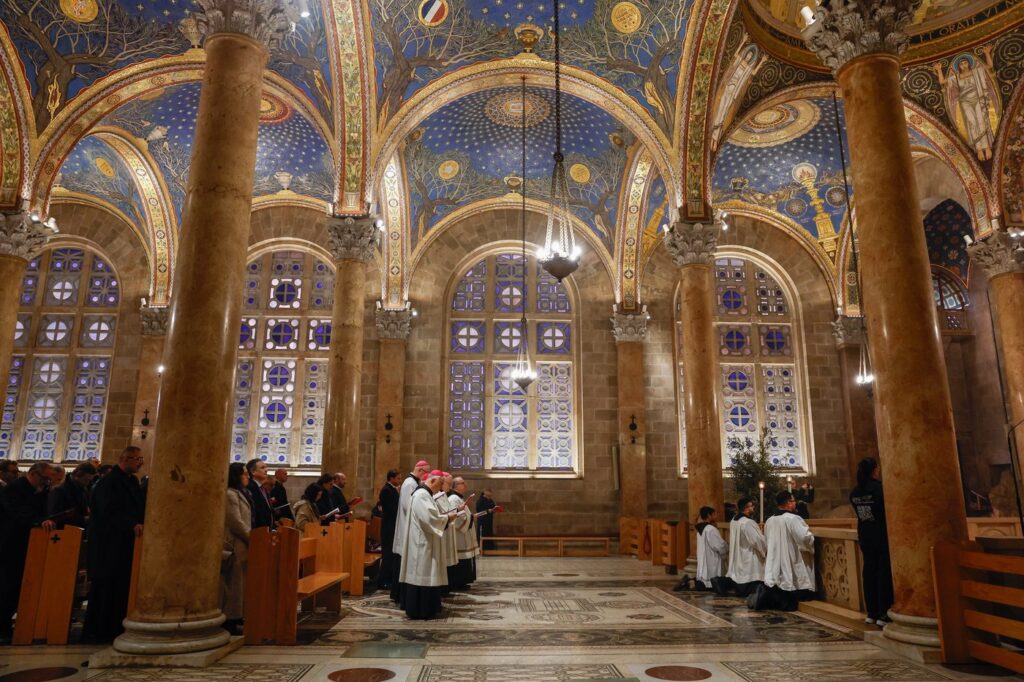
Typically, Palm Sunday features a large procession of Christians from around the globe moving from the Mount of Olives to the Old City, but safety concerns led the Patriarchate to cancel this year's traditional event. Instead, limited Masses with fewer than 50 worshippers have been conducted in compliance with military guidelines.
Cardinal Pizzaballa was able to celebrate Mass at St. Savior's Monastery instead, and later held a prayer for peace at Dominus Flevit Shrine on the Mount of Olives, avoiding the morning's incident in his homily. Pope Leo XIV prayed for Christians in the Middle East facing challenges in celebrating their rites during the holy days, speaking to the broader context of conflict affecting religious observances.
The incident drew widespread condemnation from various international figures. U.S. Ambassador Mike Huckabee characterized the prevention of the Palm Sunday Mass as an “unfortunate overreach,” stressing that the proposed gathering was well below the 50-person limit. French President Emmanuel Macron highlighted the issue as part of a concerning increase in violations of the status of Holy Sites in Jerusalem, stressing the need for guaranteed free exercise of worship.
The Italian government also protested the decision, calling it an affront to believers and expressing concern about religious freedom. Prime Minister Giorgia Meloni described the police action as disrespectful and emphasized that it affected all religious communities.
In response to the backlash, Israeli Prime Minister Benjamin Netanyahu clarified that the decision was based on safety concerns and assured that the government would work toward allowing partial access to the Church of the Holy Sepulchre. He acknowledged the significance of the holy week leading up to Easter for Christians around the world and stated that security arrangements would be reviewed to facilitate worship.
Pizzaballa indicated a desire to find common ground with Israeli authorities regarding access to the church, while the Western Wall and other sites have also experienced restrictions due to safety issues, impacting how religious communities can conduct their observances in Jerusalem's Old City amidst ongoing tensions.