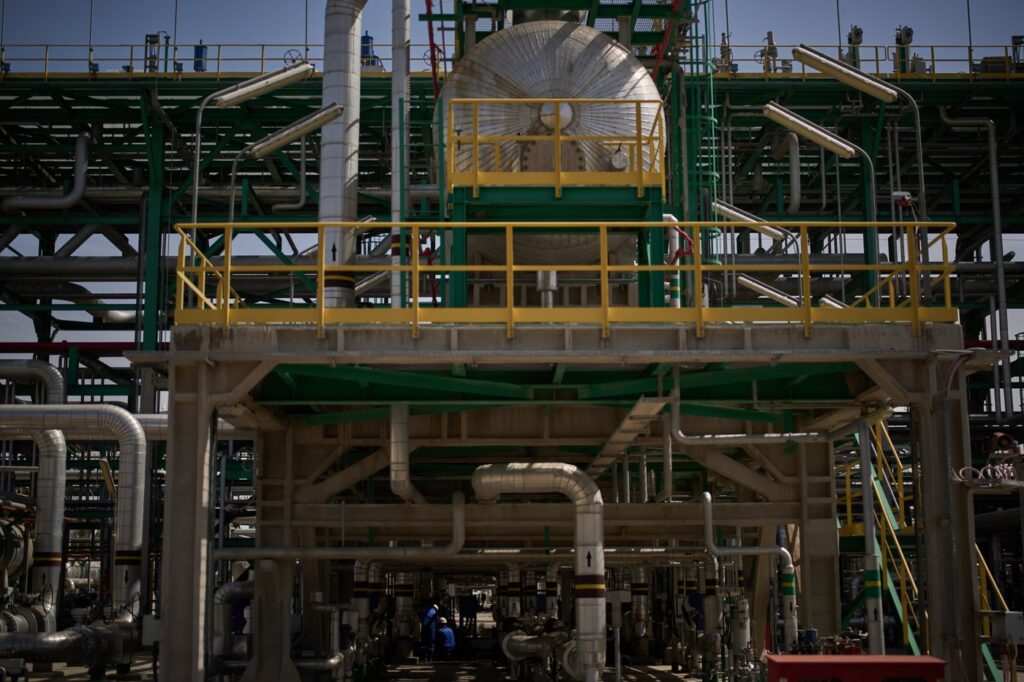
The Iraqi oil fields, once bustling with activity, have become largely deserted as the ongoing war in Iran has taken a heavy toll on the economy. In the province of Basra, where nearly all of Iraq's crude oil is produced and exported, the conflict has led to significant disruptions in both oil production and the flow of imported goods. Workers at the ports and oil fields have adjusted to the new reality of frequent rocket attacks aimed at U.S. air bases and strategic installations.
Since the onset of the war, which began one month ago with U.S.-Israeli strikes, Iraq’s economy has faced a severe crisis. Approximately 90% of the country's budget is reliant on oil revenues, most of which are exported through the Strait of Hormuz—a crucial passage that Iran has effectively closed to cargo traffic during the conflict. This has precipitated a dramatic decline in oil production and imports, leaving Iraq's economic stability precariously threatened.
In the wake of the conflict, oil production in southern Iraq—where Basra is located—has plummeted by over 70%. The volume of goods imported into the country has also halved, with foreign workers evacuating amidst rising tensions. Experts suggest that while the Iraqi government may manage until mid-May without new oil sales, it will eventually need to borrow funds, likely through bond issuance, which could have further economic consequences, according to economist Ahmed Tabaqchali.
The closure of the Strait of Hormuz has forced oil fields to reduce production to meet only domestic needs, despite a global increase in oil prices. For instance, the Zubair oil field, which once processed around 400,000 barrels per day, has seen production fall to approximately 250,000 barrels. Bassem Abdul Karim, head of the state-run Basra Oil Company, has indicated that while Iran asserts Iraqi oil can transit safely through the strait, the lack of an Iraqi tanker fleet means shipments are dependent on private vessel owners willing to take the risk of navigating the conflict zones.
Attacks by drones and rockets have also targeted U.S. oil companies and military bases, prompting many employees from international firms such as American, British, Italian, and French companies to flee Iraq. The situation escalated following a drone strike on March 6 that hit the Burjisiya complex, used by multiple oil companies, causing further concerns about security. In response to these threats, operations at the Majnoon oil field have been halted due to the dangers presented by ongoing attacks.
Trade and shipping lanes have also been severely disrupted. The Umm Qasr port, Iraq’s primary deep-water port, is no longer receiving large cargo ships due to the closure of the Strait. Instead, goods must now be transported from the United Arab Emirates, which presents a costly workaround that has halved the port's capacity. The recent destruction of two tankers by Iranian forces has increased fears regarding the safety of maritime routes.
At the Shalamcha border crossing with Iran, disruptions caused by power outages have halted trade. Prior to the conflict, this crossing was a bustling hub for both commercial goods and pilgrimage traffic. However, current conditions have caused significant delays, with long traffic backups. Local authorities indicate that food supplies are prioritized in order to mitigate price increases, but the overall movement of people and goods has dwindled since the outbreak of the war. Small-scale traders, like 30-year-old Atefa Al-Fatlawi, worry about their safety as they navigate risks associated with border crossings affected by the conflict.
This complex and precarious situation illustrates the far-reaching consequences of the conflict in Iran, not only for Iraq's oil production and economy but also for the livelihoods of those who depend on trade, commerce, and safe passages in a region beset by instability.