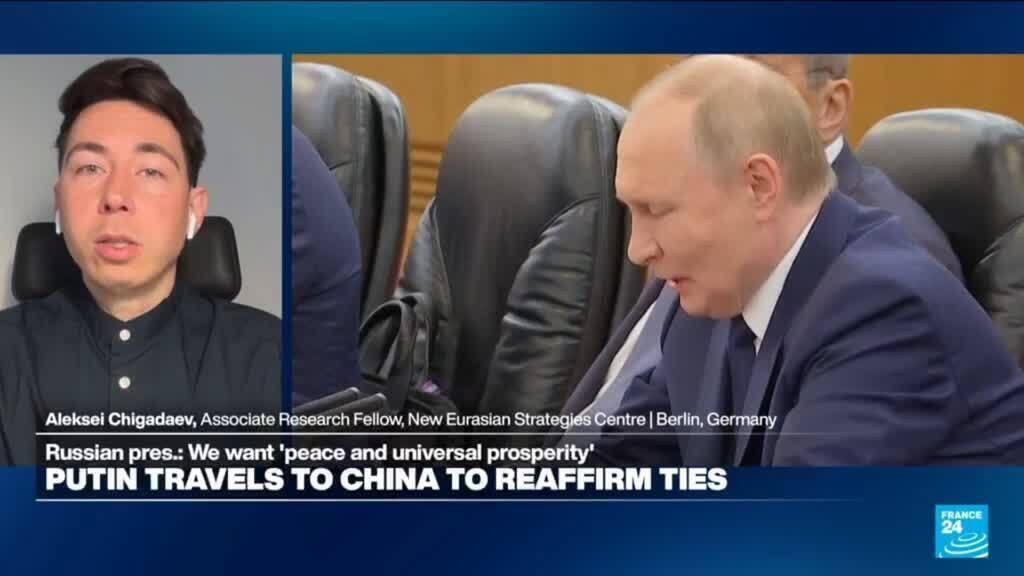
Complex Dynamics in China-Russia Relations
Oliver Farry recently hosted Aleksei Chigadaev, an Analyst specializing in China-Russia relations and an Associate Research Fellow at the New Eurasian Strategies Centre. In their discussion, Chigadaev challenges the prevailing narrative that depicts the relationship between China and Russia as a solid anti-Western alliance. Instead, he presents a more nuanced perspective that highlights the complexity of their interactions, characterized by asymmetry, strategic necessity, and a lingering sense of unease.
Chigadaev emphasizes that the relationship between the two nations is far from being one of equals. Russia, according to him, appears to be increasingly searching for external legitimacy through its interactions with China. This dynamic is vividly illustrated in the highly choreographed meetings between Russian President Vladimir Putin and Chinese President Xi Jinping. These encounters, Chigadaev suggests, are designed to reinforce Russia's standing on the global stage, particularly in the face of Western opposition.
On the other side of the spectrum, Chigadaev posits that China engages with Russia not out of ideological fervor but through calculated pragmatism. He highlights that China’s approach to its partnership with Russia is primarily focused on its own strategic interests rather than a deep-seated ideological commitment. This perspective reshapes the understanding of their bilateral ties, suggesting that China views Russia as a means to achieve its foreign policy objectives rather than an ally rooted in shared ideological beliefs.
In his analysis, Chigadaev points out that while Russia may portray its relationship with China as a partnership characterized by mutual benefit, the reality often reflects an imbalance. This asymmetry manifests in various forms, including economic dependency and geopolitical alignment, where Russia increasingly finds itself in a subordinate position relative to China's rising power. The implications of this dynamics are significant, as they shape not only the bilateral ties but also the broader geopolitical landscape, especially in the context of their dealings with the West.
Moreover, Chigadaev remarks on the underlying tensions that exist within this seemingly strategic alliance. He notes that despite their collaborative efforts, there remains an undercurrent of unease, as both nations are acutely aware of their respective national interests, which do not always align. This complicates their relationship, making it more intricate than a straightforward partnership against a common adversary. Thus, Russia's attempt to portray itself as an equal player in the partnership can mask a deeper vulnerability.
Chigadaev's insights prompt a reevaluation of the implications of China-Russia relations in the current global context. As they navigate their partnership against the backdrop of Western sanctions and geopolitical pressures, understanding the complexities of their interactions becomes crucial. It highlights the necessity for both nations to balance their strategic goals while addressing the inherent asymmetries that define their relationship.
In conclusion, the conversation with Aleksei Chigadaev sheds light on the multifaceted nature of China-Russia relations, moving beyond simplistic narratives of unity against the West. By examining the dynamics of legitimacy, pragmatic engagement, and underlying tensions, a clearer picture of their partnership emerges, one that is marked by both collaboration and caution.