BUNIA, Congo (AP) — The World Health Organization (WHO) has raised alarms regarding the "scale and speed" of an outbreak involving a rare type of Ebola known as Bundibugyo in eastern Congo. Reports indicate that there have been 134 suspected deaths and over 500 suspected cases related to the outbreak.
The Bundibugyo virus was able to spread undetected for several weeks after the initial death was recorded. Authorities initially conducted tests for more common types of Ebola but found them to be negative. Experts note that the Bundibugyo virus currently has no approved treatments or vaccines.
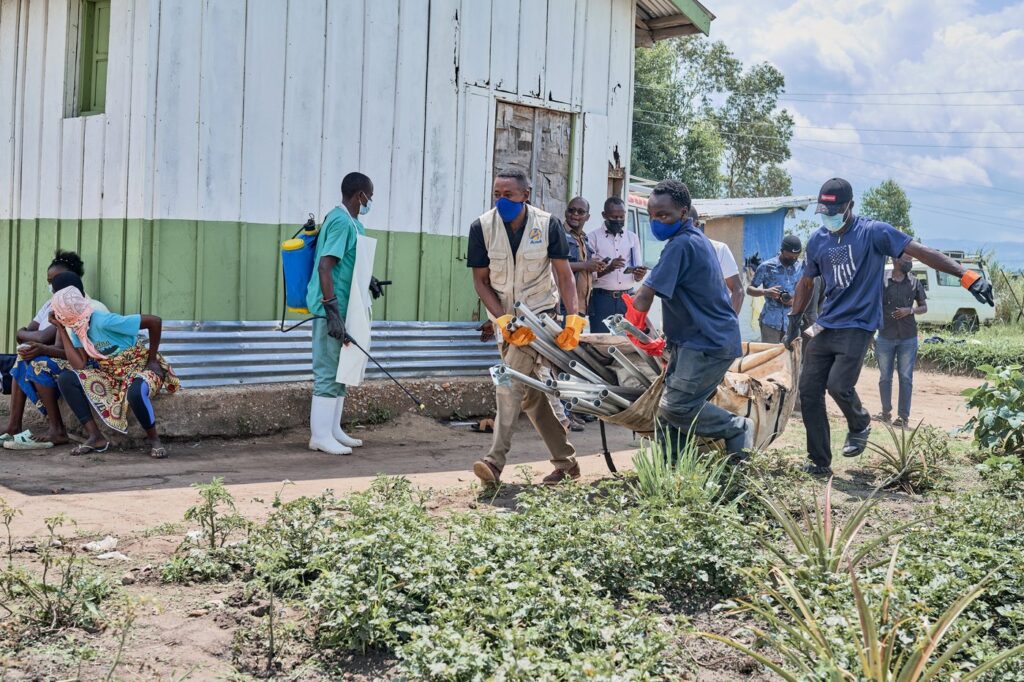
In Bunia, where the first known death occurred, health workers donned protective gear as they navigated through the community, where residents wore fabric masks. Noëla Lumo, a concerned local, expressed anxiety over the situation, stating, "I know the consequences of Ebola, I know what it’s like."
Jean-Jacques Muyembe, a virus expert at the National Institute of Biomedical Research, mentioned that Congo is awaiting shipments of an experimental vaccine developed by researchers at Oxford in the United States and Britain. While he stated that the vaccine would be administered to observe who develops the disease, he emphasized the time required for such efforts to take effect.
WHO Director-General Tedros Adhanom Ghebreyesus voiced profound concern regarding the outbreak, highlighting the emergence of cases in urban areas, the fatalities among healthcare workers, and significant population mobility. During a meeting with the U.N. health agency’s emergency committee, he confirmed that 30 cases have been officially identified in Congo. He also mentioned that Uganda has reported two confirmed cases, including one death in its capital, Kampala, among individuals who had traveled from Congo.
The outbreak has been declared a public health emergency of international concern by WHO, necessitating a coordinated response. Resources are being dispatched to two provinces affected by the virus, although the presence of armed rebel groups in parts of eastern Congo complicates the delivery of aid.
Dr. Anne Ancia, head of the WHO team in Congo, remarked that authorities have yet to identify "patient zero." She noted that the Ervebo vaccine, used against a different Ebola strain, is among potential options, though any approvals would take at least two months prior to availability. Dr. Ancia predicted that the outbreak would not be resolved within that timeframe.
Currently, neither the U.S. Centers for Disease Control and Prevention nor the Africa Centers for Disease Control are in the field, although organizations like Doctors Without Borders and the Red Cross are present. UNICEF has dispatched 16 tons of relief supplies including disinfectants, personal protective equipment, and water purification tablets to Bunia.
Confirmed cases have surfaced in Bunia, the capital of Ituri province, as well as in Goma, North Kivu’s rebel-held capital, and in the localities of Mongbwalu, Nyakunde, and Butembo, which together are home to over a million people. An American doctor working in Bunia has also been reported among the infected cases.
As fear spreads among residents, local authorities are encouraging calm and adherence to hygiene practices, especially during funerals. Justin Ndasi, a Bunia resident, lamented, "It’s truly sad and painful because we’ve already been through a security crisis, and now Ebola is here too." Experts stress that breaking the transmission chain is crucial, as previous outbreaks in Congo were controlled through effective public health measures.
The initial death from the virus was reported on April 24, and the first confirmation of an Ebola case came weeks later on May 14. The delayed testing results contributed to the escalation of the outbreak. Health officials acknowledged flaws within the surveillance system, stating that timely retesting of samples for the Bundibugyo strain was not appropriately conducted.
The inability to isolate suspected cases has further strained the response efforts. A representative from Doctors Without Borders indicated that their team struggled to find adequate isolation facilities, revealing the overwhelming number of suspected cases in health centers.
As the outbreak continues, local and international health authorities are collaboratively seeking ways to curtail the spread while addressing logistical challenges within Congo's health infrastructure.