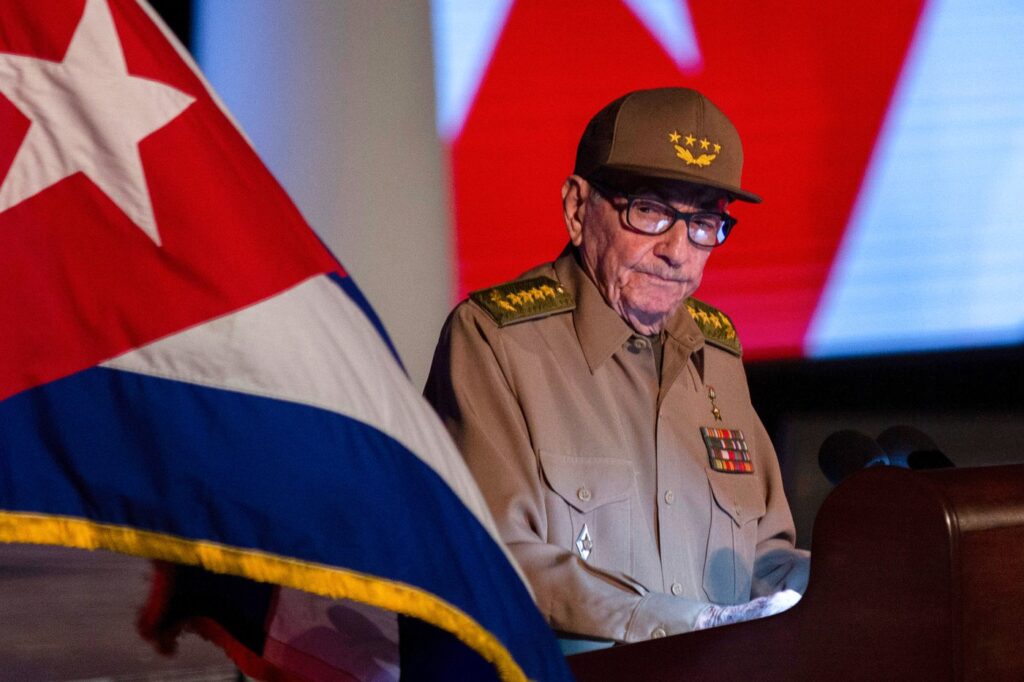
MIAMI (AP) - The U.S. Justice Department is reportedly preparing to seek an indictment against former Cuban President Raúl Castro, as tensions escalate between the U.S. and Cuba amid President Donald Trump's tough stance on the communist-run island. This potential indictment is linked to Castro's alleged involvement in the 1996 shootdown of four planes belonging to the Miami-based exile group Brothers to the Rescue, while he was serving as defense minister.
Three anonymous sources informed the Associated Press that the indictment's pursuit comes as the Trump administration intensifies its focus on Cuba. The government's move could significantly heighten diplomatic tensions with Havana and raise the possibility of U.S. military action similar to the operation in January aimed at bringing Venezuelan President Nicolás Maduro to face drug trafficking charges in New York.
Following Maduro's ousting, the Trump administration imposed an economic blockade on Cuba, severely limiting fuel shipments and resulting in extensive blackouts, food shortages, and a downturn in economic activities across the island. The ongoing war in Iran seemingly provided Cuban authorities a temporary reprieve from U.S. discussions about regime change, but now speculation is growing that Trump may pivot back to Cuba as he aims to wind down U.S. military involvement in Iran.
Richard Feinberg, a professor at the University of California-San Diego specializing in Latin American studies, pointed out that an indictment would resonate with voters in South Florida; however, it is unlikely to persuade military planners in the Pentagon to engage in a new conflict this close to U.S. shores. Feinberg stated, “There’s no easy Venezuela copy,” emphasizing the complexities surrounding regimes and succession in Cuba.
Reports from earlier in the year revealed that the U.S. Attorney’s office in Miami had formed a special working group aimed at investigating top Cuban officials, amid growing calls from several Florida Republicans to reassess investigative efforts into Castro's actions during the 1996 event.
On a related note, President Trump chose not to comment on the possible indictment but described Cuba as “a declining country” in remarks made aboard Air Force One. Additionally, CIA Director John Ratcliffe recently concluded a visit to Cuba, during which he met with Cuban officials, including Castro’s grandson.
Raúl Castro, aged 94, took over the presidency from his brother Fidel in 2011 and later transitioned power to Miguel Díaz-Canel in 2019. Although he has largely faded from public view since retiring from the Communist Party leadership in 2021, Raúl Castro is believed to still hold significant influence behind the scenes.
The shootdown incident, which occurred on February 26, 1996, was a critical moment in U.S.-Cuba relations. At the time, the U.S. government, led by President Bill Clinton, was cautiously exploring ways to ease tensions, but faced fierce opposition from Cuban exiles who were conducting flyovers of Havana to drop anti-Castro leaflets. This hostile environment prompted Cuban authorities to warn the U.S. about potential provocations before their military shot down the civilian aircraft, using Russian-made MiG-29 fighter jets.
Richard Feinberg reflects that the Castros used the shootdown to obstruct Clinton’s outreach efforts, realizing that maintaining an external enemy was essential for justifying their national security stance. Following these events, Congress passed the Helms-Burton Act, which enshrined a trade embargo that has complicated U.S. relations with Cuba for decades.
To date, the U.S. has only successfully prosecuted one individual, Gerardo Hernández, in relation to the Brothers to the Rescue incident; he was sentenced to life in prison but was released during a prisoner swap initiated by President Obama as part of attempts to normalize relations with Cuba. Other individuals involved, including two fighter pilots and their commanding officer, remain in Cuba, beyond the reach of U.S. law enforcement.
Castro has been previously investigated for drug trafficking activities as early as 1993, but an indictment was ultimately not pursued due to concerns regarding witness credibility and possible risks to U.S. intelligence operations. Overall, the potential indictment of Raúl Castro underlines the ongoing tension and complex history between the U.S. and Cuba, particularly regarding issues of governance, human rights, and military actions in the region.