A humpback whale that was found dead off the Danish island of Anholt this week has been confirmed as the same animal released two weeks prior in a contentious rescue operation. The whale had repeatedly become stranded off Germany's Baltic Sea coast, prompting extensive efforts to guide it back to its natural habitat.
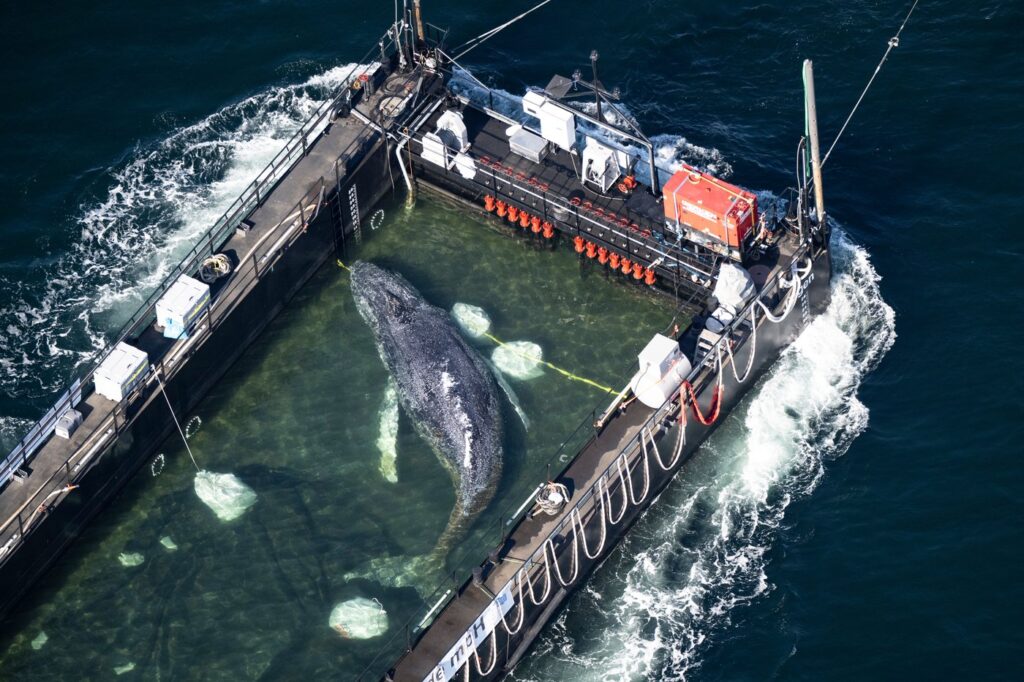
The whale was discovered stranded on Thursday, just off Anholt, located in the Kattegat strait that lies between Denmark and Sweden. This location is approximately 70 kilometers (around 45 miles) south of where the whale, often referred to by the nicknames "Timmy" and "Hope," was released on May 2. After being transported via a barge toward the North Sea, the whale's journey had garnered significant media attention and public interest.
Jane Hansen, head of division at the Danish Environmental Protection Agency, confirmed the whale's identity through a tracking device that was still attached to its back. Conditions on Saturday allowed a member of the Danish Nature Agency to retrieve this device, which confirmed the whale's previous observations and handling in German waters.
The finding marks a tragic conclusion to the extensive and often dramatic efforts designed to return the whale to the Atlantic Ocean. Initially spotted off the German coast on March 3, the whale entered the Baltic Sea, a habitat far removed from its natural environment. Experts speculated that it might have lost its way while pursuing herring or during its migration.
In late March, the whale was rescued from shallow waters near Timmendorfer Strand, Germany, with the assistance of an excavator. However, following this rescue, the whale faced subsequent challenges and became stranded yet again, leading to heightened media coverage, including livestreams tracking its situation and updates from news outlets.
By early April, experts indicated that they had largely given up hope for the whale's survival, predicting its inevitable demise. This expressed concern spurred controversy, as private rescuers, regional authorities, and members of the scientific community debated how best to assist the whale. While many activists campaigned for further rescue efforts, some scientists cautioned that these interventions could exacerbate the stress experienced by the unhealthy and exhausted animal.
Eventually, the regional government of Mecklenburg-Western Pomerania permitted a private initiative geared towards the whale's rescue. This initiative succeeded in transferring the whale onto a flooded barge. Reports from the initiative stated that the tracking device recovered from the deceased whale matched the one originally attached, although the cause of death remains inconclusive.
Till Backhaus, the environment minister of Mecklenburg-Western Pomerania, acknowledged that the rescue effort represented a final chance for the whale to reclaim its freedom and health. He emphasized the necessity of drawing "the best possible lessons" from this experience, highlighting the importance of valuing even the smallest glimmers of hope when a life is at stake.
Authorities have not yet made decisions regarding the deceased whale's remains. Hansen indicated that there were currently no concrete plans to remove the whale or conduct a necropsy, noting that, for the time being, it does not pose a problem in the area. However, she advised the public to maintain distance from the whale due to potential health risks it might present.