TEL AVIV, Israel (AP) — An Israeli airstrike in Gaza resulted in the death of Izz al-Din al-Haddad, the leader of Hamas’s military wing and a key architect of the October 2023 attacks that triggered the ongoing war. The Israeli military announced the strike on Saturday, and Hamas confirmed al-Haddad's death.
According to the Israeli army, al-Haddad was killed on Friday during an operation. He was described as one of the senior commanders directing the planning and execution of the deadly Hamas-led offensive that occurred on October 7, 2023, which claimed the lives of approximately 1,200 individuals in southern Israel and led to over 250 hostages being taken. Hazem Qassem, a Hamas spokesperson, publicly confirmed al-Haddad's killing on social media.
The fragile ceasefire between Israel and Hamas has seen mounting tensions, with accusations of violations from both sides. Since the ceasefire began in October, Israeli military actions have reportedly killed more than 850 individuals in Gaza, according to the Palestinian Health Ministry. This ministry, despite being part of Hamas’s governance, employs medical professionals who provide detailed and reliable health records recognized internationally. Overall, the ministry claims that Israeli incursions during the war have resulted in over 72,700 fatalities in the Palestinian territory.
The Israeli military stated that al-Haddad had succeeded his predecessor, Mohammed Sinwar, who was also killed. Al-Haddad allegedly used hostages as human shields during the conflict. His family confirmed his death to The Associated Press, noting that six other people, including al-Haddad’s wife and daughter, were also killed in the strike. His two sons had previously lost their lives earlier in the conflict.
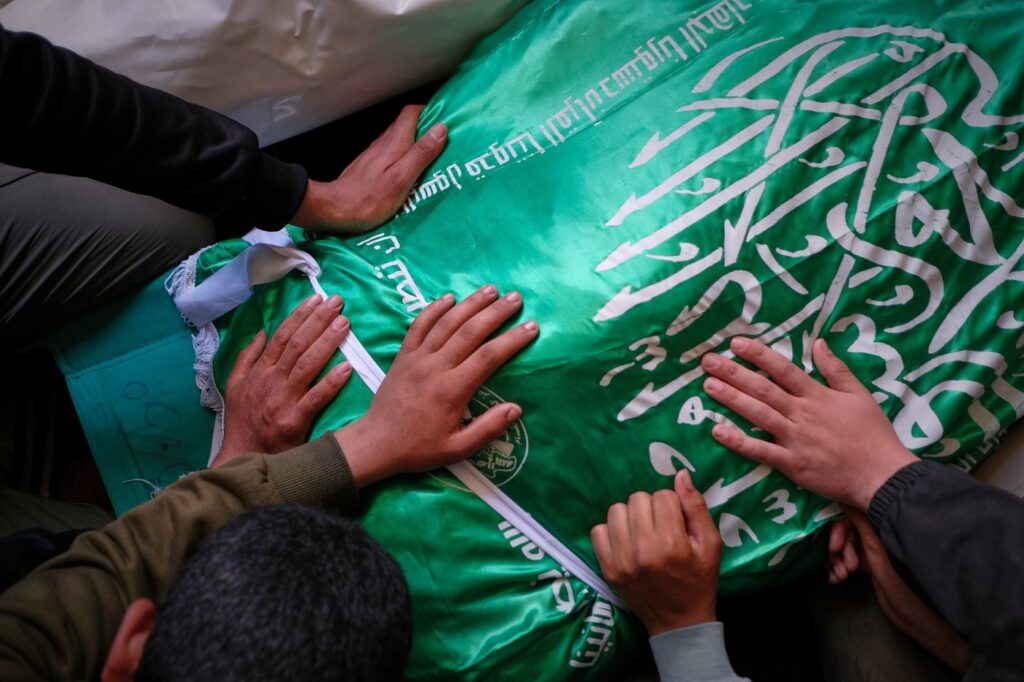
During al-Haddad's funeral in Gaza City on Saturday, his body was draped in Hamas and Palestinian flags, and mourners carried it through the streets. Al-Haddad had been associated with Hamas since its founding in the 1980s and was actively involved in the group’s military operations, serving as a member of the Qassam Brigades’ Majd section, which targeted collaborators with Israel. He was also part of the Hamas Military Council, the top leadership responsible for orchestrating the attacks that instigated the current hostilities.
The Israeli army chief of staff labeled al-Haddad's killing as a significant achievement, pledging that Israel would continue to pursue those it perceives as threats.
In addition to the airstrike in Gaza, tensions flared in the occupied West Bank. Reports emerged that Israeli troops shot and killed a 34-year-old Palestinian, identified as Hassan Fayyad, in the Jenin refugee camp. According to the Palestinian Health Ministry, he was shot in the thigh. The Israeli military claimed that troops fired warning shots at a person trying to breach the camp and used lethal force when he failed to comply, providing medical assistance as he was transported to a hospital.
Violence continued throughout the region, with reports indicating that Israeli forces shot and killed a 15-year-old boy in Eastern Lubban, Nablus, after identifying individuals throwing rocks at Israeli vehicles. In a separate incident, settlers set fire to a mosque and vehicles in the village of Jibiya, located northwest of Ramallah. Palestinian authorities condemned the actions as a “cowardly terrorist act,” criticizing the international community for its inaction regarding the increasing violence against Muslim and Christian holy sites in the occupied territories.
The Israeli military and police maintained a presence in the area following the arson incident but stated that no suspects had been apprehended. They emphasized that attacks on religious institutions are strongly condemned.