The streets of London witnessed significant tension on Saturday as thousands of demonstrators gathered for two contrasting events, reflecting the city's diverse political landscape. On one end of the spectrum was the annual march commemorating the Nakba, which translates to "catastrophe" in Arabic. This gathering aimed to remember the displacement of Palestinians that occurred in 1948 following the establishment of the state of Israel. The Nakba march is an essential event for many activists advocating for Palestinian rights and justice.
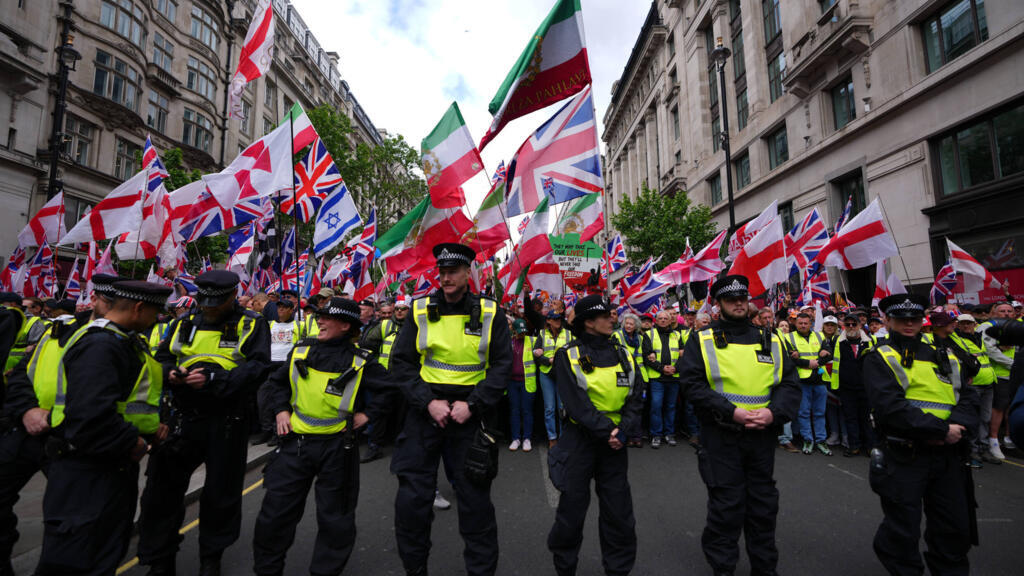
Simultaneously, a rally organized by British far-right activist Tommy Robinson attracted a different group of protesters, many of whom expressed strong nationalistic sentiments and opposition to immigration. Robinson, a provocateur known for his controversial views on Islam and immigration policies, has often sparked significant public demonstrations in the UK. His event was marked by a heavy police presence due to the potential for clashes between opposing groups.
The Metropolitan Police deployed a large contingent of officers throughout central London to manage the situation and ensure public safety. The presence of law enforcement aimed to prevent any confrontations between the groups, as the Nakba commemorators and Robinson's supporters represent polarized views on critical social issues in the UK. Authorities have been on high alert, recalling previous events where protests turned violent.
Both events drew significant crowds, reflecting the growing divide in public opinion regarding immigration, multiculturalism, and international conflicts. The march for the Palestinian Nakba highlighted the emotional and political struggles faced by Palestinians, focusing on the need for recognition and rights. Attendees carried banners and placards demanding justice for Palestine, showcasing their solidarity with a cause that has garnered widespread attention globally.
On the flip side, Robinson's rally, although smaller in comparison, still showcased a fervent group of supporters rallying behind his rhetoric. The far-right context of this demonstration reminded many observers of the rising nationalist sentiments across Europe, where immigration policies continue to be a contentious issue. Both gatherings underscored the potential for heightened tensions in an already polarized political environment.
The juxtaposition of these two events in London serves as a microcosm of the broader societal divisions present in the UK today. While some individuals advocate for social justice and support for marginalized communities, others argue for stricter immigration controls and express their discontent with multiculturalism. This ongoing struggle reveals an evolving narrative around identity, belonging, and political ideology in the contemporary British landscape.
As the day progressed, the police worked diligently to maintain order amidst the protests. The situation remained dynamic, with both groups vocal in their beliefs, further illustrating the complexities surrounding national identity and global political issues. London, as a hub of diverse opinions and social movements, showcased the reality of modern democratic expression, even when faced with the potential for conflict.