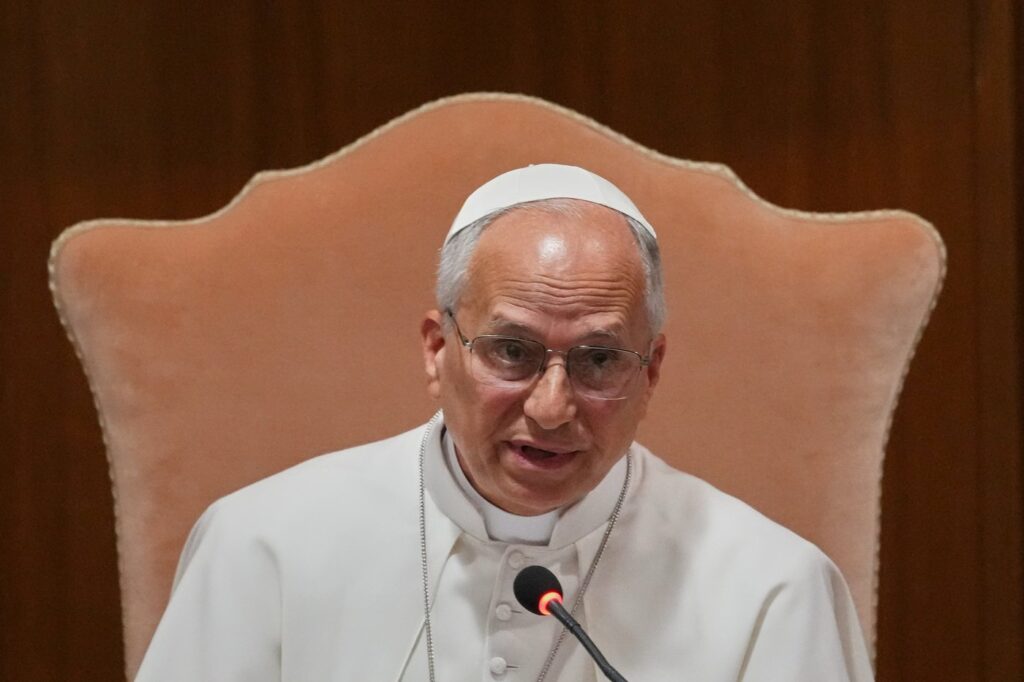
Pope Leo XIV has made a significant impact with his first encyclical, titled “Magnifica Humanitas” or "Magnificent Humanity." In this groundbreaking document, he articulates a pressing concern regarding artificial intelligence (AI), asserting that it must be “disarmed.” This encyclical serves as a call to action for global leaders to ensure that the rapid advancements in AI technology are harnessed primarily for the common good, rather than for potential misuse or harmful applications.
The Pope’s document is remarkable not just for its content but also for the manner of its introduction. Delivered personally by Pope Leo XIV, the encyclical emphasizes the need for regulatory frameworks to control the development and implementation of AI. He underscores the moral responsibility of governments and technology companies to oversee AI advancements and prevent adverse consequences that could arise from unchecked technological growth.
Maria Kestane, the host of a podcast discussing the encyclical, engages with Dr. Gerard Ryan from the Regis St. Michael Faculty of Theology at the University of Toronto. Their conversation revolves around the implications of the encyclical for public policy, philosophical perspectives on technology, and its potential effects on the leadership of Prime Minister Mark Carney. They examine how a papal encyclical can influence societal norms and legislative measures, drawing attention to its ideological weight in discussions regarding technology and ethics.
Dr. Ryan highlights the historical significance of encyclicals in shaping moral discourse and informing public policy. He explains that, traditionally, these documents carry considerable influence, prompting discussions among lawmakers, economists, and academics. As the encyclical calls for a regulatory approach to AI, it raises pertinent questions about the role of government in tech development, the ethical implications of AI, and the necessity for collective action to address potential threats posed by artificial intelligence.
Throughout the conversation, the participants contemplate the responsibilities of stakeholders, including governments, corporations, and civil society, in mitigating risks associated with AI. By invoking the concept of “disarming” AI, Pope Leo XIV invites a dialogue about the ethical constraints and moral imperatives that should guide technology and innovation in contemporary society.
As the encyclical gains attention, there is a palpable curiosity around how political leaders like Prime Minister Mark Carney will respond. With global tech regulations becoming increasingly necessary, policymakers may find themselves at a crossroads where they must balance innovation with societal safety and ethical considerations. The encyclical may serve as a motivating factor for some leaders to reevaluate their positions on technology regulation.
In conclusion, "Magnifica Humanitas" stands as a remarkable and unprecedented statement from Pope Leo XIV, signifying a shift towards integrating ethical contemplation into the realm of technological advancement. As public discourse evolves around AI and its implications, the encyclical is likely to influence debates on governance, regulation, and the shared responsibility of humanity to shape technology for the greater good.