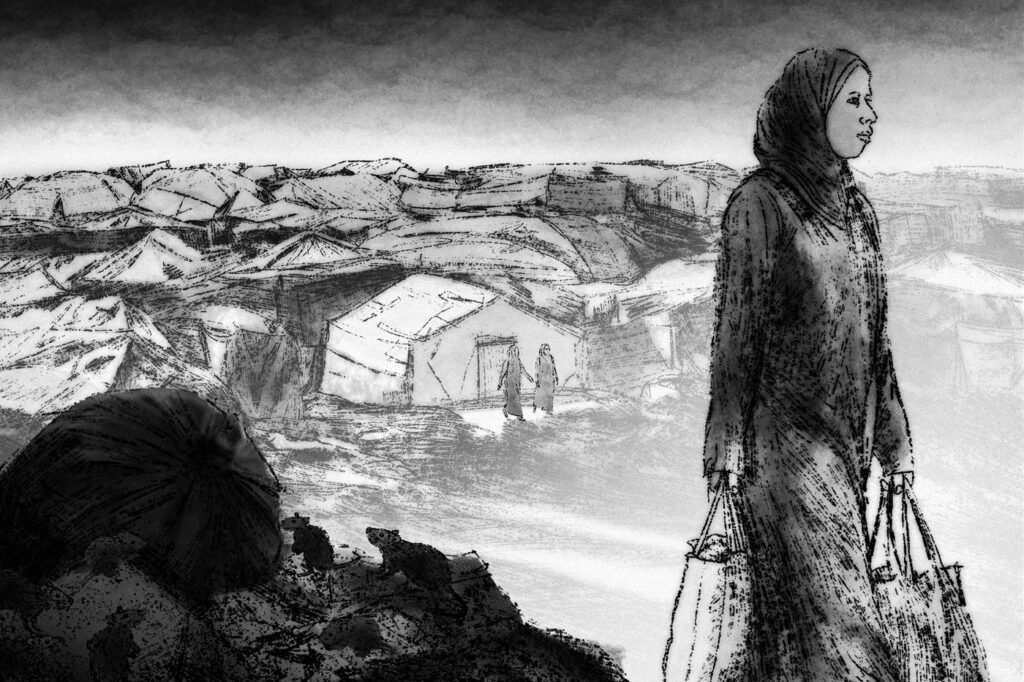
DEIR AL-BALAH, Gaza Strip (AP) — Majda found herself in a dire situation after losing her husband and eldest son to Israeli airstrikes. Living in a dilapidated tent in Gaza, infested with rats and contaminated by sewage, she struggled to support her remaining children. Concerned for her daughters’ safety, especially while using the communal latrine in a crowded camp, Majda made a painful decision: she married off her 13- and 14-year-old daughters to men who promised them safety and support.
“I thought I was protecting them,” she reflected. “Fear was slaughtering me.” The ongoing conflict has disrupted lives dramatically, leading to a rise in child marriages as families seek apparent stability during the chaos. With a significant portion of the Gaza population displaced and living in overcrowded camps, parents increasingly perceive early marriage as a means to provide financial stability for their daughters.
Before the conflict intensified, the rate of child marriage in Gaza had been decreasing. According to the Palestinian Central Bureau of Statistics, in 2022, 17.8% of marriages included a girl under 18, a drop from over 22% in 2015. However, reports indicate that this trend has reversed during the war, with a recorded 20.6% of marriages involving girls under 18 in 2024 and 2025, including 627 marriages of girls under 15.
The reality for many girls who married young has been a profound loss of childhood and jeopardized futures, often involving dangerous pregnancies and abusive environments. Majda’s daughters endured horrific physical abuse soon after their marriages, with the elder daughter recounting a traumatic experience of violence from her husband. This grim narrative is echoed by many young brides grappling with the aftermath of early marriage, often under duress.
Initially, marital arrangements were made under the deluge of wartime pressure. Majda expressed her conflicted feelings about marrying her daughters off, indicating that her state of despair clouded her judgment. Both daughters had reservations; the 14-year-old expressed losing hope and regret over the arrangement. Many parents participating in these marriages reported feeling that the circumstances of war left them no other viable options. The chaotic environment stripped the youth of educational opportunities, making early marriage seem like a last resort for survival.
Parents sometimes resorted to informal marriages due to the inability to meet legal requirements, indicating a troubling trend during conflict. The traditional norms appear to resurge amid wartime instability, as families prioritizing survival often compel daughters into marriages, inadvertently increasing their vulnerability to exploitation and abuse.
Health professionals in the area reported alarming increases in teenage pregnancies during the ongoing conflict, accompanied by severe health risks due to malnutrition and insufficient medical care. Four of the young brides interviewed experienced high-risk pregnancies, and many reported distressing complications, including miscarriages, following their early marriages.
As the war continued, Majda’s daughters returned to her after fleeing their abusive situations, but the looming threat of being sent back to their husbands still haunted them. Both girls had undertaken significant emotional and physical trauma due to their experiences. The stigma surrounding divorce in Gaza added another layer of distress, complicating their already vulnerable positions. Ultimately, pressure from family and in-laws prompted Majda to relinquish her daughters, sending them back to their husbands despite their profound objections.
Reflecting the despair faced by many families in Gaza, the plight of young girls such as Majda’s daughters illustrates an urgent humanitarian crisis exacerbated by war, poverty, and a systematic breakdown of societal structures that once provided some level of protection for the most vulnerable. Their voices fade in the tumultuous backdrop of an ongoing conflict, highlighting the dire need for intervention and awareness around the issue of child marriage, particularly in war zones.