The Trump administration announced new sanctions against Iran on Wednesday, intensifying its economic pressure campaign amid ongoing military actions in the region. This latest round of sanctions specifically targets Iran's newly established agency responsible for regulating shipping through the strategically important Strait of Hormuz. The U.S. moves were timed with military strikes against an Iranian military facility, following the downing of Iranian attack drones.
These sanctions, reported first by The Associated Press, are part of the U.S. strategy to leverage both military actions and economic penalties to compel Iran’s leadership to agree to terms to end the current war and to ensure the security of the waterway where a significant portion—nearly one-fifth—of the world's oil and natural gas are transported. President Donald Trump claims that a deal is imminent, although negotiations are still underway.
Rising energy costs and inflation linked to Iran’s effective obstruction of the strait are causing political strain for Trump and other Republican politicians as they approach the midterm congressional elections. Treasury Secretary Scott Bessent highlighted the Iranian military's actions, stating, “The Iranian military’s latest attempt to extort global maritime trade is proof that Economic Fury has left the regime desperate for cash.”
The sanctions specifically target the Iranian Persian Gulf Strait Authority and any individuals or entities cooperating with this agency, which was set up earlier this month to oversee transit within the strait and impose tolls that can amount up to $2 million per vessel. In response, Iran's powerful paramilitary group, the Revolutionary Guard, has asserted that their designated shipping corridor is the only safe passage through the critical strait, cautioning that ships straying from this path are at significant risk of attack.
The tightening of Iran’s control over the strait has led to global energy shocks in the aftermath of U.S. and Israeli military actions that began on February 28. Energy prices have markedly increased for oil, gas, and related products, with experts predicting that it may take several weeks or even months for the shipping industry and prices to stabilize once the waterway is reopened.
In retaliation, the U.S. has maintained a blockade on Iranian ports for more than a month. President Trump emphasized that this blockade "will remain in full force and effect until an agreement is reached, certified, and signed." The recent economic penalties come as the U.S. and Iran engage in some of the most high-stakes diplomacy seen in years, aiming to conclude hostilities and pave the way for a more enduring resolution to long-standing tensions between the two countries.
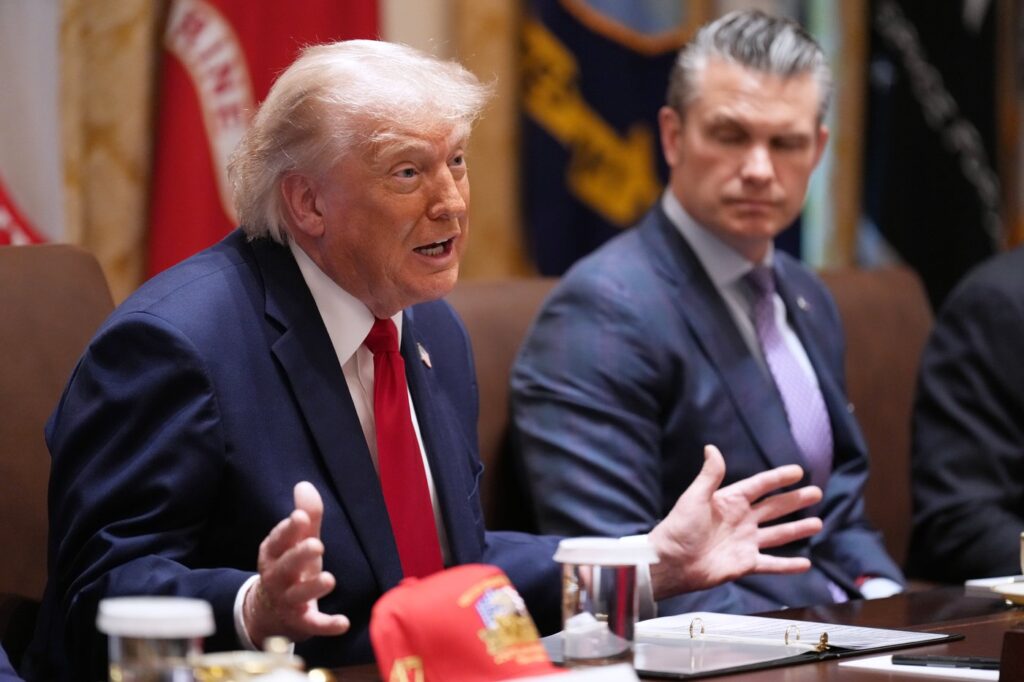
During a Cabinet meeting on Wednesday, Trump remarked that Iran is "negotiating on fumes," suggesting that both sides may be nearing an agreement despite the escalation of military tensions highlighted by U.S. military actions earlier in the week. He also issued a stark warning that if a deal is not reached, the U.S. may have to "finish the job," reiterating a stance of potential renewed military action if negotiations remain unsatisfactory.
Despite these threats, Trump has softened his aggressive posturing in recent months. His administration continues to navigate the complex dynamics of U.S.-Iran relations while addressing the ramifications of the conflict on global markets and domestic political pressure.