MONTREAL An international panel of human rights experts has accused Canada of committing genocide against its Indigenous population following a week of hearings in Montreal. The Permanent Peoples' Tribunal was tasked with investigating the issues surrounding missing and disappeared children, unmarked graves at Canada's residential school sites, and the forced sterilization of Indigenous women, all framed within the scope of international law.
The panel, which consisted of seven judges, concluded that Canada has historically adopted a series of policies they classified as crimes against humanity with genocidal intent, particularly through the operation of residential schools for over 150 years. Notably, the last residential school in Canada closed its doors in 1996.
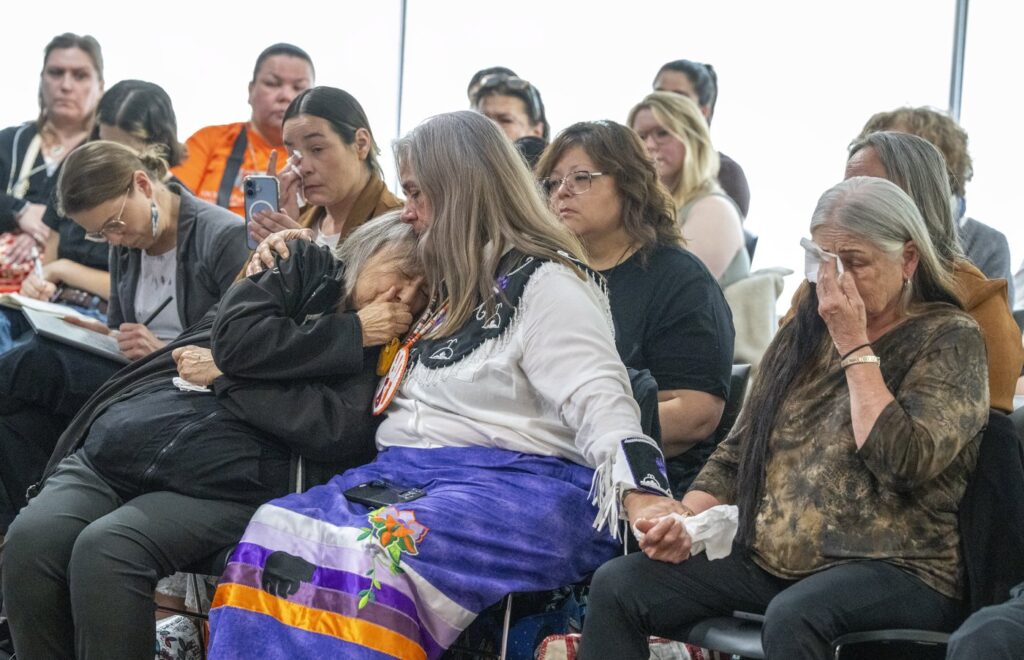
During the hearings, survivors shared their harrowing experiences, gripping each other for support as members of the tribunal read aloud their findings. Roberta Hill, a survivor who provided testimony, expressed her hope that the judgment would lead to more comprehensive answers and better reconciliation efforts, stating, "It’s all we’ve ever asked for: just tell the truth about how this country came to be."
Survivors recounted traumatic experiences, including nutritional and medical experiments that involved underfeeding and forced labor. They described the dire conditions in which children lived—cold, unsanitary, and overcrowded environments that left them susceptible to infections and disease. According to tribunal judge Frances Webber, testimonies revealed that between 4,000 and 6,000 children are known to have died or missing while attending these residential schools, with many deaths—including almost half being attributed to tuberculosis—not adequately documented.
Witnesses’ testimonies also included harrowing accounts of sexual and physical abuse. Some described solitary confinement for simply speaking their language or attempting to assist other children, further highlighting the inhumane treatment they endured. Victims like Audrey Hill shared heartbreaking memories of being locked in dark closets without food or water. The tribunal acknowledged the magnitude of these human rights violations, stating that acts such as forced disappearances, torture, and sexual violence systematically inflicted hardships on Indigenous children, women, and families.
The panel's findings also addressed the issue of forced sterilizations. Women testified about the racial discrimination they faced from medical professionals, who deemed them unfit to be mothers and misled them regarding the irreversibility of the procedures. Webber emphasized the systemic oppression aimed at seizing Indigenous lands and resources, underpinning the severity of these acts as crimes against humanity.
The Permanent Peoples' Tribunal, established in 1979 to investigate human rights violations, considered this hearing on Missing Children and Unmarked Graves as its 57th case. Notably, the Canadian government chose not to participate in these hearings. Pascal Laplante, a spokesperson for Crown-Indigenous Relations and Northern Affairs Canada, acknowledged the dark legacy of residential schools in Canada's colonial history and emphasized the commitment of the government to work together with Indigenous partners for education, commemoration, and healing initiatives.
The tribunal underscored that Canada has failed to uphold its commitments outlined in the United Nations Declaration on the Rights of Indigenous Peoples and the Truth and Reconciliation Commission's recommendations issued in 2015. Judge Valmaine Toki asserted that Canada holds legal, moral, and political responsibilities for systemic policies of assimilation and destruction that have perpetuated intergenerational trauma among Indigenous families. She remarked that despite claims of progress, the government continues to inflict harm on Indigenous communities through practices like forced sterilizations and inadequate child protection services.
Christa Big Canoe, a prosecutor and director of the Aboriginal Legal Services, expressed optimism regarding the tribunal's preliminary statement, describing their recognition of ongoing genocide as a beacon of hope moving forward. The tribunal's preliminary findings have been sent to the Canadian government, and a full judgment is expected to be revealed on September 30, coinciding with the National Day for Truth and Reconciliation.