MONTREAL Dominique Boucher, who has experienced visual impairment for the last 40 years, had distanced himself from theatre for decades. However, as more venues in Quebec have begun to implement accessibility features like audio descriptions and sign-language interpretation, he is now re-engaging with the performing arts. Boucher expresses excitement about the possibilities that these adaptations could offer, especially as he approaches retirement, looking forward to theatre as a newfound activity.
In recent years, Boucher has attended five productions, mainly at Quebec City's Théâtre du Trident, which has made strides in enhancing accessibility for individuals with visual and hearing impairments. Véronic Larochelle, the theatre’s director of philanthropic development and partnerships, confirmed that they are committed to providing at least one performance with audio descriptions and one with sign language interpretation for each season, which typically runs from September to May.
Boucher recognizes the impact of these changes, noting, “I realize that with just a little adaptation, it is amazing, because you can follow along.” He highlighted a particular theatre-and-dance production that featured live audio description, where the announcer helped audience members better envision the action unfolding on stage. “I found it so enriching,” Boucher remarked. The theatre further enhances accessibility by organizing sessions where audience members can meet actors and physically interact with props or costumes prior to performances.
Larochelle recalled a session centered around a production involving a talking dog puppet. She explained the importance of allowing audience members to touch and experience the puppet, noting its size, fur texture, and the actor voicing it. In addition, audio descriptions are now being utilized in performances that include minimal or no dialogue, enhancing the experience for visually impaired audience members. Earlier this year, Montreal's circus venue La TOHU hosted a performance specifically designed for visually impaired audiences, which featured live commentary of the actions on stage. Benoit Mathieu, co-executive director of La TOHU, stated that the preparation involved considerable effort, emphasizing that it goes beyond simple simultaneous translation; it necessitates a deep understanding of the circus’s language and visual storytelling.
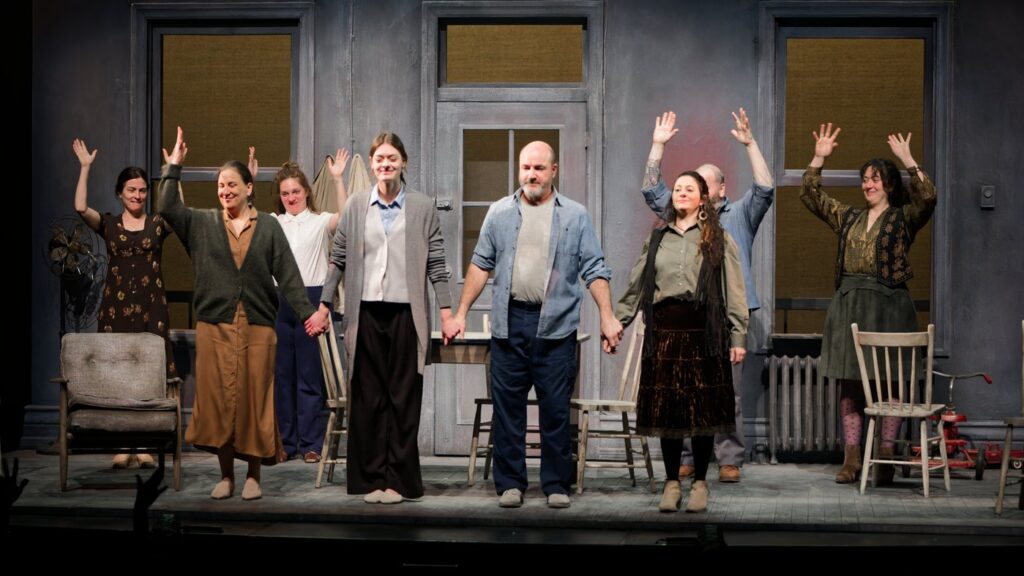
This year, Montreal's Théâtre du Rideau Vert also introduced a new format for a performance of Michel Tremblay’s classic play, “À toi pour toujours, ta Marie-Lou.” This production incorporated actors with hearing impairments and integrated sign language throughout, enhancing the overall experience for deaf audience members. Erika Malo, the theatre’s artistic development co-ordinator and accessibility lead, described the performance’s choreography, particularly how deaf performers took center stage during critical scenes, which resonated well with the audience. However, rolling out these enhancements required extensive modifications, including revisions to lighting, costumes, and sets, as well as more than 20 additional hours of rehearsal. Malo noted that the overall cost of such performances is roughly double that of standard interpreted shows.
Both Malo and Mathieu acknowledge the financial challenges associated with creating accessible productions, emphasizing that while the investment is necessary, it is not always feasible to implement these adaptations for every show in a season. Mathieu mentioned that considerable financial partnerships would be necessary to regularly present such initiatives, estimating that it could require tens of thousands of dollars each year to sustain.
Despite the considerable investment and effort needed, there is a growing demand for accessible theatre experiences, suggesting it is a significant and essential aspect of the performing arts community. Larochelle stated that grant applications increasingly inquire about the genuine needs of audiences, confirming, “Yes, it absolutely does.” For Boucher, the enhancements in accessibility are worth the financial commitment. He advocates for these efforts, stating, “Yes, it’s an investment for them. But it allows us to experience these works differently and truly appreciate them. I think it’s great because there’s more and more openness.”