This summer, the Greater Toronto Area (GTA) is projected to experience weather that is notably wetter and cooler than the seasonal average. CityNews Chief Meteorologist Natasha Ramsahai has released her forecast for the upcoming summer, emphasizing that these projections depict a three-month average and do not determine day-to-day weather patterns.
A significant factor behind this year's forecast is the presence of a super El Niño in the Pacific Ocean. While El Niño typically influences weather patterns during the fall and winter, the robust conditions of this super El Niño may extend its impacts into the summer across Canada. Ramsahai explained that the distinction between a standard El Niño and a super El Niño lies in the extent to which ocean water temperatures exceed average levels. This year is expected to witness a rapid transition, with water temperatures potentially exceeding averages by three to four degrees, marking a potentially historic global weather event.

The anticipated super El Niño is expected to alter the behavior of the polar jet stream, which is forecasted to dip across the Great Lakes region. This shift is key, as moisture typically travels along the jet stream, influencing the temperature divides across different areas—resulting in cooler or warmer conditions in various regions.

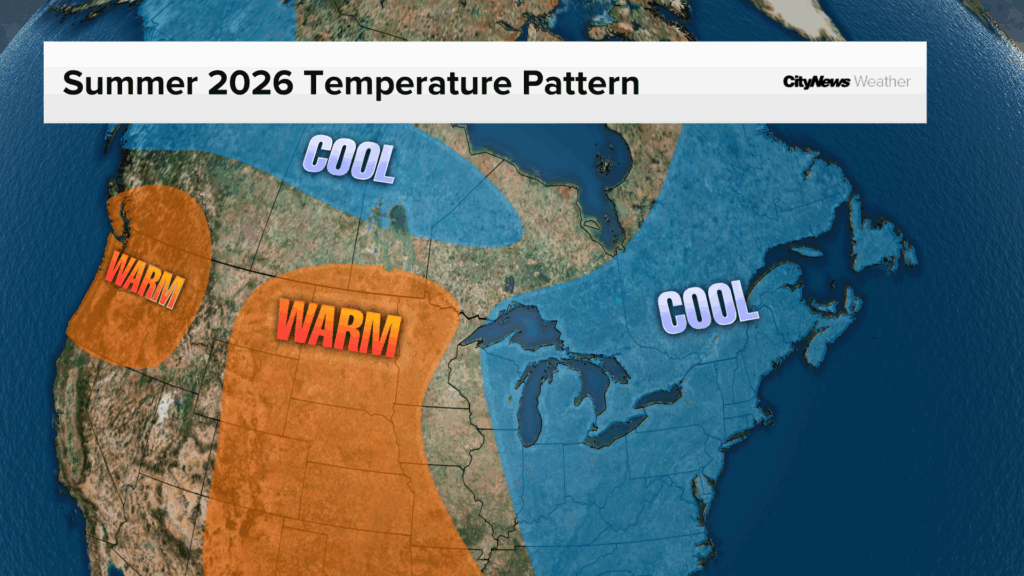
Despite the overall cooler forecast, Ramsahai noted that Ontario will still experience warm days. Recent forecasts predict stretches of temperatures reaching the 30s Celsius over the next weeks in Toronto. However, she emphasizes that the validity of extended heat waves in the region will be diminished, with the possibility of cooler temperatures and weather disruptions emerging more frequently throughout the season. In particular, the GTA is expected to experience temperatures that are at or slightly below seasonal norms.
While there may be instances of heat domes producing short-lived heat waves lasting five to eight days, these occurrences are anticipated to be less common in southern Ontario, Quebec, and the Maritime provinces. Conversely, western Canada could endure a higher frequency of heat waves this summer.
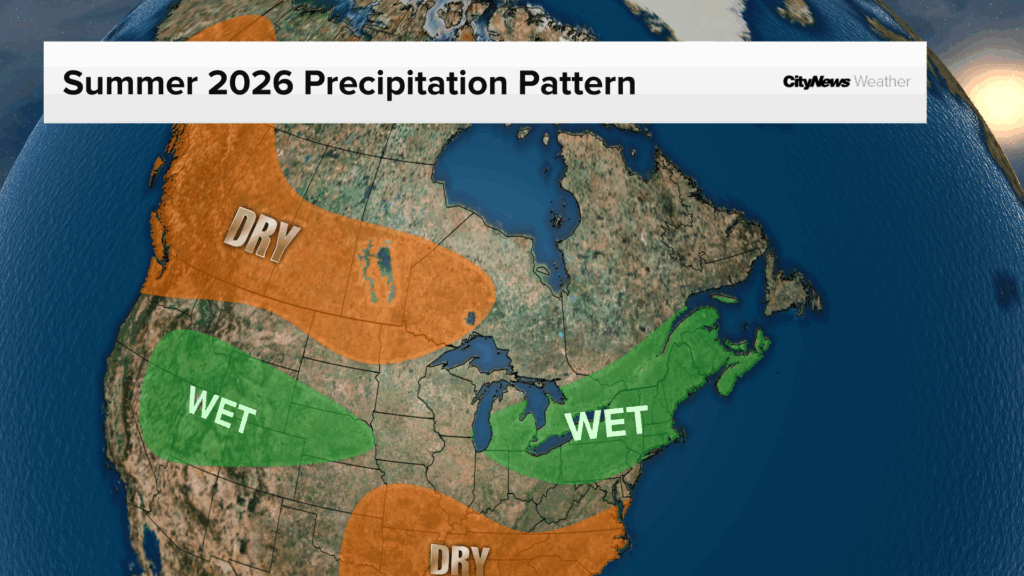
In terms of moisture, rainfall is likely to exceed average levels across the Great Lakes over the summer months. The trend of wetter conditions is expected to extend further into Atlantic Canada. In contrast, British Columbia and Alberta are forecasted to encounter drier conditions during the summer, which poses concerns for the upcoming wildfire season in those regions.